

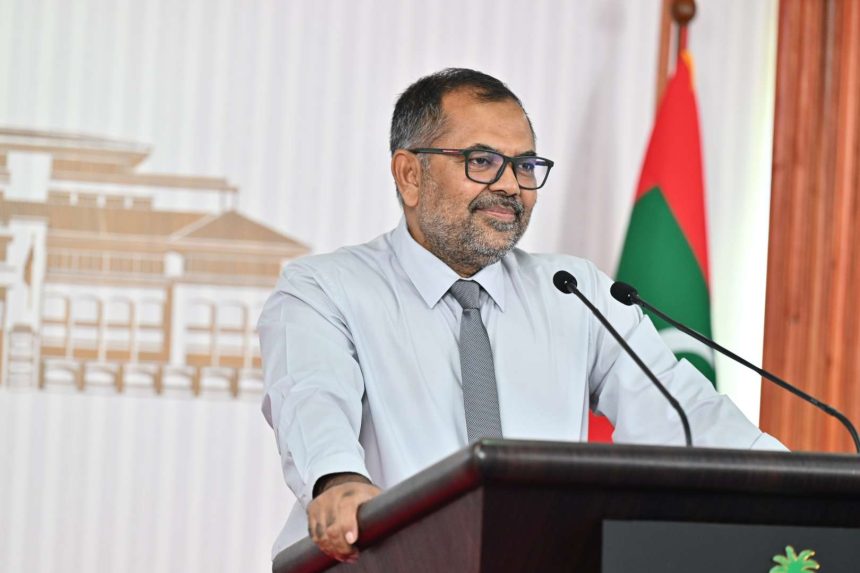
The government is preparing a targeted expenditure reduction plan to counter mounting fiscal pressures triggered by escalating geopolitical tensions in the Middle East, Finance Minister Moosa Zameer announced on Wednesday.
Speaking at a press briefing at the President’s Office, Zameer confirmed that a comprehensive austerity strategy is being finalized and will be submitted to President Dr Mohamed Muizzu within the coming week. The plan aims to identify key sectors where state spending can be curtailed without disrupting essential public services.
The move comes as global instability begins to weigh on the Maldives’ economic outlook, particularly through rising costs and potential revenue fluctuations linked to the conflict. While the country has already reduced its budget deficit compared to previous years, the minister warned that the current shortfall of MVR 6 billion could widen to MVR 8 billion under prevailing global conditions.

Zameer said preliminary cost-control efforts are already underway within the existing budget framework, focusing on limiting recurrent expenditure and tightening public sector hiring. “We are working to manage spending within the current budget, including controlling recruitment and reducing recurring costs. A set of proposals has been compiled for the President’s review,” he stated.
The proposed plan also weighs broader fiscal considerations, including balancing reduced revenue streams with necessary financing options to sustain government operations. Once approved, the government is expected to publicly outline the specific measures.
As an immediate step, authorities have suspended official overseas travel for government representatives, directing institutions to shift to virtual participation in international engagements wherever feasible. However, travel undertaken by the Ministry of Foreign Affairs will continue as scheduled, reflecting the strategic importance of diplomatic engagement during the crisis.
Despite tightening fiscal controls, the government has pledged to safeguard critical sectors. Zameer emphasized that healthcare and housing will remain top priorities, with measures designed to ensure uninterrupted delivery of essential services to the public.
The forthcoming plan is expected to signal the administration’s broader strategy to navigate external economic shocks while maintaining domestic stability.