

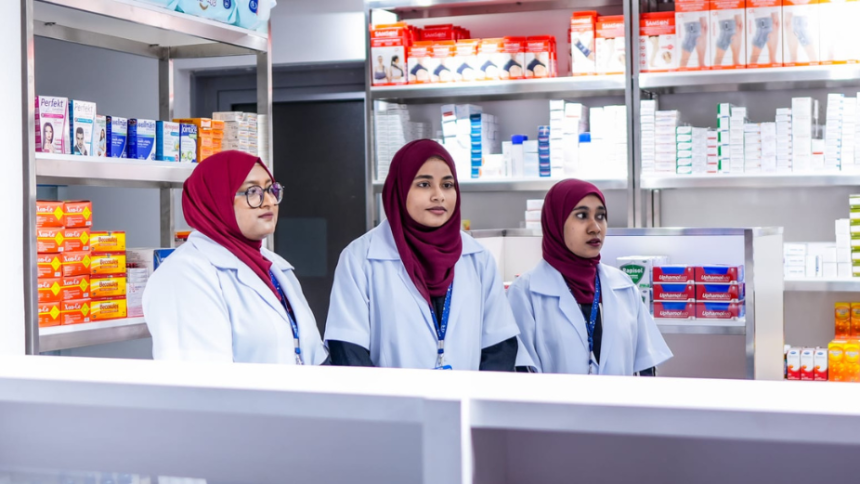
The State Trading Organization (STO) has assured the public that medicines will remain available throughout the final phase of transferring its nationwide pharmacy operations to the newly established State Pharmaceutical and Medical Supplies Corporation Limited, widely known as State Pharma.
The transition process began on Monday and is scheduled to continue until Friday, covering STO-operated pharmacies across the Maldives. While the handover is expected to involve procedural changes and stock verification work, STO said the public will continue to have normal access to medication during the process.
In a statement, STO said the work currently underway mainly involves stock counting and administrative preparations, stressing that there will be no disruption to pharmacy services.

“Medicine will remain available as usual. There will be no difficulty in obtaining medication,” the company said.
State Pharma was established by the government as part of a broader effort to address long-standing medicine shortages and improve the country’s pharmaceutical supply system under a dedicated state-owned structure.
Under the transition plan, pharmacy operations currently managed by STO will officially come under State Pharma from the first of next month, in line with a pledge made by President Dr. Mohamed Muizzu to reform the medicine supply system and deliver a permanent solution to shortages.
State Pharma Managing Director Dr. Shah Mahir had earlier said the company is preparing to take over a nationwide network of pharmacies, including STO’s existing outlets and the newly opened pharmacy at Indira Gandhi Memorial Hospital (IGMH).
Although figures cited by officials have varied in recent statements, Dr. Shah said preparations are moving ahead at speed, with the company focused on installing electronic systems, securing medicine supplies and organizing operations for pharmacies that will be brought under the new structure.
A major priority for the company, he said, is building a more reliable inventory management system capable of forecasting shortages in advance and tracking stock levels across the country in real time. Officials believe this will make it easier for health authorities and regulators to identify supply gaps early and plan pharmaceutical imports more effectively.
The establishment of State Pharma comes amid repeated public concern over the difficulty of obtaining certain prescription medicines, particularly for patients on long-term treatment.
Dr. Shah has previously said that while emergency and short-term interventions are being rolled out immediately, a full and permanent solution to the country’s medicine supply challenges may take up to six months from the official start of State Pharma’s operations.
President Muizzu has also expressed confidence that the impact of the new company will begin to be felt within months, saying the government’s goal is to eliminate recurring shortages and ease the burden faced by patients who depend on regular medication.
The transfer of pharmacy operations marks one of the most significant changes to the Maldives’ public medicine supply system in recent years, with authorities betting that a specialized pharmaceutical company will be better positioned to manage procurement, stock control and nationwide distribution more efficiently.