

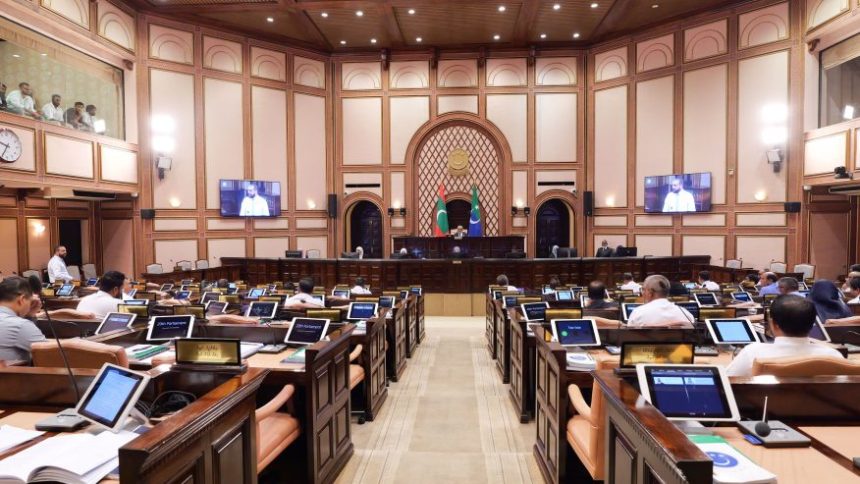
The People’s Majlis has approved legislation to reduce the import duty imposed on cigarettes and several other tobacco products, while simultaneously removing import duties on nicotine replacement products intended to help smokers quit.
The bill, submitted to Parliament by Komandoo MP Mohamed Ibrahim on behalf of the government, was passed unanimously during Monday’s sitting with the support of all 68 lawmakers present.
Under the amendment, the import duty on cigarettes will be reduced from MVR 8 per cigarette to MVR 4. The revised rate will also apply to bidis and heated tobacco products, which were previously subject to higher import duties.

Heated tobacco products are devices that produce nicotine-containing vapour by heating tobacco instead of burning it and have become increasingly available in international markets in recent years.
Alongside the reduction in tobacco import duties, Parliament also approved the complete removal of import duties on nicotine replacement products such as nicotine chewing gum, nicotine patches and similar smoking cessation aids.
The measure is aimed at making products designed to help smokers quit more affordable and accessible.
Officials have acknowledged that the changes are expected to reduce government revenue generated through import duties. However, the bill also reflects broader policy adjustments relating to tobacco control and smoking cessation.
The legislation will take effect once it receives presidential ratification.
Following ratification, the relevant regulations and administrative procedures must be updated and published within 30 days.
The amendment comes as the Maldives continues to strengthen its tobacco control framework through a range of legislative and policy measures. In recent months, the government has introduced initiatives including the ban on vaping products, implementation of the generational tobacco ban and the launch of the national anti-tobacco campaign, “Dhen Huttaalama” (Let’s Stop Now).
Authorities have said these initiatives are intended to reduce tobacco consumption, discourage nicotine addiction among young people and support smokers seeking to quit through improved access to cessation programmes and products.