

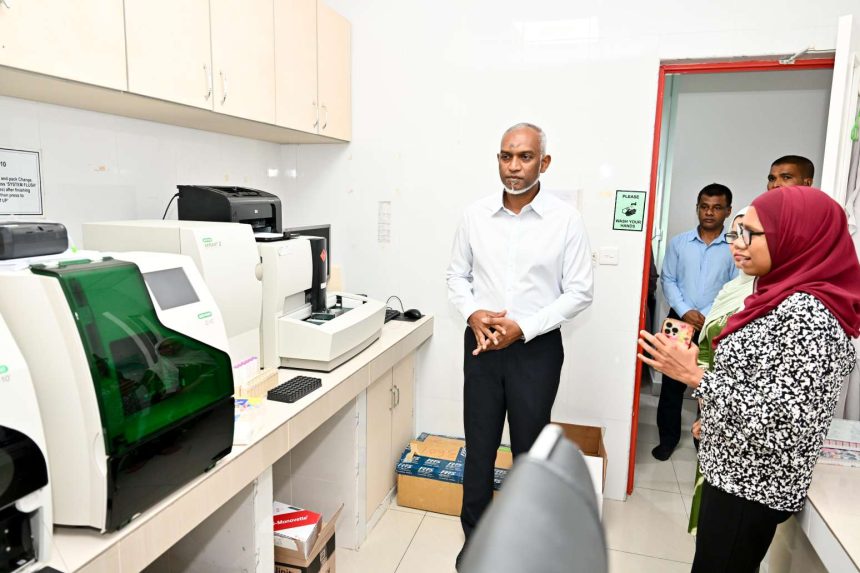
The Maldives has achieved a major milestone in healthcare with the introduction of Nucleic Acid Testing (NAT) for donated blood at the Maldivian Blood Services, fulfilling President Dr Mohamed Muizzu’s pledge to strengthen the country’s blood screening capacity and improve transfusion safety.
The launch of NAT technology significantly enhances the national blood screening system by enabling the early detection of the genetic material of HIV, Hepatitis B, and Hepatitis C. Compared with conventional screening methods, NAT substantially shortens the diagnostic window period, further reducing the risk of transfusion-transmitted infections and ensuring safer blood for patients.
The initiative delivers on President Muizzu’s commitment to modernise healthcare services and expand the country’s capacity to provide high-quality blood screening. Strengthening blood safety has been a key priority of the administration, particularly for patients who rely on frequent transfusions.

The development is especially significant for the hundreds of people living with thalassaemia in the Maldives, many of whom require regular, lifelong blood transfusions. The introduction of NAT is expected to improve the safety and reliability of every unit of blood received by these patients while increasing public confidence in the national blood donation system.
The new screening technology also advances the objectives of the Maldives’ National Thalassaemia Master Plan 2024 to 2034, which aims to improve transfusion services, enhance patient care, and ensure the long-term sustainability of blood safety standards across the country.
The Thalassaemia International Federation (TIF) welcomed the achievement, describing it as a significant advancement for the Maldives’ transfusion services. The federation congratulated the Maldivian Thalassaemia Society, healthcare professionals, policymakers, technical teams, and the country’s voluntary blood donors for their collective efforts in making the initiative a reality.
The introduction of NAT places the Maldives among countries adopting internationally recognised blood screening standards, representing another step in the government’s broader efforts to strengthen the healthcare system and provide safer, more advanced medical services for all citizens.