

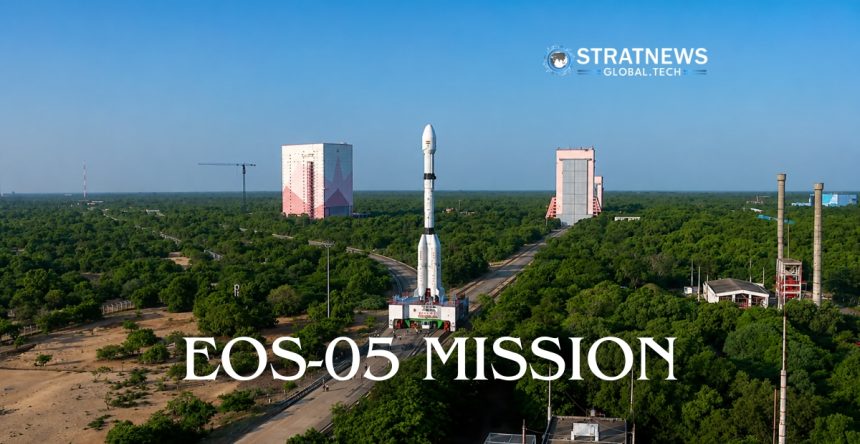
The Indian Space Research Organisation (ISRO) launched the EOS-05 Earth observation satellite aboard its GSLV-F17 rocket from the Satish Dhawan Space Centre in Sriharikota at 2:55 am on September 4. ISRO later confirmed that the launch vehicle successfully placed the spacecraft into its intended initial orbit.
EOS-05 is India’s first dedicated imaging satellite intended to operate from geosynchronous orbit, approximately 36,000 kilometres above Earth. Unlike many Earth observation satellites operating in lower orbits, EOS-05 will be able to repeatedly observe large areas of the Indian subcontinent at frequent intervals.
The satellite weighs approximately 2.36 tonnes and is expected to have a mission life of around 10 years. Its capabilities are expected to support disaster management, agriculture, forestry and other Earth observation requirements, while the satellite is also expected to have applications related to national security and defence.

Following the launch, ISRO began a series of orbital manoeuvres to gradually move EOS-05 towards its final geosynchronous orbit.
The first orbit-raising manoeuvre was successfully completed on September 5, placing the spacecraft in an estimated 20,000 km by 31,129 km orbit. ISRO said further manoeuvres would eventually position the satellite at the 85.5 degrees East orbital slot.
ISRO announced on September 6 that the second orbit-raising operation had also been successfully completed. The satellite’s apogee, or highest orbital point, was raised to an estimated 35,786 km, while ISRO confirmed that the spacecraft remained in normal health.
The successful mission is particularly significant after India’s previous attempt to deploy a similar geosynchronous Earth observation satellite, EOS-03, failed during launch in 2021.
EOS-05 now gives India a powerful new observation platform capable of providing frequent imagery across a vast geographical area, strengthening the country’s capabilities in disaster response, environmental monitoring, agriculture and strategic surveillance.