

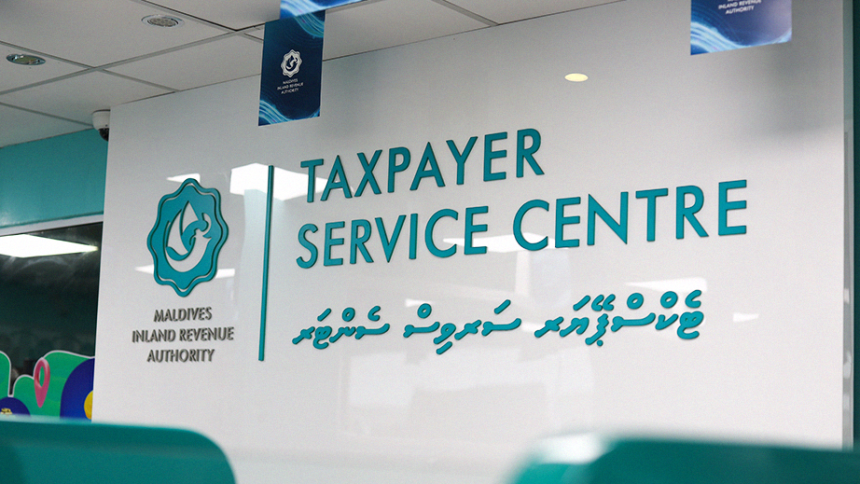
Businesses awaiting payments from government institutions can now use the outstanding amounts to settle their tax obligations to the Maldives Inland Revenue Authority (MIRA), following the introduction of a new arrangement aimed at easing financial pressure on local companies.
The Ministry of Finance announced that the necessary procedures have been finalised, allowing businesses to offset money owed to them by state institutions against their outstanding tax liabilities.
Under the arrangement, businesses will no longer have to wait for the government to settle eligible unpaid bills before using those amounts to meet their tax obligations.

Companies wishing to use the facility must submit their requests to MIRA, which will coordinate the set-off process.
The ministry said special procedures have been established for micro, small and medium enterprises (MSMEs), which have faced difficulties managing tax payments while awaiting money owed for goods and services supplied to the state.
The amount payable under the arrangement will depend on the outstanding balance between the business and the government.
Where a company’s tax liability exceeds the amount owed to it by a state institution, the government payment will be deducted from its tax bill. The business will then be required to pay only the remaining tax balance to MIRA.
If the government owes a business more than the amount it owes in taxes, the outstanding tax liability will be deducted from the government payment, with the remaining amount paid to the business.
For example, a company awaiting MVR 100,000 from a government institution while owing MVR 150,000 in taxes would have its tax liability reduced to MVR 50,000.
Conversely, if a business is owed MVR 150,000 by the government but has an outstanding tax bill of MVR 100,000, the tax obligation would be settled through the arrangement, leaving MVR 50,000 payable to the business.
The Finance Ministry has instructed applicants to provide complete details of their outstanding payments and follow the procedures established by MIRA when submitting requests.
The measure follows a commitment made by President Dr Mohamed Muizzu last December to address complaints from businesses struggling with delayed government payments.
During a town hall meeting at the Social Centre in Malé, small and medium business owners raised concerns about being required to settle taxes despite not receiving payments for completed government projects.
Some business owners complained that MIRA continued to pursue outstanding tax liabilities and enforce collection measures while payments owed to them by government institutions remained unsettled.
The situation had placed businesses in a difficult position, particularly smaller companies that depend on timely payments from public sector contracts to cover operating expenses, employee salaries and other financial commitments.
Following those complaints, Muizzu announced that the government would establish a mechanism to allow outstanding state payments to be deducted directly from tax obligations.
The newly finalised arrangement is intended to address that problem by allowing eligible government receivables and tax liabilities to be settled against each other, reducing the need for businesses to find additional cash while awaiting payment.
For MSMEs, which often operate with limited cash reserves, the mechanism could help ease short-term financial pressures and reduce the burden of managing unpaid government invoices alongside tax deadlines.
Businesses seeking to benefit from the arrangement can now submit their applications to MIRA in accordance with the authority’s procedures.