

The Maldivian government has submitted a bill to Parliament proposing hanging as the legally prescribed method of carrying out the death penalty, introducing strict execution procedures, mandatory official supervision and specific conditions under which executions must be postponed.
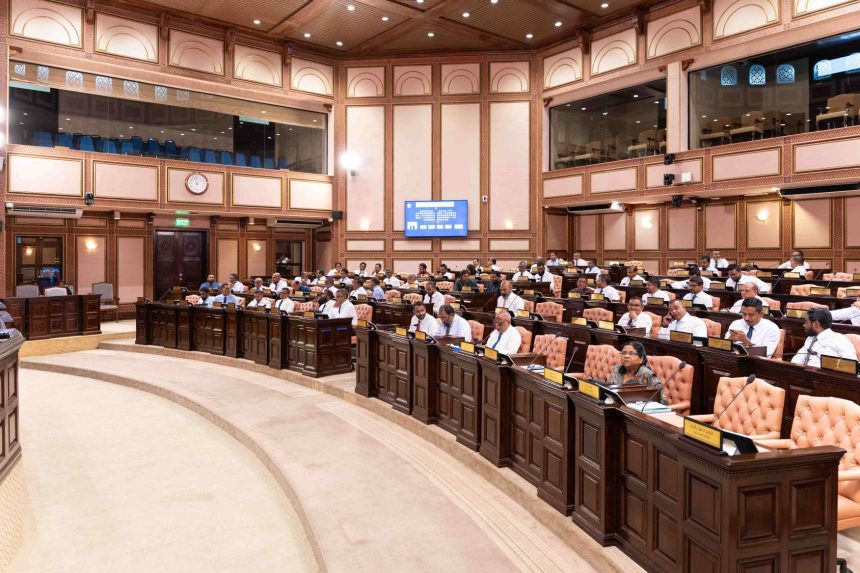
The Bill on the Determination and Execution of the Death Penalty was introduced to the People’s Majlis on behalf of the government by Guraidhoo MP Hannan Mohamed Rasheed.
Under the proposed legislation, capital punishment would be carried out by hanging, which involves placing a noose around the convicted person’s neck and suspending them until death.

The bill requires execution equipment and procedures to minimise suffering and ensure death occurs as swiftly as possible. All equipment must be suitable for its intended purpose, while personnel involved in executions must undergo adequate training.
Senior officials must witness executions
The legislation requires the presence of designated senior officials during executions, including:
- Commissioner of Police or an authorised representative.
- Prosecutor General or an authorised representative.
- Commissioner of Prisons or an authorised representative.
- A medical doctor to attend the execution.
Public executions and recordings strictly prohibited
The proposed law introduces restrictions intended to prevent executions from becoming public spectacles.
The following activities would be prohibited:
- Public executions: Carrying out executions in locations visible to the public.
- Video recordings: Filming or visually recording an execution.
- Audio recordings: Recording sounds during an execution.
- Distribution of recordings: Publishing, sharing or disseminating execution recordings in any form.
Six circumstances where executions must be postpone
The bill establishes six specific circumstances under which the implementation of a death sentence must be suspended:
- Pregnancy: Execution must be postponed until the convicted woman has given birth, recovered and her child reaches two years of age.
- Mothers with infants: Women caring for children under two years of age cannot be executed until the child reaches that age.
- Judicial review: Execution must be suspended while a judicial review of the death sentence remains pending.
- Supreme Court proceedings: Execution cannot proceed while the Supreme Court considers an application to stay the execution under the proposed legislation.
- Serious physical illness: Execution must be postponed if the convicted person’s physical health deteriorates significantly, until their condition sufficiently improves.
- Mental health deterioration: Execution must be suspended if the convicted person experiences serious mental health deterioration, until their mental condition stabilises.
Maldives moves towards establishing execution procedures in law
The Maldives has maintained a longstanding moratorium on executions, with the last recorded execution taking place in the 1950s, although capital punishment remains part of the country’s legal system.
The proposed legislation seeks to establish a statutory framework governing how death sentences are implemented, including execution methods, supervision, restrictions and safeguards.
If approved by Parliament and ratified by the President, the bill would provide a dedicated legal framework for carrying out capital punishment in the Maldives.