

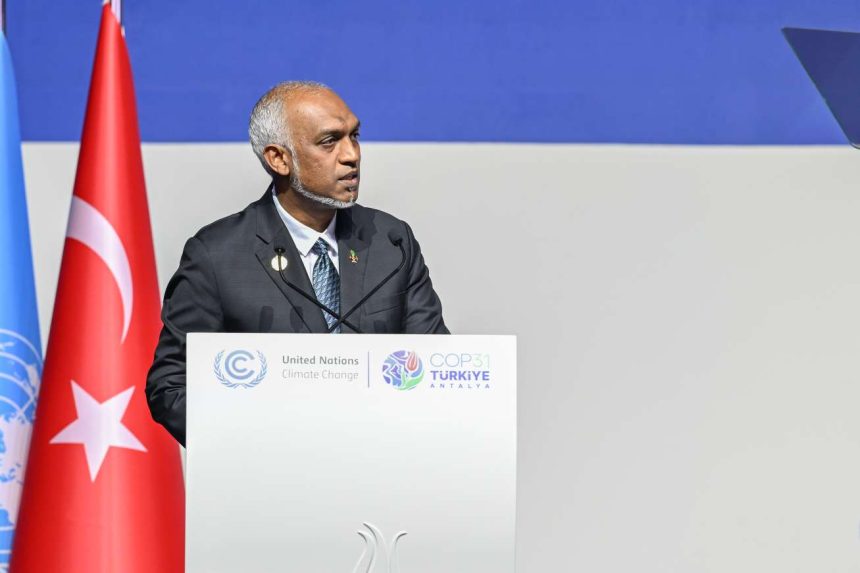
President Dr Mohamed Muizzu has called on the international community to fulfil its climate financing obligations, reform the global financial system and turn political promises into measurable action to protect vulnerable nations.
Delivering the Maldives’ National Statement at the 31st United Nations Climate Change Conference (COP31) in Antalya, Türkiye, President Muizzu outlined three priorities for international climate cooperation: finance, reform and implementation.
The President stressed that climate financing must be new, additional, predictable and grant-based, warning against forcing vulnerable countries to accumulate further debt to address a crisis they contributed little to creating.

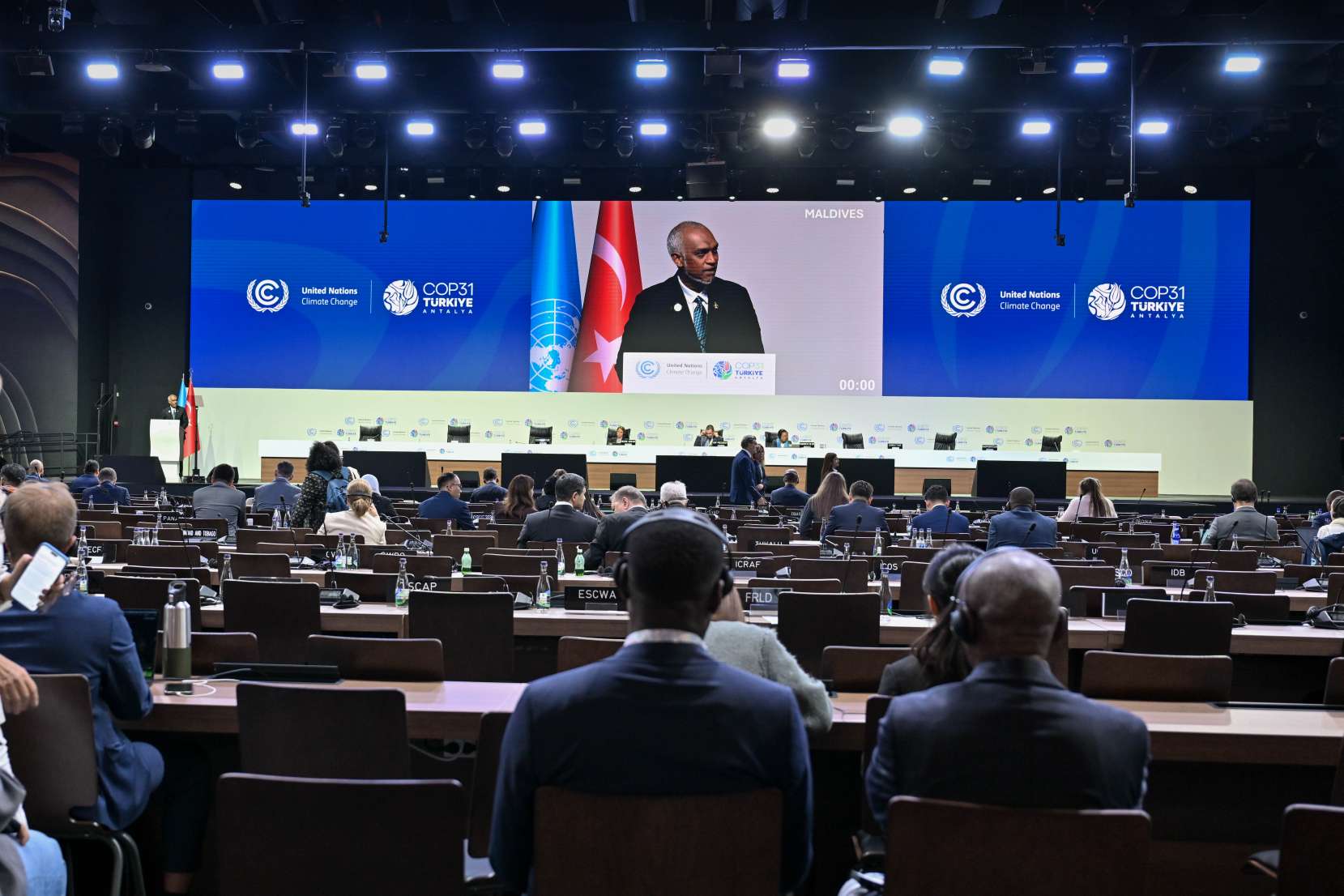
He called for the replenishment of the Green Climate Fund, adequate capitalisation of the Adaptation Fund and sufficient resources for the Loss and Damage Fund to support countries facing the consequences of climate change.
Calls for reform of global financial institutions
President Muizzu urged international financial institutions and credit rating agencies to reconsider how they assess climate-related investments, particularly in Small Island Developing States (SIDS).
He emphasised that investments in climate resilience should be recognised as essential contributions to long-term development and global stability rather than financial liabilities.
The President also called for reforms that acknowledge the unique economic and environmental vulnerabilities of island nations, ensuring fairer access to international financial assistance.
Maldives highlights progress in climate financing
Outlining the Maldives’ domestic efforts, President Muizzu highlighted initiatives to strengthen food, energy and water security through the strategic use of available national and international resources.
He also welcomed the recent accreditation of the Maldives’ first national direct access entity to the Green Climate Fund, describing it as a significant milestone in expanding the country’s access to international climate financing.
According to the President, the accreditation marks the first such achievement for an Asian Small Island Developing State and demonstrates the Maldives’ institutional capacity to manage and implement climate-funded projects.
Climate promises must translate into action
President Muizzu emphasised that meaningful climate progress requires more than international declarations, calling for adequate financing, technology transfer and sustained political commitment.
He advocated for a global financial and development system that enables Small Island Developing States to determine their own development priorities while building resilience against climate threats.
Concluding his address, the President called for justice, responsibility and decisive international action, urging COP31 to demonstrate that multilateral cooperation can deliver tangible results.
His remarks reinforced the Maldives’ longstanding position that countries most vulnerable to climate change must receive equitable financial support and greater influence in shaping global climate policies.