

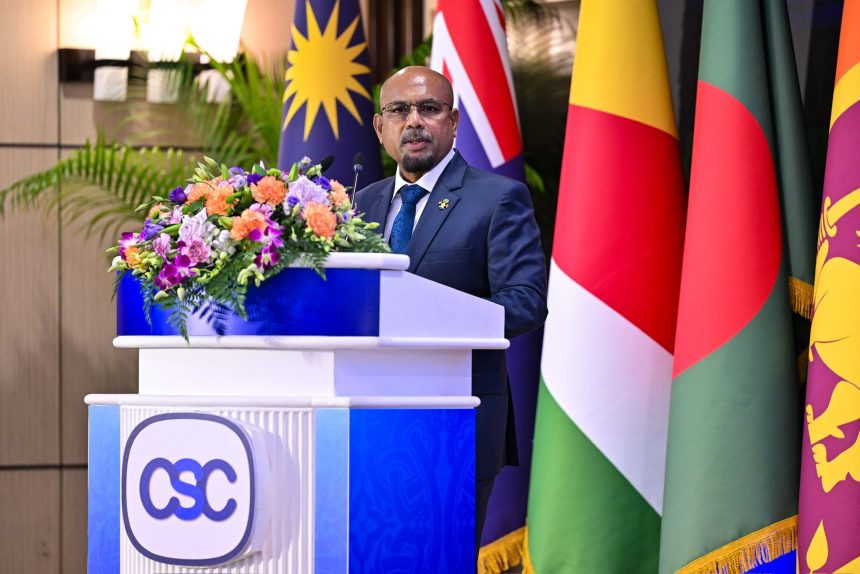
The 8th National Security Advisors Meeting of the Colombo Security Conclave (CSC) concluded today at Villa Nautica Paradise Island in the Maldives.
The meeting brought together National Security Advisors and senior security officials from member countries to discuss regional security priorities and strengthen cooperation against shared and emerging threats in the Indian Ocean region.
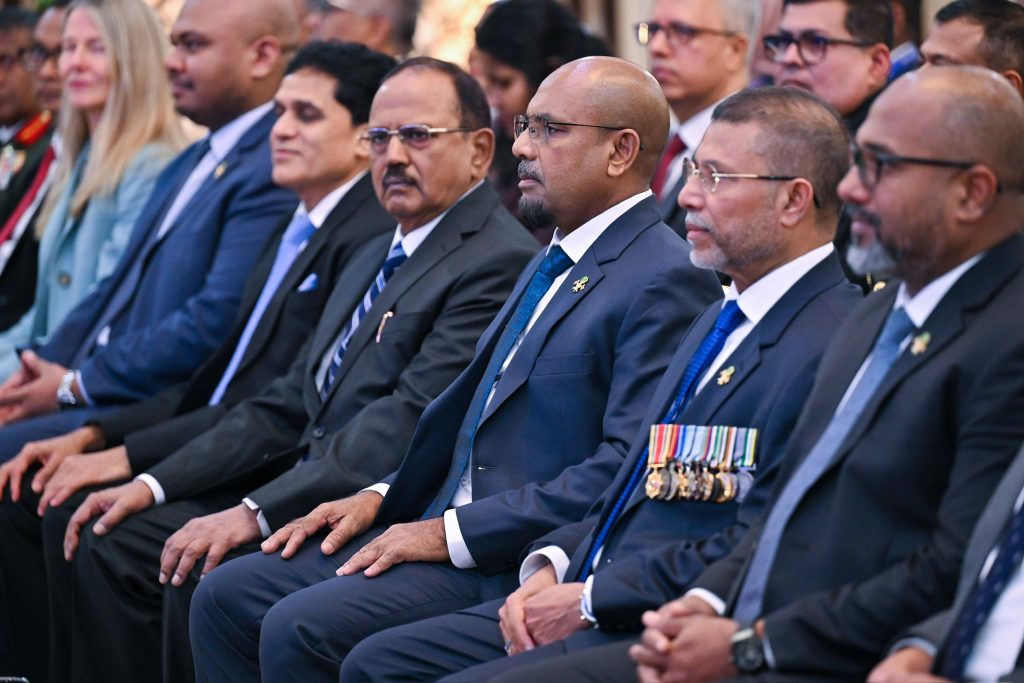
High-level delegations from the Maldives, India, Sri Lanka and Bangladesh attended, with Australia and Malaysia taking part as guest countries.

The Maldives hosted the meeting following a decision taken at the seventh meeting, held in India in 2025.
The Colombo Security Conclave is a regional security cooperation platform made up of India, the Maldives, Mauritius, Sri Lanka, Bangladesh and Seychelles.
Its work is built on five pillars: maritime safety and security; counterterrorism and radicalisation; combating trafficking and transnational organised crime; cybersecurity and the protection of critical infrastructure; and humanitarian assistance and disaster relief.
Minister of Defence and National Service Hassan Rasheed, the chief guest at the opening ceremony, delivered the keynote address, highlighting key challenges facing member nations, including illegal, unreported and unregulated fishing, terrorism, radicalisation and climate change.
The Maldivian delegation was led by National Security Advisor Ibrahim Latheef and included the chiefs of the country’s security sector.
Latheef described the Conclave as a valuable platform for strengthening the Maldives’ national security architecture, in line with the Maldives First Policy and the vision of President Dr Mohamed Muizzu.
He said the Conclave’s capacity-building and training programmes, carried out with the participation of the Maldives National Defence Force (MNDF), the Maldives Police Service and other security agencies, had made a tangible contribution to the country’s institutional capabilities and operational readiness.
He added that the five pillars provide a practical framework for closer coordination, information-sharing and institutional partnerships among neighbouring countries.
Such cooperation also enables direct communication between relevant agencies and timely, coordinated responses during emergencies, he said.
At the close of the meeting, member states, including the Maldives, issued a joint statement setting out the agreed minutes of the deliberations.
The meeting reaffirmed the importance of continued engagement in advancing the five pillars and strengthening collective efforts towards a peaceful, secure and resilient Indian Ocean region.