

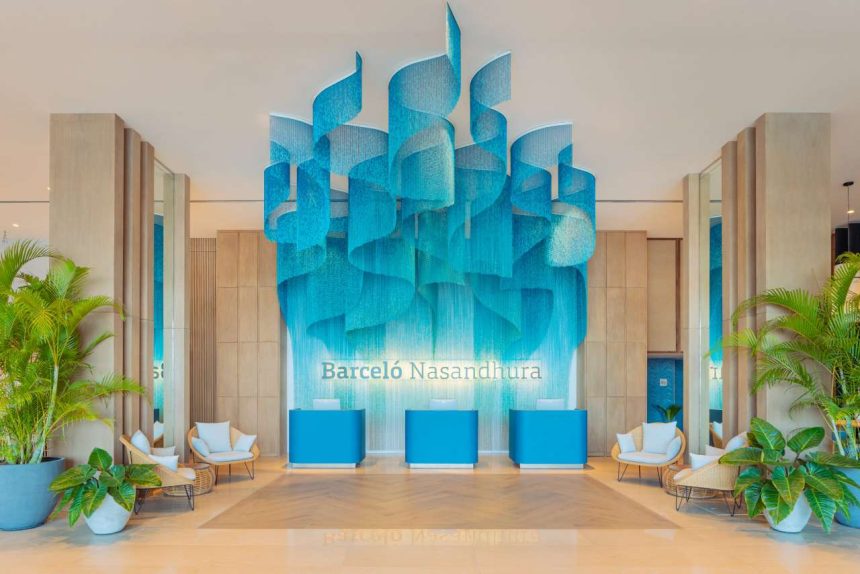
Several individuals who recently organized events at Barceló Nasandhura claim they were required to settle payments in United States dollars or in Maldivian Rufiyaa calculated using an unofficial exchange rate, prompting concerns about compliance with Maldives’ foreign currency regulations.
Multiple event organizers told this publication that they were informed payments had to be made either directly in USD or converted into MVR using a rate of approximately MVR 20 per dollar, a rate widely regarded as a black market exchange value.
According to these individuals, the payment condition was presented as a requirement to confirm and proceed with event bookings at the hotel. The claims were made by clients who recently hosted parties, corporate gatherings and private functions at the property.

“We were told payment must be made either in dollars or in rufiyaa calculated at their dollar rate,” one organizer said, adding that the arrangement was communicated during the event confirmation process.
The allegations have sparked questions because collecting payments in foreign currency for domestic transactions is illegal under Maldivian foreign currency laws unless specific authorization has been granted.
Foreign currency regulations and exchange oversight in the Maldives fall under the authority of the Maldives Monetary Authority. The regulatory framework requires businesses operating within the country to conduct local transactions primarily in Maldivian Rufiyaa (MVR) unless they are licensed or formally permitted to operate under foreign currency arrangements.
Financial experts note that demanding payments in USD or converting transactions using unofficial exchange rates could constitute a violation of the country’s currency regulations.
The issue could also attract scrutiny from the Maldives Inland Revenue Authority, which oversees revenue declarations and tax compliance for businesses operating in the Maldives, including hospitality and event services subject to Goods and Services Tax.
Barceló Nasandhura, a newly opened waterfront hotel in the capital operated under the international Barceló Hotel Group brand, has quickly positioned itself as a premium venue for conferences, weddings and private events in Malé.
However, the claims from event clients have now raised broader questions about regulatory oversight within the capital’s hospitality and events sector, particularly regarding payment practices and compliance with national financial laws.
As of now, neither the hotel management nor relevant authorities including the or the have publicly responded to the allegations.
The situation is likely to attract attention from regulators as discussions intensify over the enforcement of foreign currency rules and financial transparency in the Maldives’ rapidly growing hospitality industry.