

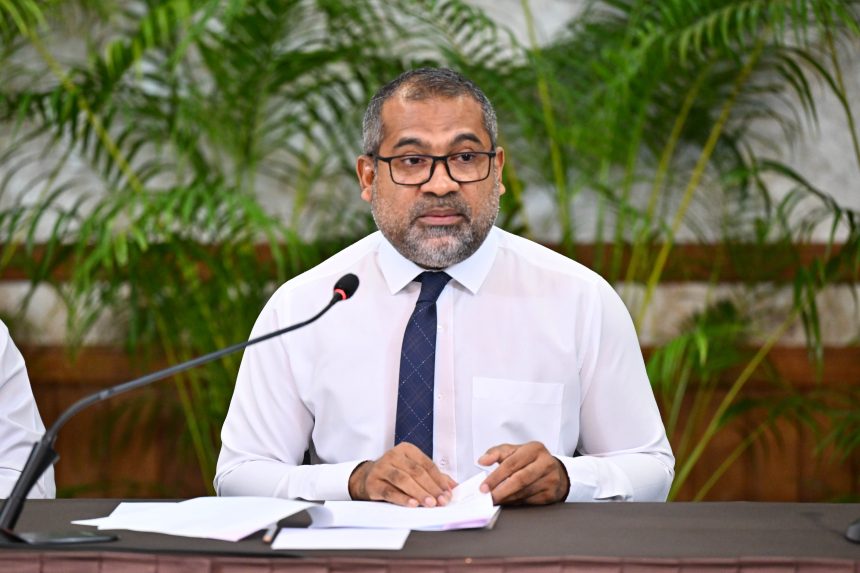
The Maldives government is exploring alternative fuel supply routes as tensions and conflict in the Middle East continue to disrupt regional trade and energy markets, according to Foreign Minister Abdulla Khaleel.
Speaking during a press conference held by a special ministerial committee established by President Mohamed Muizzu, Khaleel said authorities are taking proactive steps to safeguard the country’s energy and food security amid the evolving situation.
The committee was formed to assess and mitigate potential challenges that Maldivian citizens may face due to the escalating conflict and instability in the Middle East and Gulf regions.
Monitoring Economic and Security Risks
Minister Khaleel noted that the Maldives, as a small island nation that depends heavily on imports, is particularly vulnerable to disruptions in international supply chains.
He said the government is closely monitoring developments in the region, including escalating attacks and retaliatory actions, to evaluate their possible impact on the Maldivian economy and national security.
Officials are conducting ongoing research to determine the potential economic consequences of the conflict, while ensuring that the government can respond quickly if the situation worsens.
Diversifying Fuel and Food Supplies
Historically, the Maldives has sourced most of its fuel from Middle Eastern markets. However, the minister said current regional uncertainties have prompted the government to begin exploring alternative suppliers.
These include potential fuel sources from neighboring countries as well as other international markets, with the aim of reducing reliance on a limited number of suppliers.
Khaleel emphasized that this move is part of a broader strategy to diversify the country’s energy procurement channels and strengthen resilience against external shocks.
In addition to fuel supplies, authorities are also working to ensure that the Maldives maintains a stable flow of essential food items.
Rising Oil Prices and Storage Plans
The minister also warned that global oil prices have already increased significantly as a result of the ongoing tensions.
According to Khaleel, international fuel prices have risen by between 25 and 30 percent, creating additional pressure on energy markets worldwide.
He noted that any potential government intervention regarding domestic fuel prices would be carefully considered in light of these global market fluctuations.
At the same time, the government is working to expand national fuel storage capacity. With tourist arrivals increasing and the country’s working population growing, officials say larger reserves are necessary to guarantee energy and food security for the Maldives.
Authorities say these measures are intended to ensure that essential supplies remain stable, even if global market disruptions intensify in the coming months.