

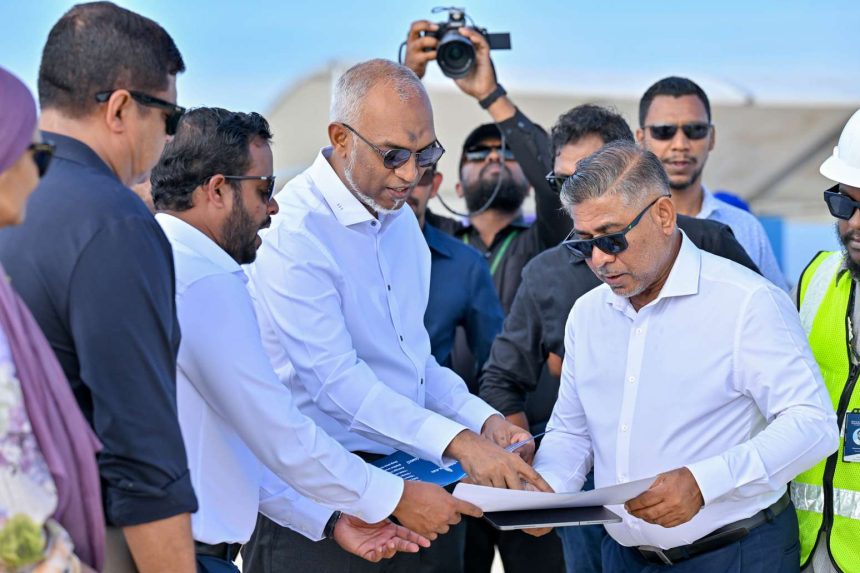
President Dr Mohamed Muizzu has inspected the progress of the Giraavaru Falhu land reclamation project, a central component of the government’s strategy to address the country’s housing shortage.
President Muizzu on Saturday visited the Giraavaru Falhu site in the Greater Malé Area to review ongoing land reclamation works aimed at easing housing constraints.
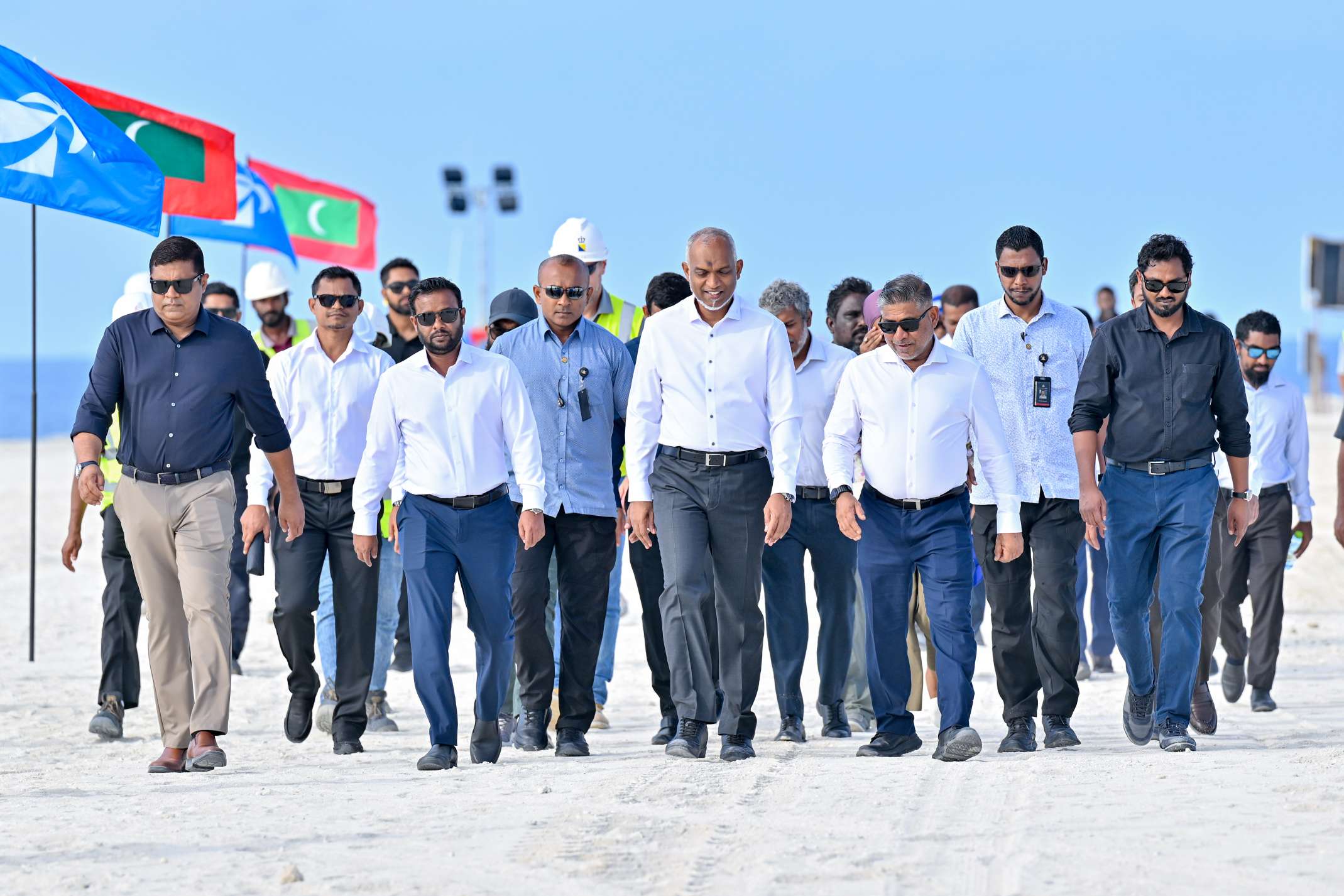

Upon arrival, the President was received by Minister of Construction, Housing and Infrastructure Dr Abdulla Muththalib, alongside Cabinet Ministers, Members of Parliament, and senior officials. Also present were the Managing Director and Chief Executive Officer of Maldives Airports Company Limited, Ibrahim Shareef Mohamed, and members of the company’s senior management.
During the visit, the President was briefed on the latest developments of the project before inspecting the reclamation works currently underway.
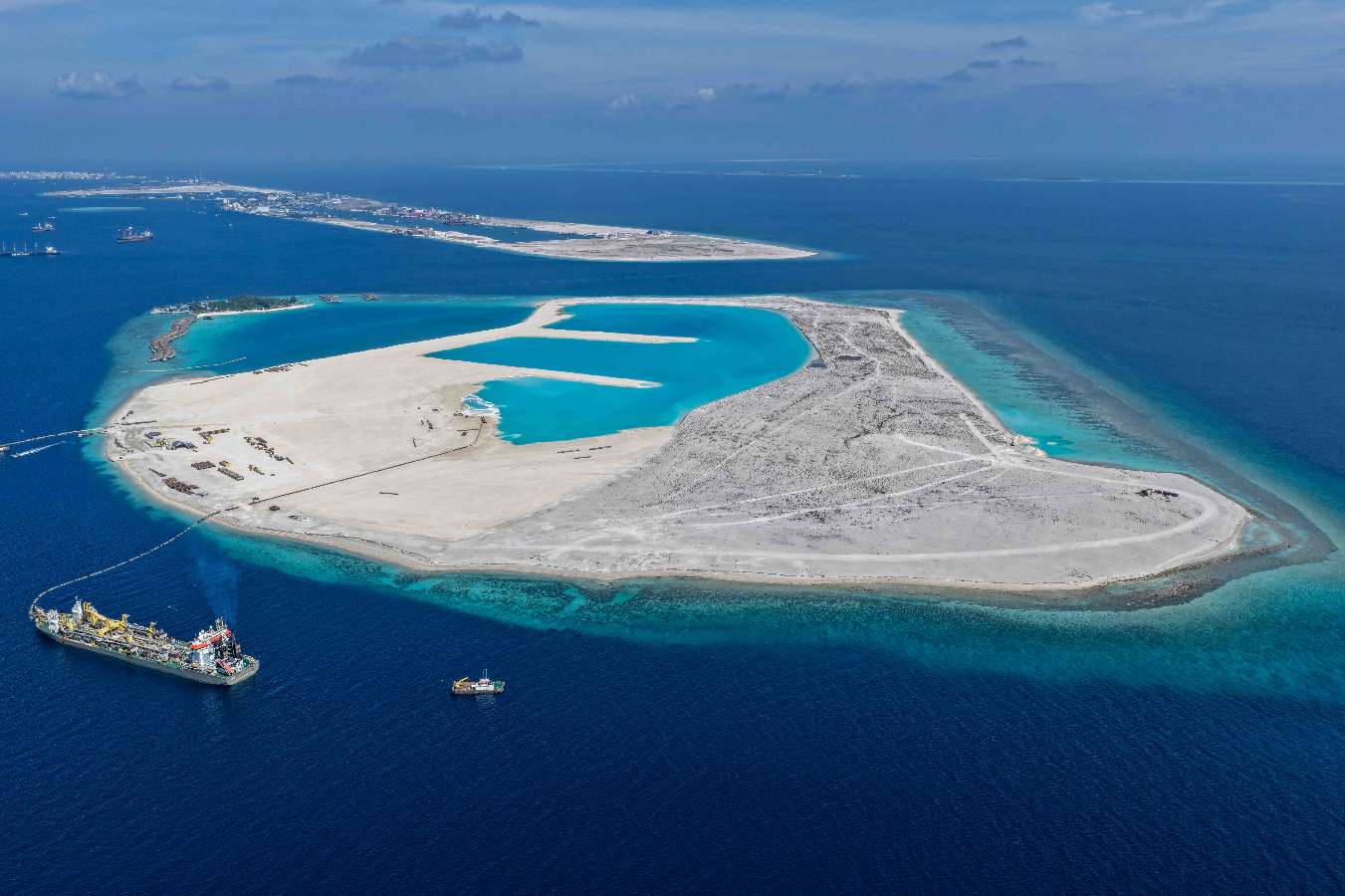
According to project updates, the second phase of reclamation, being carried out by MACL, targets a total of 97.15 hectares, with approximately 35 hectares already completed. The first phase, undertaken by , successfully reclaimed 70 hectares.
Combined, the two phases are expected to deliver 167.15 hectares of reclaimed land at Giraavaru Falhu. Of this, 105 hectares have been completed so far, marking significant progress in one of the administration’s flagship infrastructure initiatives.
The President has been actively sharing updates on the project through his official account on . In a post on 21 March, he stated that reclamation and land survey works are on track to be completed by the end of April, with the handover of land plots scheduled to begin in June.
Earlier updates highlighted the scale of operations, with reclamation works commencing on 30 January 2026. By mid-February, two dredgers, the Queen of the Netherlands and Oranje, were deployed simultaneously to accelerate progress. The vessels have respective capacities of 35,000 cubic metres and 22,000 cubic metres, significantly boosting reclamation efficiency.
The Giraavaru Falhu project forms a key pillar of the government’s broader housing agenda, aimed at expanding land availability in the Greater Malé region and enabling large-scale residential development to meet growing demand.