

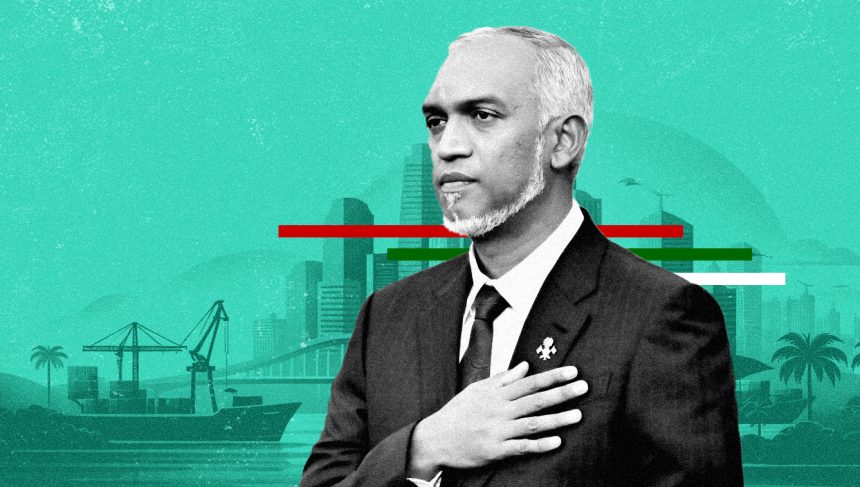
President Dr Mohamed Muizzu’s Presidential Address 2026 will be remembered as a defining moment in the country’s modern political history — not only for its substance, but for its symbolism.
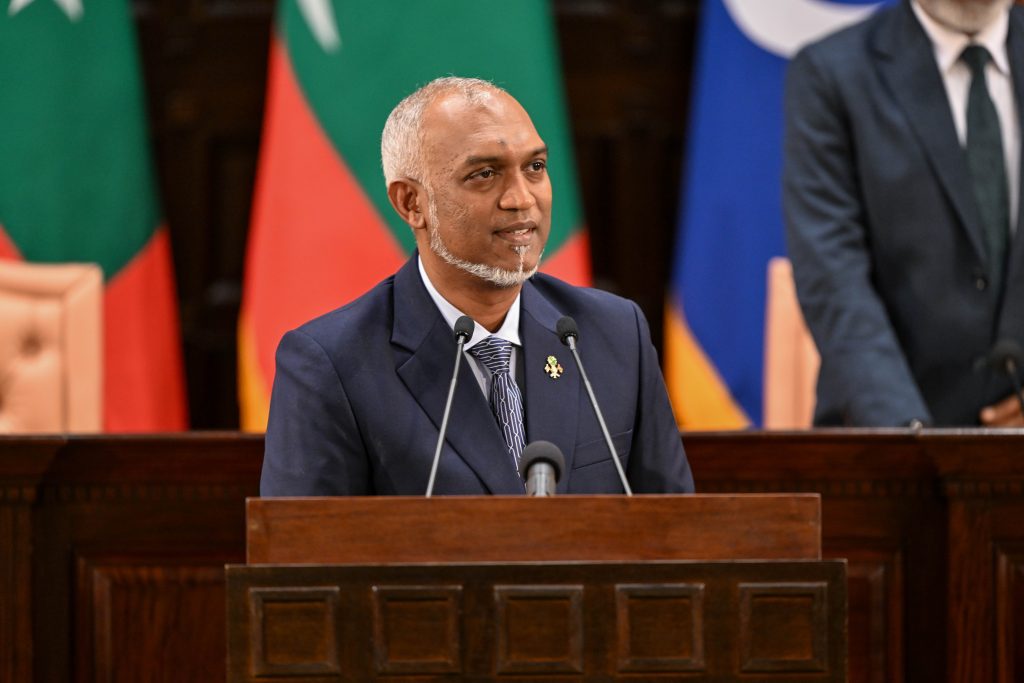
Delivered on Thursday at the opening of Parliament, the address became the longest Presidential Statement ever delivered in the 90-year history of the People’s Majlis. Despite repeated attempts by opposition members to disrupt proceedings, the President pressed on, addressing the nation in full and laying out a comprehensive account of achievements, challenges, and a forward-looking roadmap for what he described as a coming era of prosperity.
What unfolded was not merely a policy speech, but a detailed national briefing — one that covered governance, the economy, sovereignty, housing, tourism, security, and citizen empowerment with unusual depth and clarity.

A Government Framed by Transparency and Engagement
At the heart of the President’s address was a strong emphasis on open governance and direct communication with the public. President Muizzu announced that beginning March 2026, he will meet journalists every Monday from 10:00am to 11:00am, creating a structured, weekly platform for accountability and information sharing. In addition, one Cabinet minister will also meet the press weekly, with schedules to be announced by the President’s Office.
This move builds on a year in which the President and his Cabinet engaged the media 424 times, both locally and internationally. The administration also highlighted its handling of Right to Information (RTI) requests — responding to 93 percent of submissions received last year.
To further institutionalise public access, the President announced the creation of a 24/7 Citizens’ Complaints Bureau at the President’s Office. The Bureau will operate continuously, equipped with a digital, AI-assisted system to log, track, and follow up on complaints submitted via social media, letters, calls and other channels. A dedicated call centre will form part of the system, with the Bureau expected to be operational within five months.
Economic Stability and the Promise of Shared Prosperity
President Muizzu devoted significant attention to economic reform, noting that the Maldives has reached a record USD 1.13 billion in foreign exchange reserves, a milestone he described as a critical foundation for long-term stability.
He revealed that MVR 349 million has been disbursed to small and medium enterprises (SMEs) so far, reaffirming the administration’s focus on supporting local businesses. Additionally, the government paid MVR 6.3 billion last year to settle outstanding bills owed to businesses — easing liquidity pressures and restoring confidence in the private sector.
One of the most consequential announcements was the unveiling of a citizen-shareholder tourism model. Acknowledging that tourism — while vital to the economy — has not directly benefited ordinary Maldivians, the President stated that the nation’s natural beauty belongs to its people.
To correct this imbalance, the government plans to develop at least 10 resorts through a state-owned enterprise over the next three years, with a significant share of profits deposited directly into the bank accounts of every Maldivian citizen in foreign currency. Under this model, every citizen will be an equal shareholder in the resorts.
“This,” the President said, “is the most just way to ensure that Maldivians benefit directly from the tourism industry.”
Housing Declared the Government’s Top Priority
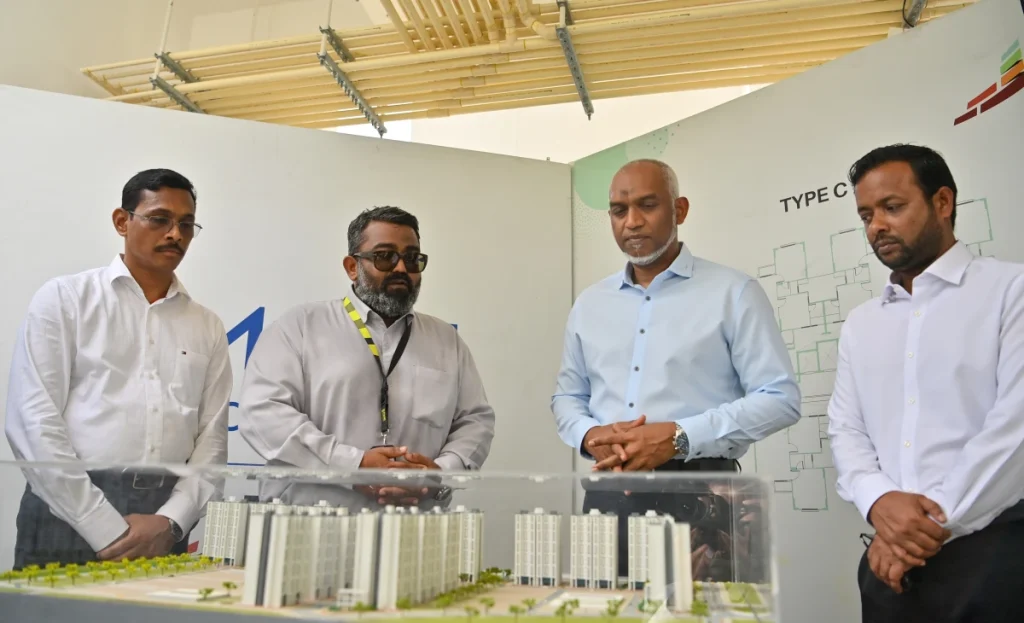
Housing emerged as the central social issue of the address. President Muizzu stated unequivocally that social stability and national wellbeing cannot be achieved without a permanent solution to the housing crisis.
He announced that the government will soon open applications for a new housing programme, including a separate category allowing families to apply for land even if a spouse already owns housing — a significant policy shift aimed at addressing gaps in previous schemes.
Large-scale reclamation and development projects were highlighted as ongoing, with Hulhumalé Phase III nearing completion and land allocation processes advancing in Rasmalé, Gulhifalhu and Giraavarufalhu.
Infrastructure Transformation: From Ports to IT Hubs
Among the major infrastructure announcements was confirmation that the Malé Commercial Port will be relocated to Thilafushi on 11 November 2027, marking the end of a 40-year chapter. The relocation is expected to reduce cargo clearance times from seven days to under 48 hours, lower costs, and ease congestion in Malé’s busiest commercial zones.
Equally transformative is the decision to designate Addu City as the Maldives’ first IT hub, granting three years of rent and tax exemptions to SMEs starting January 2027. The President invited investors and entrepreneurs to seize the opportunity, describing the initiative as a pathway to job creation, innovation and economic diversification in the south.
Sovereignty, the Sea, and a Firm Foreign Policy Stance
The President addressed issues of sovereignty with notable candour, revisiting the loss of maritime territory linked to decisions taken under the previous administration. He stated firmly that he does not believe the Maldives has lost any part of its sea area and announced that action would be taken against those whose negligence led to the situation.
He also revealed that the Maldives has formally objected — in writing — to the decision to grant ownership of the Chagos Archipelago to Mauritius. Objections were submitted on 8 November 2024 and 18 January 2026, and the matter was discussed directly with UK Deputy Prime Minister David Lammy in an online call on 15 December 2025.
“I believe that not a grain of sand from our land should be lost,” the President said, underscoring a renewed, assertive foreign policy posture.
Looking Ahead: Two Years Framed as an Era of Opportunity
President Muizzu described the coming two years as a period that will define the country’s future — one shaped by economic resilience, citizen-centred governance, national sovereignty and inclusive development.
With expanded media engagement, landmark tourism reforms, housing prioritised as a social imperative, and mega-projects reshaping the nation’s infrastructure, the Presidential Address 2026 signals a government intent on moving decisively from recovery to prosperity.
As the President concluded, the message was clear: the foundations are being laid not just for growth, but for a Maldives where development is felt by every citizen — economically, socially, and nationally.