

The Maldives has reached a turning point in its aviation and tourism journey. With record-breaking arrivals, expanding infrastructure, and shifting global aviation dynamics, the country now faces a strategic choice, continue relying on a single gateway, or unlock the full potential of its regional airports.
A bold and commercially viable solution is emerging: handing over operational access of Hanimaadhoo International Airport and Gan International Airport to leading Middle Eastern carriers to run dedicated international services.
This is not just an aviation proposal. It is a national growth strategy.

Infrastructure Is Ready, Utilisation Is Not
The Maldives has already made significant investments.
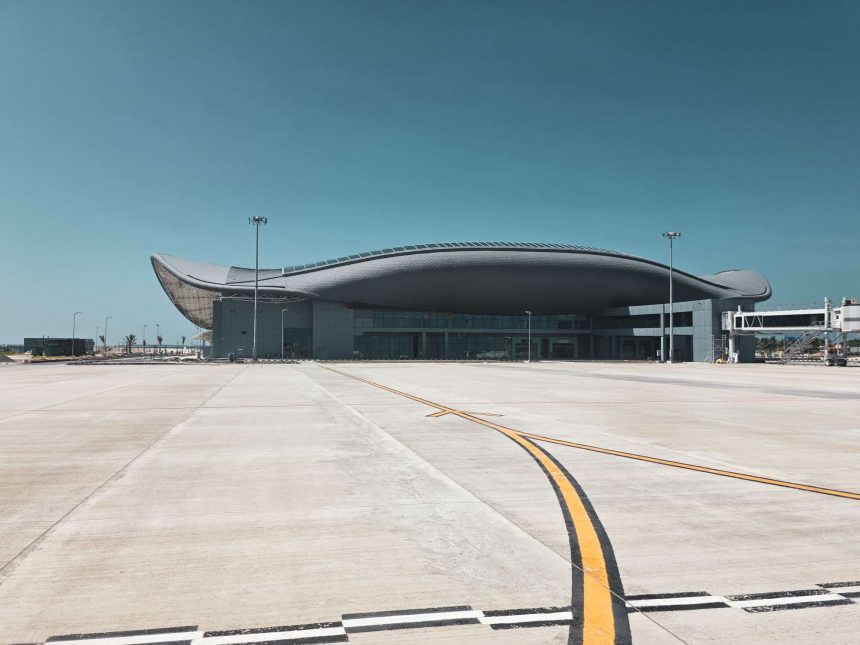
Hanimaadhoo International Airport, recently upgraded and officially opened, now offers:
- A 2,465-metre runway suitable for Airbus A320 and Boeing 737 aircraft
- Passenger handling capacity of over 1 million annually
- Modern terminal, cargo facilities, and full international capability
- Investment exceeding USD 130 million
In the south, Gan International Airport brings even greater operational strength:
- A 3,400-metre runway capable of handling wide-body aircraft
- Existing infrastructure for long-haul international operations
- Strategic location in Addu City, one of the Maldives’ key regional hubs
Despite these capabilities, both airports remain underutilized in terms of global connectivity.
A Proven Partner: Middle East Airlines
Airlines from the Gulf region already dominate Maldives connectivity through Velana International Airport. Through hubs in Dubai, Doha, and Abu Dhabi, they connect the Maldives to more than 150 global destinations and consistently deliver high-value travelers.
These carriers bring:
- Strong global networks and year-round demand
- High passenger load factors and premium segments
- Operational efficiency and experience in leisure destinations
Handing operational access of Hanimaadhoo and Gan to these airlines allows the Maldives to scale quickly using partners that have already proven their success in the market.
A Strategic Advantage in a Changing Region
The timing of this move is critical.
Ongoing tensions in parts of the Middle East have led to:
- Reduced operations at certain transit hubs
- Airspace uncertainties and operational disruptions
- Increased pressure on airlines to diversify routes
In contrast, the Maldives offers:
- A safe, politically stable environment
- No conflict-related aviation risks
- Reliable, uninterrupted airport operations
This positions the Maldives as an attractive, stable expansion point for Middle Eastern carriers seeking to optimize and diversify their networks.
A Three-Gateway Maldives
For decades, the Maldives has operated on a single-gateway model centered on Velana International Airport, which now can handle over 7 million passengers annually.
With tourist arrivals exceeding 2 million per year and rising, this model is reaching its limits.
By enabling Middle Eastern carriers to operate directly from Hanimaadhoo and Gan, the Maldives can transition into a three-gateway system:
- Velana as the central hub
- Hanimaadhoo as the northern gateway
- Gan as the southern gateway
This shift would immediately expand national capacity without overloading existing infrastructure.
Unlocking New Tourism Regions
Direct international operations from Hanimaadhoo and Gan would fundamentally reshape tourism in the Maldives.
It would:
- Open northern and southern atolls to direct global access
- Reduce dependence on domestic transfers, which can account for up to 30 percent of travel costs
- Encourage resort and guesthouse development in new regions
- Increase visitor spending and length of stay
The result is a more diversified, resilient tourism economy.
Economic Impact at Scale
Handing over operational access to major carriers is not just about flights. It is about economic activation.
Even limited operations, such as 3 to 5 weekly international flights per airport, could:
- Generate millions in aviation-related revenue annually
- Create hundreds of direct jobs and thousands of indirect employment opportunities
- Drive investment in infrastructure, hospitality, and local businesses
- Strengthen regional economies in both the north and south
This is growth that extends beyond Malé and into communities across the country.
A Commercially Practical Model
Partnering with Middle Eastern carriers to operate from Hanimaadhoo and Gan offers a practical, low-risk pathway:
- Airlines bring passengers, marketing power, and global connectivity
- The Maldives provides infrastructure and destination strength
- Shared incentives can ensure route sustainability
This model allows rapid scaling without requiring the Maldives to build demand from scratch.
The Opportunity Ahead
Global aviation is evolving, and airlines are actively seeking stable, high-demand destinations to expand their networks.
The Maldives already has:
- Proven global demand
- Newly developed airport infrastructure
- Strong airline partnerships
What remains is to connect these elements into a unified strategy.
Conclusion
Handing operational access of Hanimaadhoo International Airport and Gan International Airport to Middle Eastern carriers represents a bold but logical step forward.
It transforms underutilized infrastructure into active economic engines, opens new regions of the country to global tourism, and positions the Maldives as a more dynamic player in international aviation.
The Maldives has already invested in its future.
Now is the time to activate it, decisively and strategically.