

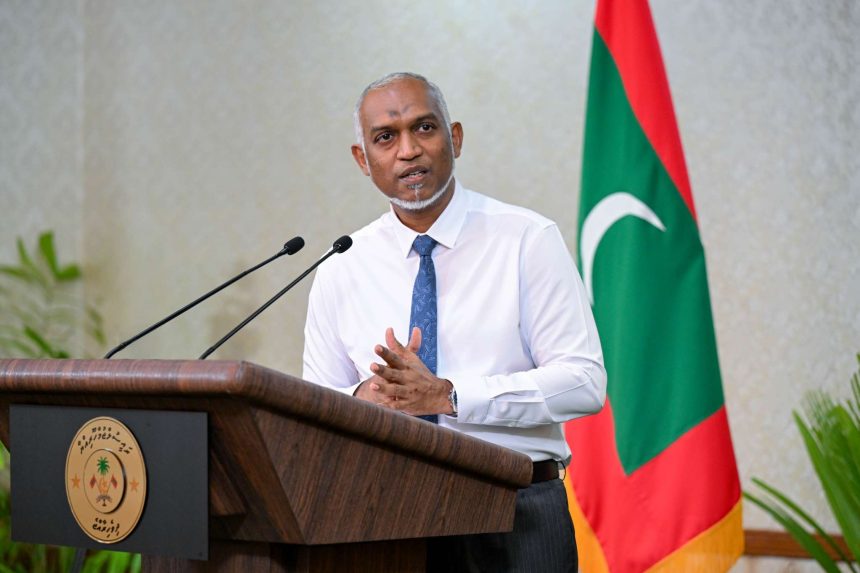
President Dr Mohamed Muizzu announced today that he is in active discussions with Arab leaders to convey the Maldives’ unwavering solidarity as hostilities intensify across the Middle East.
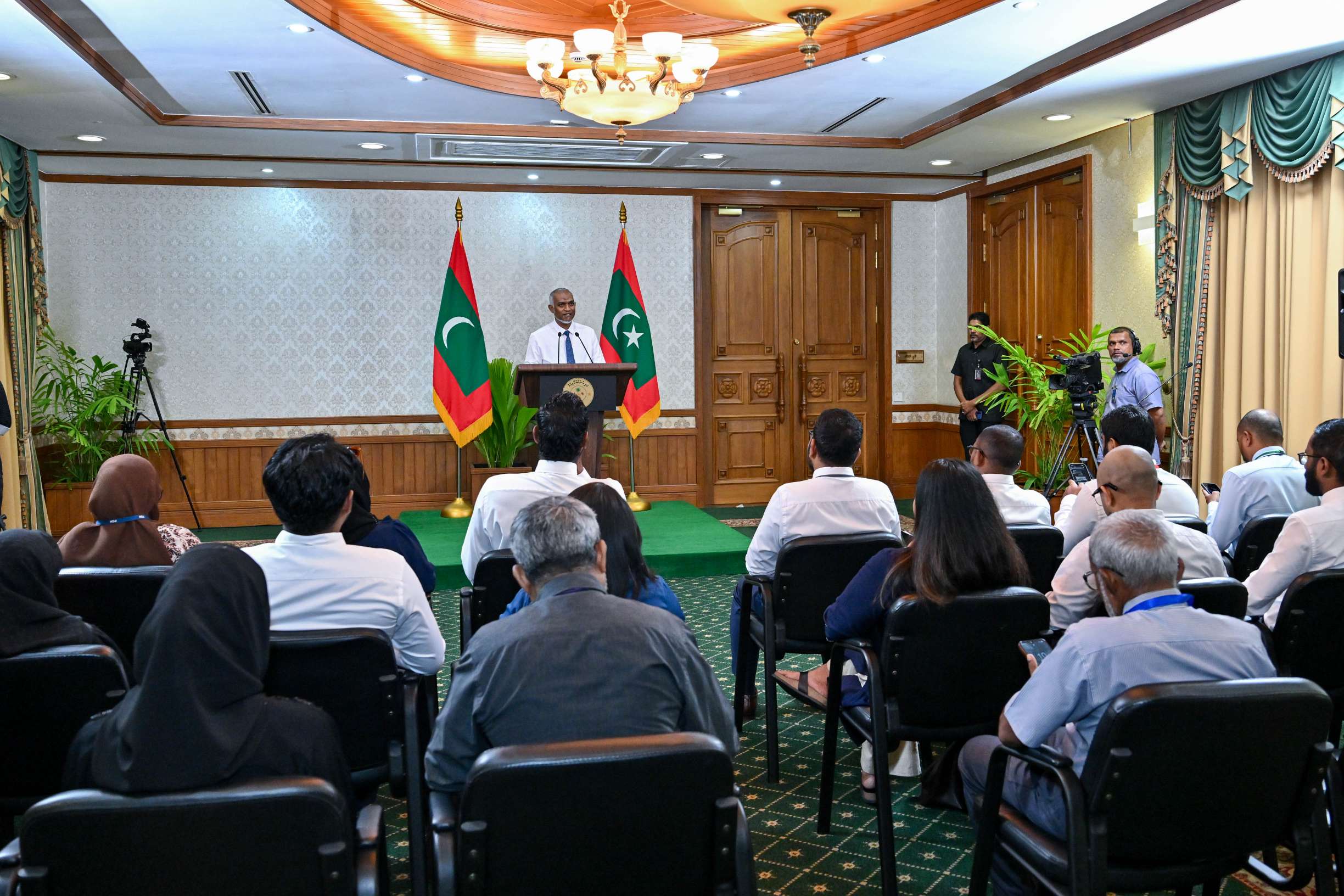
Speaking at the weekly “Hafthaa Press” conference this morning, which officially commenced from today onwards, the President said he has been directly reaching out to leaders of Arab and Islamic nations to express support on behalf of the Maldivian people amid mounting casualties and destruction.

He confirmed that he held talks last night with the President of the United Arab Emirates and has scheduled phone calls today with the leadership of Saudi Arabia, Bahrain, Oman and Qatar.
“I have conveyed that the Maldivian people stand in solidarity with them regarding the casualties and damages resulting from the ongoing attacks,” President Muizzu stated.
The diplomatic outreach comes as tensions surge following intensive strikes by the United States and Israel against Iran. In response, Iran has launched large scale missile and drone attacks targeting United States military installations in neighboring Arab countries.
Authorities in the UAE reported that more than 130 missiles and over 200 drones were launched by Iran yesterday alone, causing varying degrees of damage to several hotels in Dubai and affecting operations at the international airport. Qatar has reported that it has been targeted by 65 missiles and 12 drones thus far.
Following the attacks, the UAE, Bahrain, Saudi Arabia, Qatar and Oman closed substantial portions of their airspace, triggering widespread aviation disruptions and heightened security measures.
Meanwhile, reports indicate that the death toll in Iran from United States strikes has exceeded 200. It is further claimed that Iran’s Supreme Leader, Ali Khamenei, along with 48 senior officials, is among those reported deceased, though independent confirmation remains limited as the situation rapidly evolves.
With the Maldives maintaining deep economic and diplomatic ties with the Gulf region, President Muizzu’s swift engagement underscores Male’s strategic interest in regional stability as the crisis carries significant geopolitical and economic implications.