

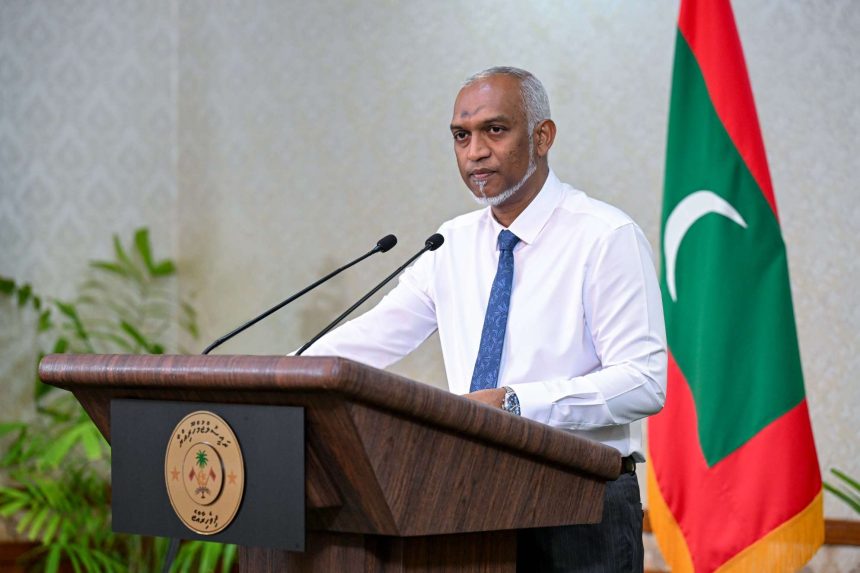
President Dr Mohamed Muizzu has sharply criticized Mauritius’ decision to sever diplomatic ties with the Maldives, describing the move as illogical and politically immature while reaffirming Male’s firm stance on the Chagos Archipelago.
Speaking during a press briefing, President Muizzu said the unilateral decision by Mauritius does not alter what he described as the “underlying reality” surrounding the disputed territory. He stressed that diplomatic disengagement cannot redefine sovereign entitlement.
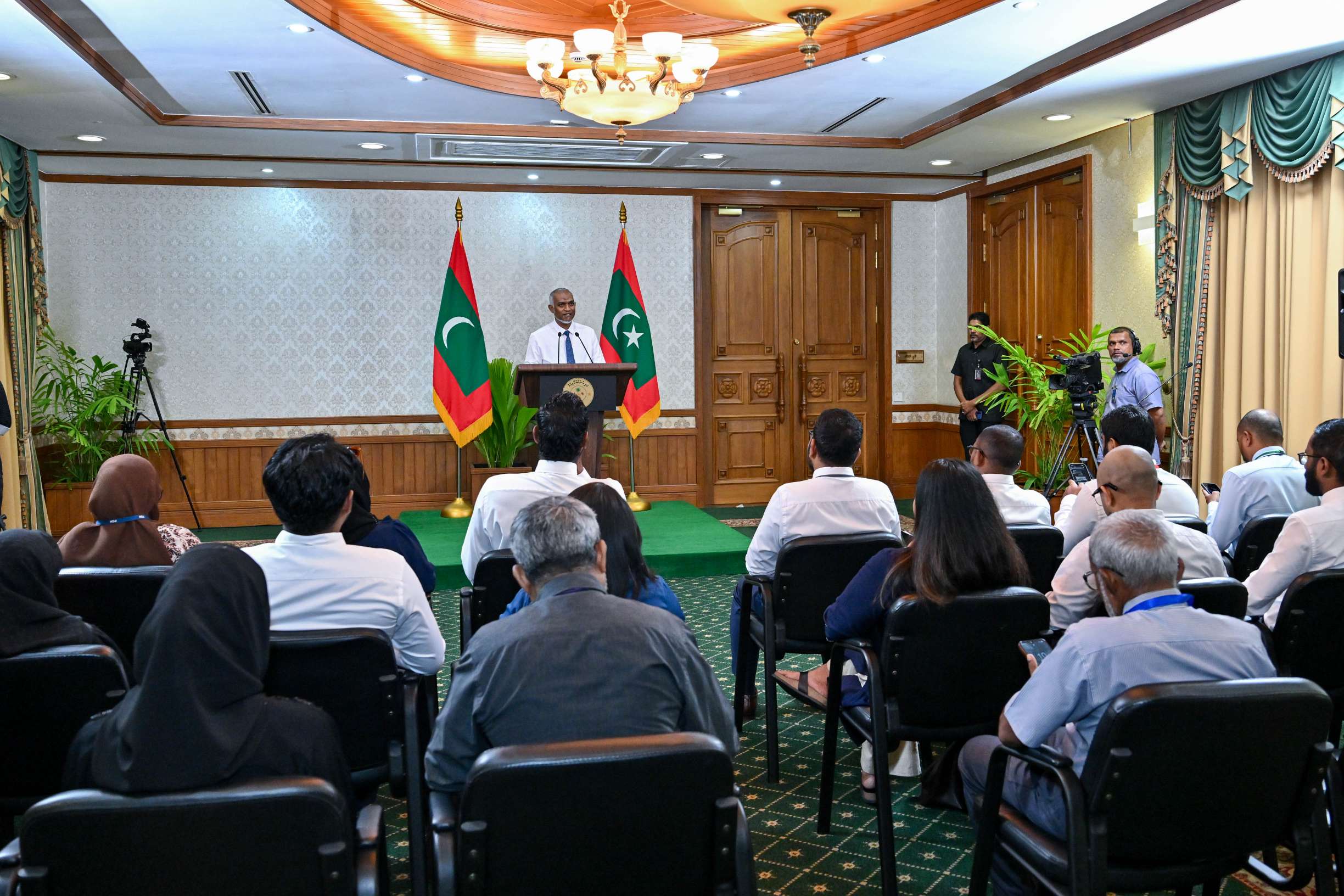

“Regarding the decision made by Mauritius, the severance of diplomatic ties with the Maldives is an illogical, immature and naive move. This decision does not change the underlying reality of the situation,” President Muizzu stated.
He asserted that if the Chagos Archipelago is to be handed over to any country, it must be returned to what he called its rightful owner, the Maldives. The President maintained that cutting diplomatic relations does not strengthen Mauritius’ claim.
“Even if diplomatic relations are severed, Mauritius cannot claim rights to a territory they are not entitled to. If the Chagos Archipelago is to be handed over to any nation, it must be returned to its rightful owner, the Maldives. This fundamental fact remains unchanged,” he said.
The President further criticized the move as a unilateral action taken without prior consultation, calling it naive and inconsistent with diplomatic norms. He emphasized that the Maldives’ position remains unchanged and will continue to be guided by the government’s “Maldives First Policy.”
The dispute over the Chagos Archipelago has long carried geopolitical significance in the Indian Ocean, drawing international attention due to competing claims and strategic interests. Mauritius has historically asserted sovereignty over the islands, while the Maldives has increasingly voiced its own position regarding historical and regional considerations.
President Muizzu’s remarks signal that Male intends to pursue its claim through diplomatic and policy channels despite the breakdown in bilateral ties, reinforcing a foreign policy approach centered on national interest and sovereignty.