

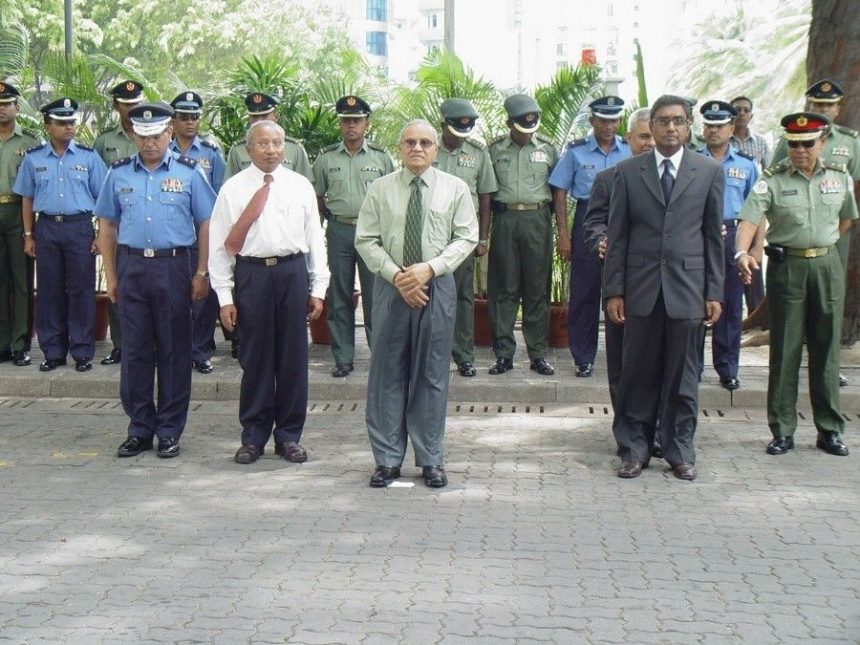
The Maldives Police Service is marking 22 years since becoming a separate civilian institution, commemorating more than two decades of transformation that has seen policing expand from a limited presence in the capital to services reaching every inhabited island in the country.
September 1 marks Police Service Day and the anniversary of the formal separation of the police from the country’s military establishment in 2004.
While the Maldives Police Service in its present form is 22 years old, the history of formal policing in the country stretches back more than nine decades.

Policing dates back to 1933
Formal policing in the Maldives began on March 29, 1933, when Sultan Mohamed Shamsuddeen III ratified the country’s first Police Act.
The original force consisted of 120 personnel.
That arrangement was short-lived as a standalone structure. From August 15, 1933, policing and military responsibilities were brought together, beginning a period in which the two functions operated under the same institutional structure for generations.
As the Maldives developed, however, the distinction between national defence and civilian law enforcement became increasingly important.
Former President Maumoon Abdul Gayoom subsequently announced in his 2004 Presidential Address to the People’s Majlis that the police would be separated and established as an independent civilian institution.
The change was based on the principle that national defence and civilian policing serve fundamentally different purposes, with a dedicated police organisation required to focus on public safety, law enforcement and community security.
Six months to build a separate police institution
Transforming the police into an independent organisation required considerably more than separating personnel from the security forces.
Authorities were given approximately six months to prepare the new institution, including its organisational structure, training framework, identity and operational philosophy.
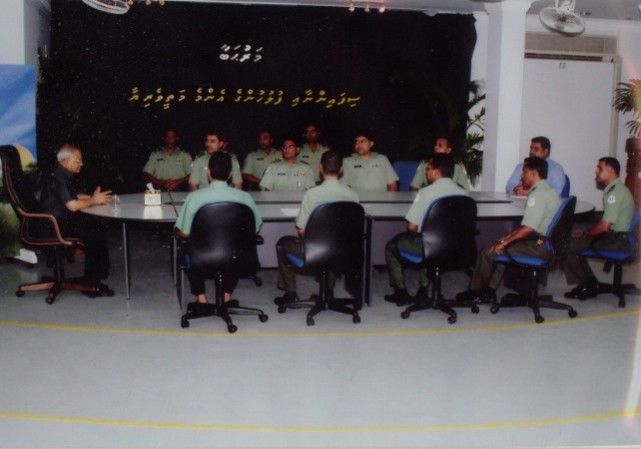
Then-Commissioner of Police Adam Zahir established a special Change Management Committee, chaired by Ibrahim Latheef, to oversee the transition.
The committee began its work at the Shaheed Hussain Adam Building on March 8, 2004.
With only months available before the planned separation, members of the committee reportedly worked an average of 17 hours a day during the transition period.
Expertise was also sought outside the police. Guidance was obtained from a change management specialist at the National University of Singapore, while consultations were conducted with Maldivian historians, legal professionals, religious scholars, literary figures and designers.
One of the issues identified during the process was the limited availability of specialised police training despite formal policing having existed in the Maldives for more than 70 years.
Developing domestic training facilities capable of providing officers with both basic and specialised policing skills consequently became one of the priorities of the new organisation.
Maldives Police Service established on September 1, 2004
Following months of preparations, the police officially became a separate civilian institution on September 1, 2004.
Previously operating within the National Security Service under the Ministry of Defence, the newly separated organisation was named the Maldives Police Service and became a uniformed civilian body under the Ministry of Home Affairs.
The transition was accompanied by a new institutional identity.
A separate police flag was raised at Police Headquarters, while officers began wearing a newly designed uniform distinct from that of the military.
The uniform development process was carried out under the guidance of the Commissioner of Police, with Ibrahim Latheef and Ahmed Shiyam leading the design work.
New vehicles and police branding also became visible to the public.
But the separation was intended to represent more than a change in uniforms and appearance. It marked a shift towards a civilian policing model centred on serving communities rather than operating through a military-oriented structure.
Moving policing closer to communities
Community policing subsequently became an important part of the institution’s development.
The approach drew on the principle that effective policing depends on cooperation between law enforcement and the communities they serve, reflected in the longstanding policing philosophy that “the public are the police, and the police are the public.”
Neighbourhood policing and community-based crime prevention initiatives were introduced as part of efforts to strengthen that relationship.
Expanding the geographical reach of police services became another major priority.
For much of the institution’s earlier history, policing was heavily concentrated in Malé. Until 1992, formal police services were largely restricted to the capital.
Even when the police became a separate institution in 2004, there were only five police stations across the atolls.
Over the following two decades, that footprint expanded substantially.
By the end of 2025, police services had been extended to every inhabited island in the Maldives, representing one of the most significant changes to policing since the institution’s separation.
For a country whose communities are scattered across hundreds of islands, establishing a nationwide police presence has been particularly important in reducing disparities in access to law enforcement services between Malé and the atolls.
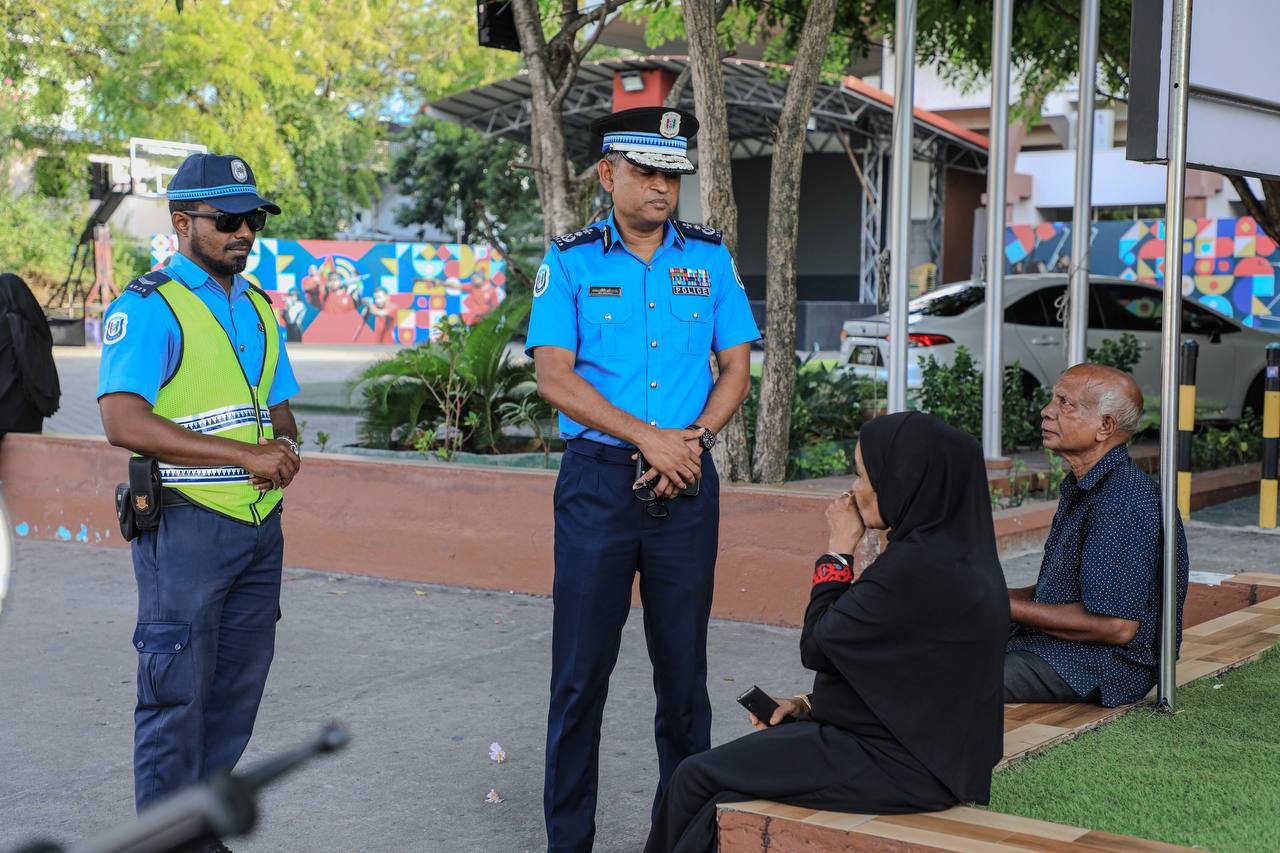
Remembering officers who served and sacrificed
As the Police Service marks its anniversary, the occasion also recognises generations of officers who contributed to the institution’s development.
Police officers routinely work in circumstances involving personal risk, emergencies, crime and other situations where public safety is threatened.
The institution’s history also includes officers who lost their lives in the course of their duties.
Their service forms part of the legacy being remembered on Police Service Day, alongside retired personnel and those who spent extended periods away from their families while serving communities throughout the country.
22 years of change
The Maldives Police Service that enters its 23rd year as a civilian institution is considerably different from the organisation established in 2004.
Its workforce has expanded, specialist capabilities have been developed, training has evolved and police operations now extend throughout the archipelago.
The institution has also operated through a period of significant political and constitutional change in the Maldives, including the country’s transition to a multiparty democratic system and the introduction of the 2008 Constitution.
Those changes have placed greater emphasis on accountability, professional standards, individual rights and the relationship between law enforcement institutions and the public.
The Police Service has set an ambition of becoming one of the most trusted and professional police organisations in South Asia.
Achieving that objective, however, will depend on more than expanding stations, personnel or technology.
Public confidence ultimately rests on whether laws are enforced fairly, people are treated equally and communities believe they can trust the officers tasked with protecting them.
From a force of just 120 personnel in 1933, to the establishment of an independent civilian police service in 2004 and nationwide coverage by 2025, policing in the Maldives has undergone a profound transformation.
As the Maldives Police Service marks 22 years as a separate institution on September 1, 2026, its next phase will be shaped by the same fundamental challenge at the heart of civilian policing: remaining professional, accountable and close to the communities it serves.