

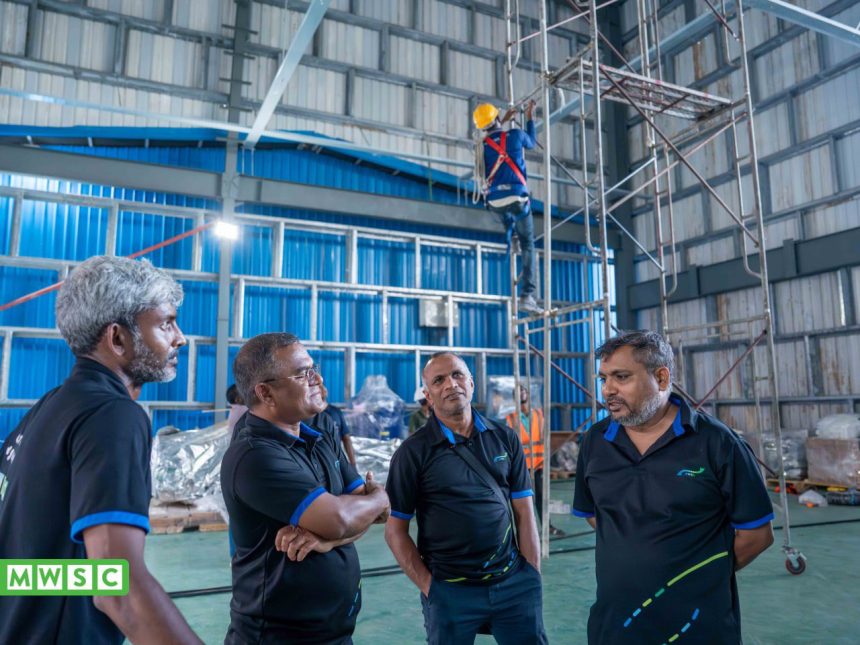
A 5,000-tonne water production system currently under construction in Hulhumalé is scheduled to be completed next month, according to the Male’ Water and Sewerage Company (MWSC).
MWSC Managing Director Abdul Matheen Mohamed said the project forms part of broader efforts to strengthen water security and ensure uninterrupted supply to residents of Malé and Hulhumalé, where demand continues to rise.
Construction of a 10,000-tonne-per-day water production facility in Hulhumalé began in August last year, with the project being implemented in phases. One water production unit with a capacity of 5,000 tonnes was completed and brought online last year, while the second unit of the same capacity is expected to be operational next month.

Speaking on a programme aired by state broadcaster PSM News, Matheen said safeguarding water availability remains the company’s top priority. He noted that expanding both production and storage capacity is essential to maintaining reliable services in the densely populated capital region.
MWSC said the expanded reverse osmosis (RO) facilities are aimed at enhancing the resilience of water services in Malé and Hulhumalé, ensuring a stable, sustainable supply of clean drinking water alongside safe sewerage services.
To support the increased production capacity, the company installed a 10,000-tonne water storage tank in Hulhumalé last year, the largest such tank ever installed in the Maldives. This has raised the city’s total water storage capacity to 22,600 tonnes.
Further expansion is planned, with MWSC preparing to install two additional storage tanks with a combined capacity of 13,000 tonnes later this month. The company has also been strengthening water infrastructure across the Greater Malé area, including the installation of additional water plants and storage facilities.
In June last year, MWSC commissioned an RO plant capable of producing 1,000 tonnes of water per day, adding another layer of capacity to the city’s water network.
Officials say the ongoing upgrades are critical to meeting future demand and ensuring long-term water security for residents of the capital region.