

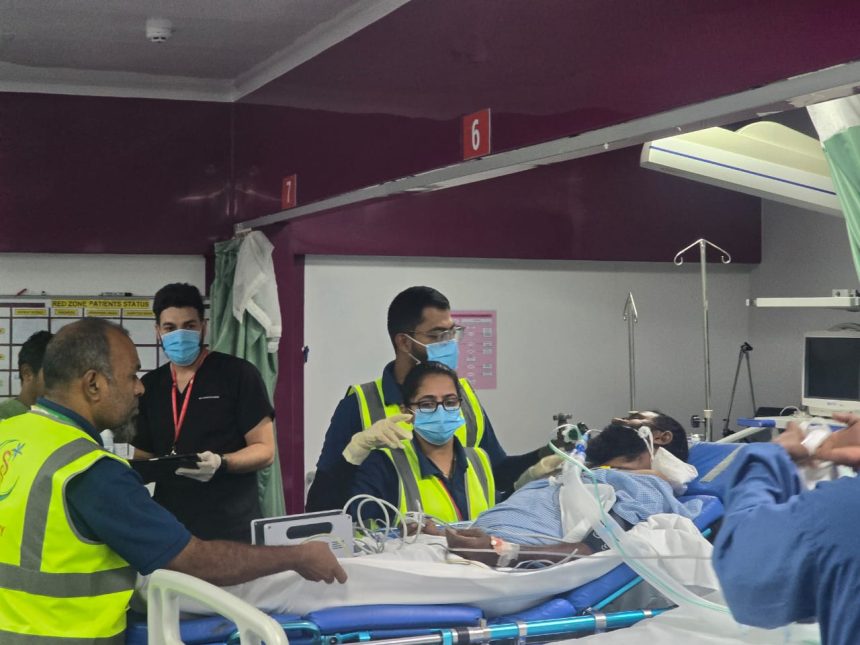
The Waste Management Corporation Limited (WAMCO) has announced a positive update on the condition of its employee who was hospitalised after a workplace accident at the GDh. Dhiyadhoo site earlier this month, reaffirming the company’s commitment to employee welfare and institutional accountability.
According to WAMCO, the employee’s condition has stabilised following intensive treatment. Hospital authorities have confirmed that the worker has been removed from ventilator support and is expected to be transferred to a general ward for observation once a bed becomes available.
The corporation stated that it has taken comprehensive measures to ensure the employee receives uninterrupted medical care. An experienced WAMCO staff member has been assigned to monitor the patient daily from 09:00 to 00:00, while the company is fully covering all medical and living expenses for the employee’s family, who have been brought to Malé to remain close during treatment.

WAMCO further confirmed that it is responding to all requests made by the family and has put in place arrangements to source any required medications that are not available locally. The company emphasised that this process is being managed on a daily basis to ensure there are no delays or complications in treatment.
In a further assurance, WAMCO said it would continue to support the employee even after discharge from hospital. Should the employee or their family opt for overseas follow up treatment, the corporation has pledged to provide the necessary assistance.
The incident occurred on 12 December 2025 while the employee was attempting to refuel a generator by transferring diesel from a jerry can using a pipe. Diesel entered the worker’s body during the process after air was blown through the pipe by mouth, leading to the medical emergency.
WAMCO confirmed that an internal investigation has been launched into the circumstances surrounding the incident. The corporation stated that lessons learned from the inquiry will be used to strengthen safety protocols and prevent similar accidents in the future, underscoring its responsibility to safeguard frontline workers operating in high risk environments.