

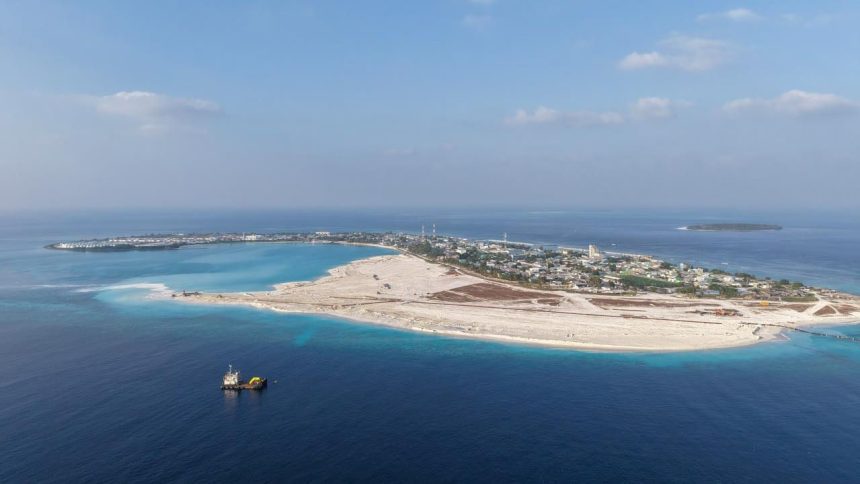
Land reclamation works in HA. Dhidhoo are progressing at an accelerated pace, with 21 hectares reclaimed since the start of operations earlier this month, according to Maldives Airports Company Limited (MACL). The reclaimed area represents approximately 18.75 percent of the overall project, which is being carried out to support long-term development in the northern region.
MACL confirmed that reclamation works officially commenced on 5 January 2026 and are being undertaken using Leiv Eriksson, one of the world’s largest trailing suction hopper dredgers, with a capacity of 46,000 cubic metres. The deployment of the high-capacity dredger has significantly accelerated progress on the project, officials said.
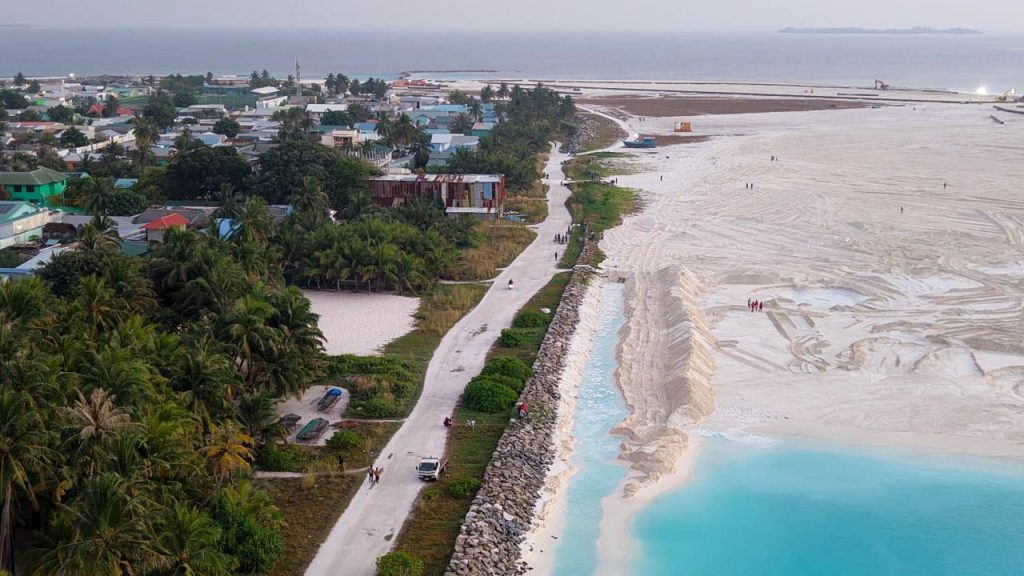

The Dhidhoo land reclamation project is designed to facilitate a range of critical developments, including the construction of an airport, new housing initiatives, and the expansion of essential community services. In total, approximately 102.73 hectares of land are planned to be reclaimed under the project.
Speaking previously to PSM News, MACL Chief Executive Officer and Managing Director Ibrahim Shareef Mohamed said final preparatory works had been completed ahead of the start of dredging operations, with the necessary equipment mobilised to the site in advance.
The use of Leiv Eriksson marks the third major hopper dredger deployed by the government to fast-track reclamation projects nationwide. Other large dredgers currently operating in the Maldives include Prins der Nederlanden and Oranje, both operated by Boskalis of the Netherlands.
The Dhidhoo airport development is a key pledge of President Mohamed Muizzu, who has described the project as a cornerstone of sustainable, long-term development for Dhidhoo and the wider region. During a community meeting with island residents in January, the President assured that commitments made to Dhidhoo would be prioritised, emphasising that the airport project is intended to serve not only the island but also surrounding communities.
Once completed, the reclaimed land is expected to play a central role in transforming connectivity, housing availability and economic opportunities in the northern atolls, with MACL indicating that works will continue at pace in the coming months.