

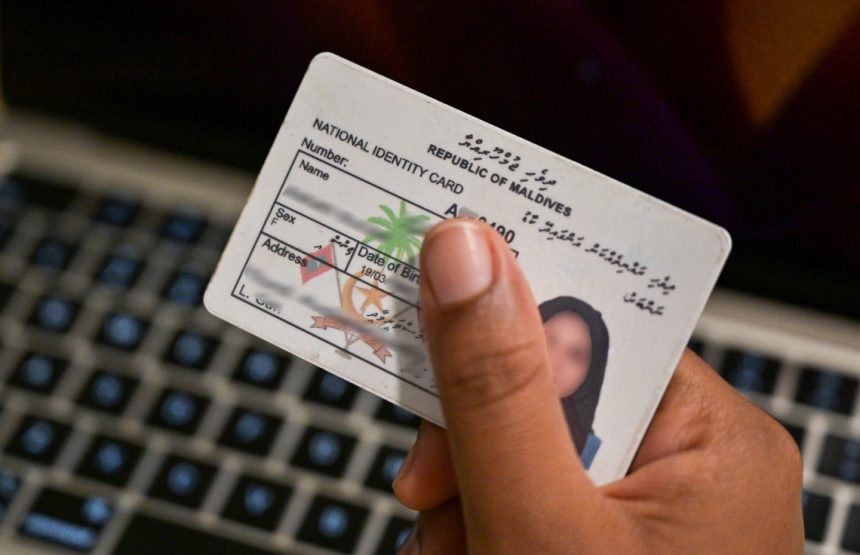
Maldivians could begin using Smart ID cards capable of facilitating payments and accessing a wide range of government services within the next 18 months, President Dr. Mohamed Muizzu has announced.
Speaking on “Nation Chat,” a podcast produced by Public Service Media (PSM), the President said the initiative forms part of the government’s broader “Maldives 2.0” programme, an ambitious digital transformation agenda aimed at modernising public services and accelerating the country’s digital economy.
President Muizzu reiterated that the Maldives 2.0 project is expected to be fully implemented by July 26, 2028, in line with the target he announced during this year’s Independence Day celebrations.

He said one of the flagship components of the programme will be the introduction of Smart ID cards, which will replace the current physical identity cards with a more advanced digital alternative.
“The ID card we carry today is a physical card. That will change into a digital Smart ID card. God willing, it will be introduced within the next year to a year and a half as planned,” the President said.
According to President Muizzu, the new cards will go beyond serving as proof of identity. They will allow citizens to make financial transactions, access public services and securely manage personal information through a single integrated platform.
He explained that each Smart ID card will be equipped with an embedded electronic chip and fingerprint-based biometric information, enhancing both security and functionality. More details about the system are expected to be announced in the coming weeks.
The President said the Smart ID programme is one of several digital initiatives designed to simplify everyday interactions between citizens and government institutions while expanding the use of technology across the public sector.
He pointed to the healthcare sector as an example of the changes envisioned under Maldives 2.0, describing the upcoming reforms as transformative. According to the President, the Ministry of Health is expected to unveil further details on planned digital health services in the near future.
The Smart ID initiative builds on earlier efforts to modernise the Maldives’ digital infrastructure. In 2022, the World Bank approved USD 10 million in financing to support the country’s digital transformation, including the development of digital identity systems and other technology-driven public services.
The government has also set an ambitious long-term goal of expanding the digital economy’s contribution to the national economy. President Muizzu has previously said he wants the digital sector to account for 15 percent of the Maldives’ Gross Domestic Product (GDP) by 2030, positioning technology as a key driver of future economic growth.
The planned rollout of Smart ID cards is expected to be a central pillar of that strategy, bringing identity verification, digital payments and access to government services together on a single secure platform.