

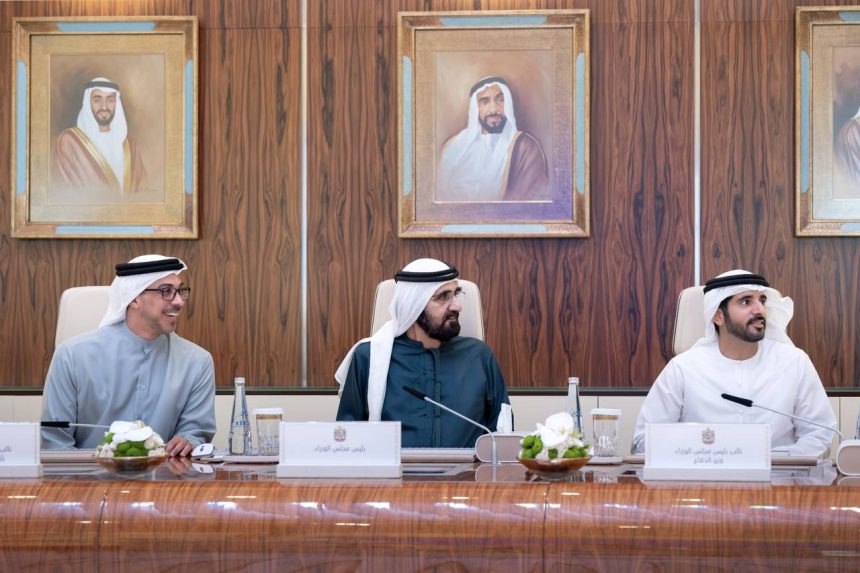
The United Arab Emirates has launched a new artificial intelligence system to support Cabinet decision-making, as Vice President and Prime Minister Sheikh Mohammed bin Rashid Al Maktoum set out three priorities for the country’s government at the start of its new working season.
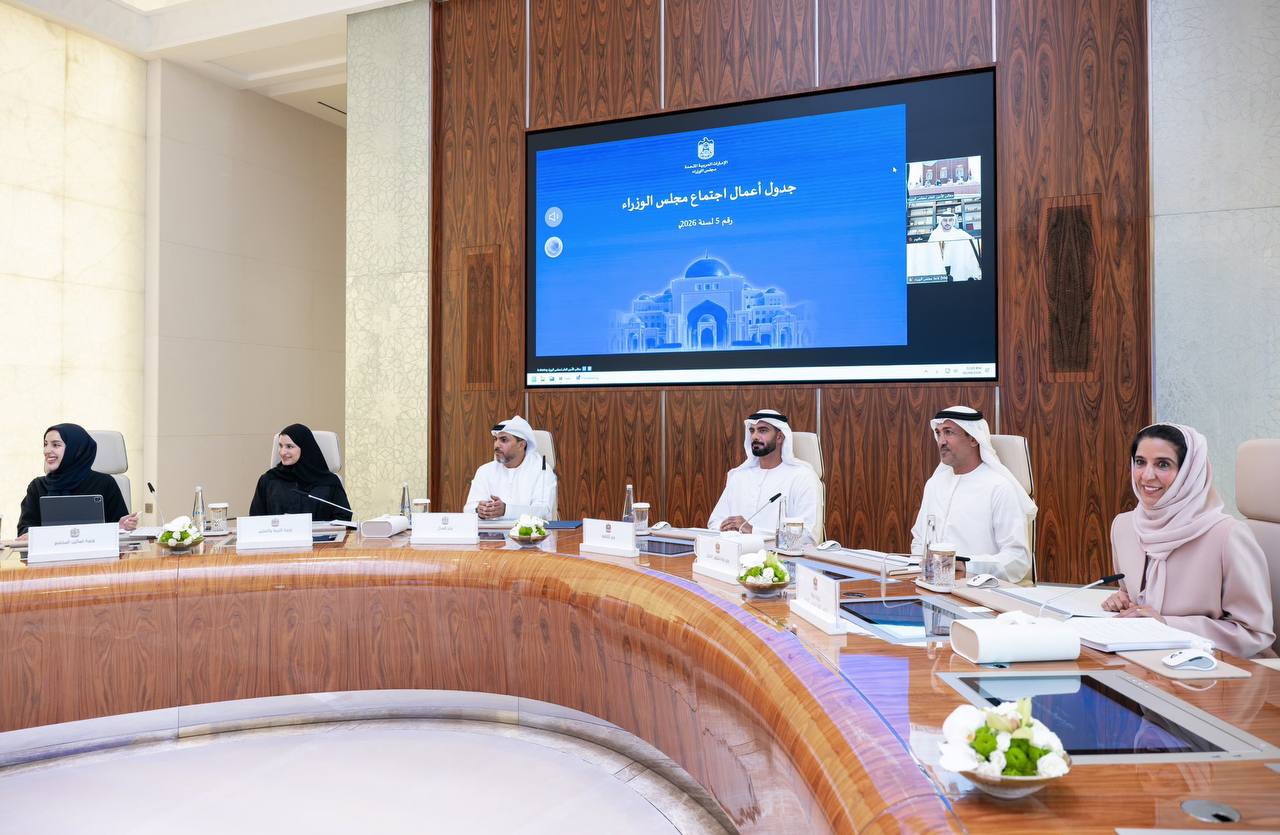
Sheikh Mohammed, who is also the Ruler of Dubai, chaired a Cabinet meeting at Qasr Al Watan in Abu Dhabi, where the government reviewed its digital transformation agenda and approved several new policies and initiatives.
In remarks following the meeting, Sheikh Mohammed said the UAE would continue pursuing its development plans regardless of changing global conditions, while accelerating a major transformation of government services through artificial intelligence.

He said the country’s projects remain active, its economy continues to expand and its markets and international events continue operating at full capacity.
His first message to government teams was that the UAE would not wait for ideal circumstances to move forward with its ambitions.
The second centred on what Sheikh Mohammed described as the country’s largest transformation of government services using Agentic AI, a form of artificial intelligence designed not only to provide information but also to analyse situations, coordinate tasks and support the execution of actions.
As part of that transformation, the Cabinet approved the launch of the Cabinet AI Advisor, a new system intended to improve the speed and quality of government decision-making.
The platform will use 32 specialised AI advisors to analyse policies, legislation, strategies and government systems. They will assess potential financial, economic, social and environmental impacts, compare proposals against international practices and provide recommendations aligned with national priorities.
The system is also designed to work alongside ministers around the clock to support the monitoring of Cabinet decisions and their implementation.
The initiative builds on a wider government transformation programme announced earlier this year, under which the UAE aims to shift at least 50 percent of federal government sectors, services and operations to Agentic AI models within two years.
The government has also launched a programme to train 80,000 federal employees in Agentic AI, covering officials ranging from senior leadership to technical specialists and other government employees.
Digital government is already operating at significant scale in the UAE. Figures reviewed by the Cabinet showed federal entities completed more than 308 million digital transactions in 2025, while government websites received 88.5 million visits and government applications recorded 15.8 million downloads.
The UAE government currently provides 1,633 digital services, with customer satisfaction for priority services reaching 92 percent.
Sheikh Mohammed’s third message focused on maintaining the international trust and reputation the UAE has built over several decades.
He said that trust had been established through the development of legislation, regulations and public policy, alongside substantial investment in infrastructure and the building of strong international relationships.
Sheikh Mohammed described that trust as an important asset underpinning the country’s continued development and called on government teams to protect and strengthen it.
The Cabinet meeting also covered several other areas of government policy, including environmental protection, financial sustainability and digital infrastructure.
Among the decisions was the approval of a National Ecotourism Policy, while the Cabinet reviewed progress under the National Strategy to Combat Desertification 2022-2030. The UAE now has 55 protected areas, while around 4,900 hectares of land have been rehabilitated and more than 3.2 million square metres of green areas added.
The Cabinet also approved the migration of federal institutional resource management systems to cloud infrastructure, covering areas including finance, human resources, payroll, budgeting and government administration.
The latest decisions mark another stage in the UAE’s broader push to integrate artificial intelligence into the day-to-day functioning of government, with Sheikh Mohammed placing AI adoption alongside economic continuity and international trust as central priorities for the new government season.