

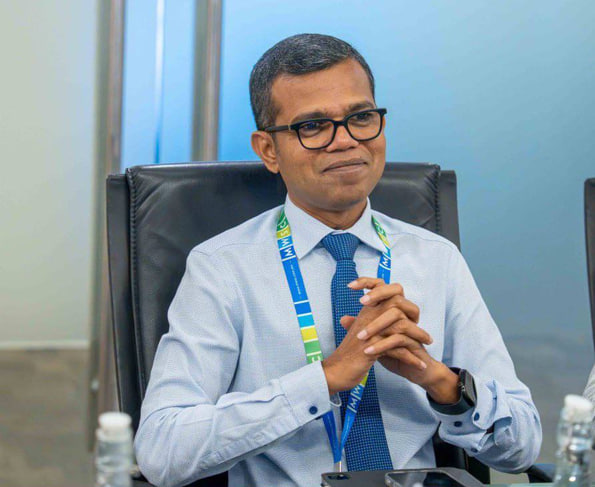
The State could earn more revenue from the planned Eagle Hills development in Ras Malé than it currently receives from the Maldives’ entire tourism industry, Maldives Water and Sewerage Company (MWSC) Managing Director Hussain Fahmy has said.
In a post on X, Fahmy highlighted the projected fiscal impact of the Ras Malé development, describing the economic objective behind the project as unprecedented for the Maldives.
According to Fahmy, estimates indicate that State revenue generated through the Eagle Hills development alone could exceed the combined revenue currently received from the country’s 179 resorts, 16 hotels, 920 guesthouses and 165 safari vessels.

His comments come just over a week after the government signed a Commercial Terms Agreement with Abu Dhabi-based Eagle Hills for the Maldives Waterfront and Marina development in the Ras Malé area.
The agreement, signed on September 21, sets out the principal commercial terms and overall vision for the development, while more detailed arrangements are expected to be finalised as the project progresses.
The development is envisioned at a scale of around USD 20 billion across its different phases. The figure represents the projected overall scale of the development rather than an upfront USD 20 billion capital injection.
Plans include international hotels and resorts, premium and branded residences, a major marina, waterfront promenades, restaurants, retail and entertainment outlets, wellness facilities and other community infrastructure.
The project is also expected to deliver 5,000 housing units for Maldivians.
Preliminary economic projections indicate that more than USD 30 billion in gross foreign investment could be generated over the lifetime of the development. Of this, around USD 18 billion is projected to represent net foreign investment flowing into the Maldives.
More than 54,000 direct and indirect employment opportunities are also projected to be created as the development progresses.
At full maturity, the destination is expected to attract more than one million visitors annually and generate over USD 2 billion a year in tourism revenue.
The figures remain long-term projections based on the project being developed at its envisioned scale and should not be interpreted as investment or State revenue that has already been realised.
The government has presented the development as an opportunity to establish real estate as a significant new economic sector alongside tourism, while bringing larger and more sustained foreign currency inflows through the domestic banking system.
Properties within the development are planned to be offered under a long-term leasehold framework of up to 99 years. Transfers would remain subject to government approval and registration.
The Eagle Hills development forms part of the broader Ras Malé project at Fushidhiggaru Falhu, where the government is developing a new urban centre intended to ease housing and population pressure on Malé.
The wider Ras Malé masterplan covers more than 1,100 hectares and includes plans for approximately 65,000 housing units, alongside commercial, tourism and public infrastructure.
The administration has identified economic diversification as a major policy priority as the Maldives remains heavily dependent on tourism for economic activity and foreign currency earnings.
Tourism remains the country’s principal economic sector. Official figures show the industry generated USD 5.55 billion in revenue in 2025, while tourism revenue is projected at around USD 5.6 billion this year.
The Eagle Hills project is intended to complement the traditional resort industry with a large-scale waterfront destination combining tourism, residential property, hospitality and commercial activity.
Eagle Hills is a private real estate investment and development company headquartered in Abu Dhabi and chaired by businessman Mohamed Alabbar.
Alabbar is also the founder of Emaar Properties, the company behind major developments including Burj Khalifa and Dubai Mall. Eagle Hills has undertaken large-scale residential and waterfront developments across several international markets, including Albania, Serbia, Bahrain and the United Arab Emirates.
The company has said the Ras Malé development will be implemented with sustainability and environmental considerations incorporated into its planning, with the project to be built on reclaimed land and no additional dredging to be undertaken by Eagle Hills.
Fahmy said the projected returns demonstrate the scale of the economic ambition behind Ras Malé, with the development expected to create a new source of State revenue alongside the country’s established tourism industry.