

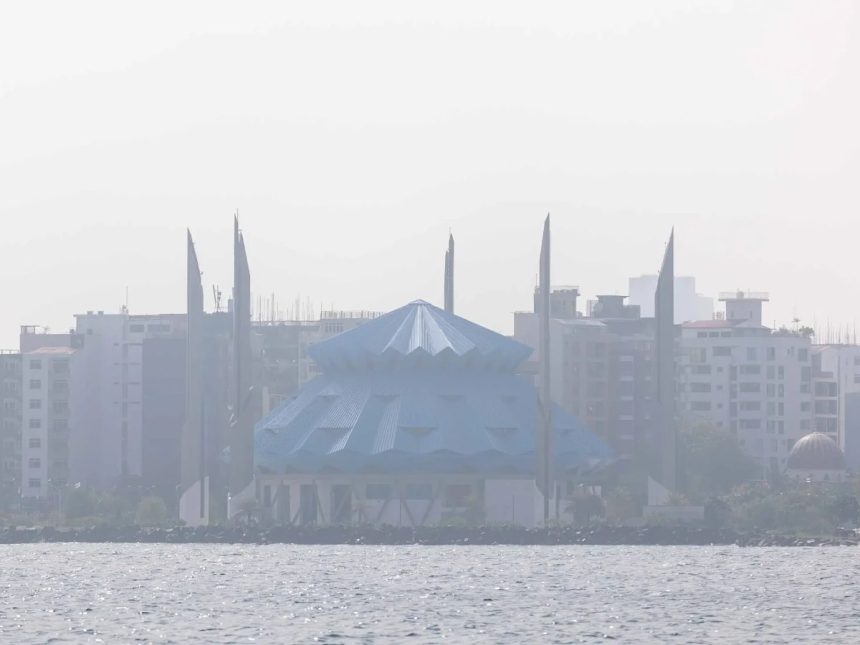
Air quality in the Malé region has reached unsafe levels, according to air quality index monitors.
Data from the Air Quality Monitoring System shows the air quality index in Malé currently stands at 159.
Haa Dhaalu Atoll Kulhudhuffushi recorded the poorest air quality in the country today, with a reading of 160.

An air quality index above 50 is considered moderate, a level at which precautionary measures should be taken.
When the index exceeds 100, the risk increases for high-risk groups, while readings above 150 pose a heightened risk to everyone.
The deterioration comes as smoke from a fire that broke out yesterday at the waste collection area in Hulhumalé Phase 3 continues to heavily affect parts of Hulhumalé Phase 2.
Following the incident, the Health Protection Agency (HPA) urged the public yesterday to take precautionary measures.
Poor air quality in the Maldives is mostly caused by polluted air carried from northern India, due to the direction of the winds during the northeast monsoon.
With the northeast monsoon expected to begin in December, the impact of polluted air on the Maldives is expected to increase significantly once again.
The polluted air contains dust and smoke from factories, along with smoke from the burning of agricultural waste, coal burned to generate electricity, and dust and smoke from large construction projects.
Studies show that around 75 to 80 percent of the pollutants affecting the region’s atmosphere originate from human activities in South and Southeast Asian countries.
HPA statistics also show that cases of respiratory illnesses in the Maldives during periods of poor air quality have been rising year on year.