

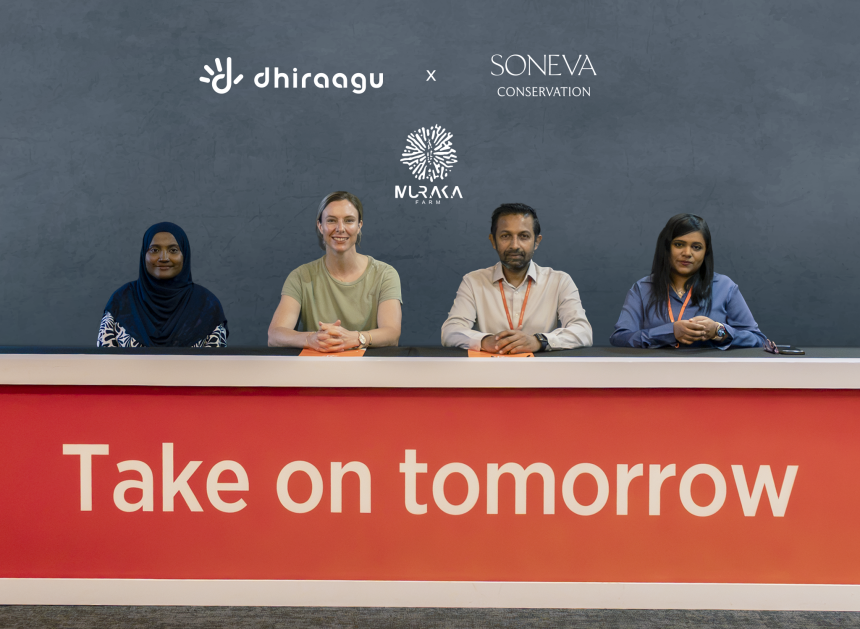
A new community-led coral restoration programme in Baa Dharavandhoo will train local residents to restore and monitor reefs while establishing a coral nursery with up to 50 structures.
Dhiraagu has partnered with Soneva Conservation & Sustainability Maldives (Soneva CSM) to support the Dhirun Community Coral Regeneration Programme, an initiative designed to place long-term reef restoration skills directly in the hands of the Dharavandhoo community.
The programme will be implemented together with local NGO Muraka Farm and residents of the island, combining Soneva CSM’s scientific and technical expertise with community participation.

Between 10 and 15 people from Dharavandhoo will receive practical training in coral restoration and reef monitoring.
As part of the initiative, a community coral nursery consisting of approximately 30 to 50 nursery structures will also be established.
The programme will support the continued propagation of corals and their eventual outplanting onto local reefs, while participants will be trained to monitor the progress and health of the restoration work.
Dharavandhoo sits within the Baa Atoll UNESCO Biosphere Reserve and close to Hanifaru Bay, an area internationally recognised for its rich marine biodiversity.
Healthy reefs surrounding the island are closely connected to Dharavandhoo’s economy and way of life, supporting tourism, fisheries and the livelihoods of local residents.
Rather than carrying out restoration as a short-term external project, those behind Dhirun say the initiative has been designed to leave the knowledge and skills required to continue the work within the community itself.
Dhiraagu Senior Manager for Corporate Social Responsibility Bishaara Hameed said the community-led structure was one of the most important aspects of the partnership.
She said building local knowledge and practical skills would help ensure coral restoration work could continue over the long term, while strengthening marine ecosystems for future generations.
Soneva CSM Director of Operations Dr Johanna Leonhardt similarly said meaningful restoration could not simply be introduced to a community and then abandoned once a project ends.
For restoration to deliver lasting results, she said, the knowledge, skills and ownership of the work must remain with the people living in the area.
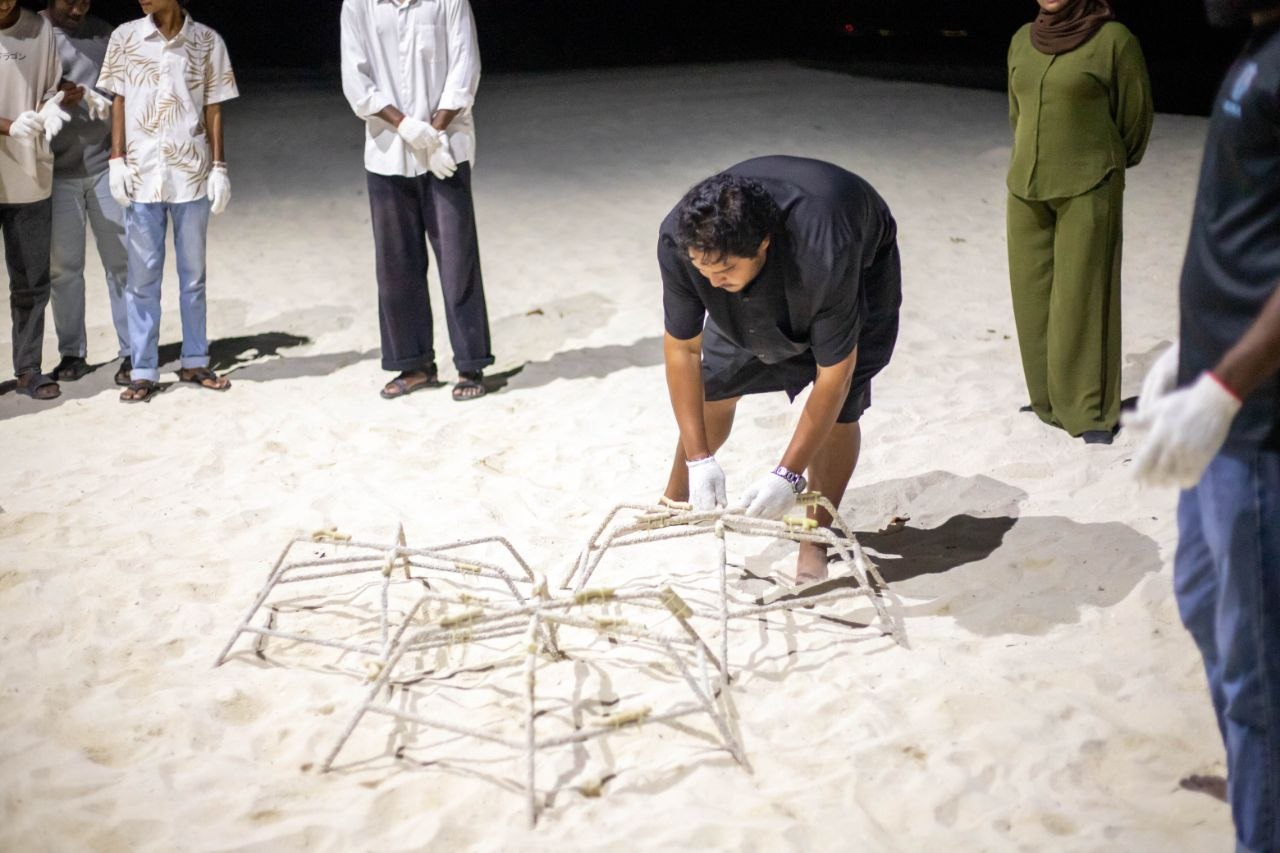
The Dhirun programme will therefore focus heavily on developing practical capacity in Dharavandhoo so that coral restoration, monitoring and reef stewardship can increasingly be undertaken by the community itself.
Leonhardt said the organisation also hopes the project could eventually provide a model for community-led reef regeneration that can be adapted for use elsewhere in the Maldives.
Young people on the island will also be involved through training and public awareness activities aimed at building greater understanding of coral reefs and their importance to the community.
A series of training and community engagement sessions will be held ahead of coral restoration activities and a community festival planned in Dharavandhoo later this year.
Soneva CSM is a Maldivian-registered non-governmental organisation working in coral reef regeneration, marine research and conservation.
Its work combines scientific research and practical reef restoration with education, partnerships and community capacity building, with the broader objective of improving the resilience of coral reef ecosystems across the country.
For the Maldives, where reefs provide natural protection to low-lying islands while supporting fisheries and the tourism industry, coral degradation carries both environmental and economic consequences.
Rising ocean temperatures and coral bleaching events have placed increasing pressure on reefs across the archipelago, adding urgency to efforts aimed at improving their ability to recover from environmental stress.
Dhiraagu said environmental protection and ocean conservation remain key areas of its corporate social responsibility programme.
Through the Dharavandhoo partnership, the company said it aims to support environmental conservation while giving communities the skills and capacity to take a direct role in protecting the ecosystems on which they depend.