

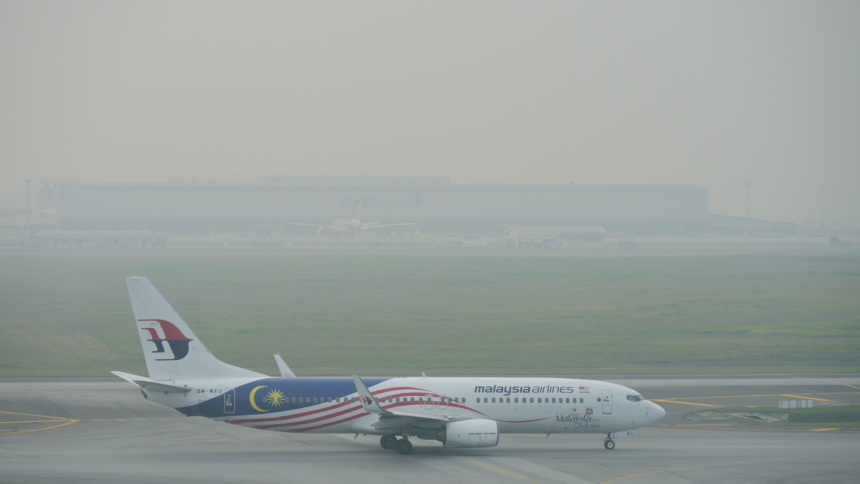
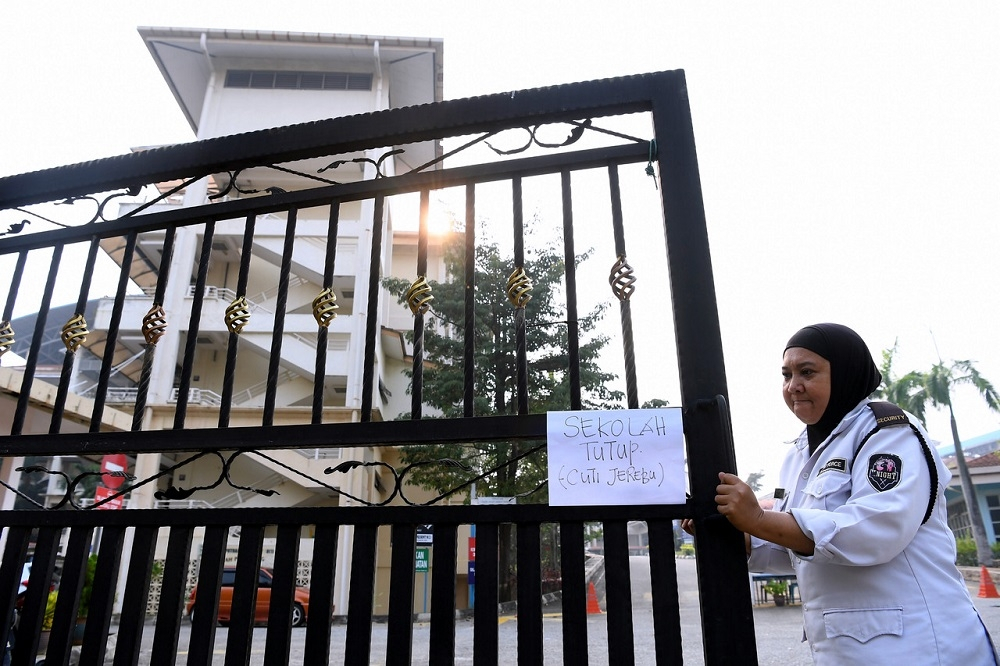
Malaysia has ordered schools in areas experiencing severe air pollution to close from Friday, October 9, as thick haze linked to wildfires in Indonesia continues to spread across the country, raising concerns over public health and disrupting education.
The Malaysian Education Ministry announced that schools and other educational institutions under its jurisdiction must suspend in-person classes wherever the Air Pollutant Index (API) exceeds 180.
A second measure will take effect on Monday, October 12, requiring schools in areas where pollution readings remain above 150 for three consecutive days to close until conditions improve.

The decision comes as parts of Malaysia experience deteriorating air quality, with smoke from widespread forest and peatland fires in neighbouring Indonesia contributing to a regional pollution crisis affecting several Southeast Asian countries.
Education director-general Datuk Dr Mohd Azam Ahmad said the measures were introduced to protect students, teachers and education personnel from prolonged exposure to potentially harmful air pollution.
The announcement follows an intervention by Malaysia’s King, Sultan Ibrahim, who called for greater precautions to safeguard students and other vulnerable groups as the haze worsened.
The King urged authorities to consider school closures in areas where pollution levels remain elevated for extended periods, particularly when readings fall between 150 and 180.
Under Malaysia’s air quality classification system, API readings between 101 and 200 are considered unhealthy, while readings from 201 to 300 are classified as very unhealthy.
The latest directive does not mean schools across Malaysia will close simultaneously. Instead, closures will depend on pollution readings recorded by the country’s Department of Environment in individual areas.
Schools affected by the restrictions will be required to continue lessons through home-based teaching and learning, known locally as PdPR.
The Education Ministry said institutions must make suitable arrangements to ensure students can continue their education, taking into account access to learning materials, individual needs and the preparedness of teachers.
Teachers and support staff may also be permitted to work from home during the closure period, subject to the relevant approvals.
State education departments and district education offices have been instructed to closely monitor air quality and implement the necessary measures when pollution levels reach the specified thresholds.
The situation has already forced widespread disruptions in Johor, one of Malaysia’s most populous states.
Authorities in Johor ordered schools to close through the end of the week as air pollution reached unhealthy levels, affecting approximately 617,000 students.
The haze has also spread across other parts of Peninsular Malaysia, including the capital Kuala Lumpur, where worsening visibility and unhealthy air have raised concerns among residents.
On Thursday morning, Malaysia’s Department of Environment recorded unhealthy air quality in 38 monitoring areas nationwide.
Segamat in Johor registered an API reading of 187, while Nilai in Negeri Sembilan recorded 183, placing both areas above the newly announced threshold for school closures.
The worsening conditions have also prompted calls for a coordinated regional response.
Johor Chief Minister Datuk Onn Hafiz Ghazi has urged the Association of Southeast Asian Nations (ASEAN) to convene an emergency meeting to address the cross-border haze crisis.
Onn Hafiz said the pollution had become a regional problem requiring cooperation among neighbouring countries rather than isolated national responses.
He also raised the issue during discussions with Indonesia’s consul general in Johor Bahru, as Malaysian authorities sought stronger cooperation in tackling the fires contributing to the haze.
Indonesia has been battling one of its most severe wildfire seasons in more than a decade, with unusually hot and dry conditions increasing the risk of forest and peatland fires.
Peat fires are particularly difficult to extinguish because they can continue burning beneath the ground even after visible flames have been brought under control.
Smoke from such fires can travel considerable distances, affecting air quality across national borders depending on prevailing wind and weather conditions.
The recurring haze has long been a challenge for Southeast Asia, particularly during dry periods when forest fires and land-clearing activities can generate large volumes of smoke.
Malaysia, Singapore and other neighbouring countries have repeatedly experienced disruptions to daily life, transport and outdoor activities during severe haze episodes.
Health concerns are particularly significant for children, older people and individuals with asthma or other respiratory conditions, as exposure to polluted air can aggravate breathing difficulties and other medical problems.
Malaysia’s Education Ministry said it would continue consulting the Health Ministry and relevant government agencies as the situation develops.
Authorities are expected to maintain close surveillance of pollution readings, with further school closures possible if air quality deteriorates or remains at unhealthy levels.
For now, the government’s priority is to limit students’ exposure to the haze while ensuring that education can continue through alternative learning arrangements until conditions become safer.