

The government has submitted a bill to the People’s Majlis that would give people a clear legal path to protect their name and reputation from false claims, while safeguarding freedom of expression.
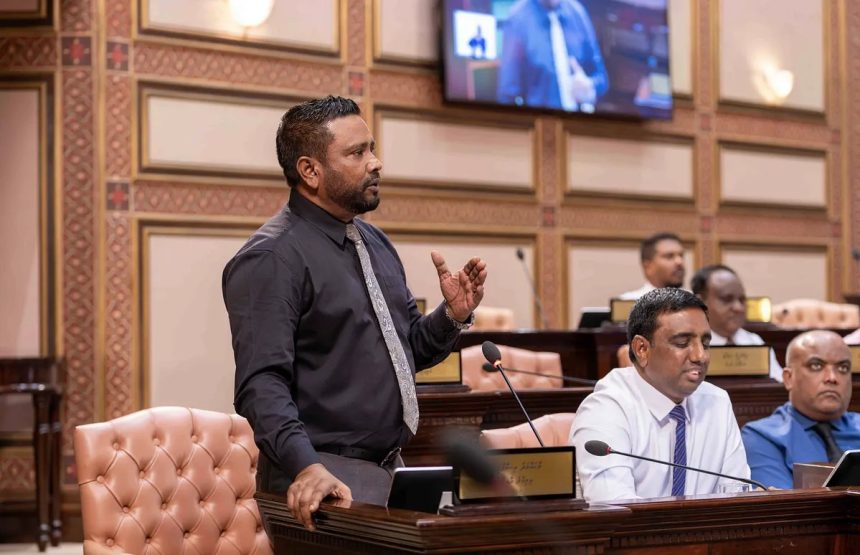
The Right to Protection of Name and Reputation Bill had its first reading in the Majlis today. It was presented on behalf of the government by MP Mohamed Ismail.
Under the bill, defamation will be treated as a civil wrong rather than a criminal offence. Anyone whose reputation is harmed will be able to sue for compensation.

The bill states that its purpose is to strike a fair balance between freedom of expression and the right to protect one’s name and reputation. It also sets out a legal framework for resolving complaints both before and during court proceedings.
Speaking at a press conference today, President Dr Mohamed Muizzu said the bill gives practical effect to the right to name and reputation under Article 33 of the Constitution. He stressed that no one has the right to spread lies that damage another person’s dignity, and that truthful information and opinions are not defamation.
A statement will only be considered defamatory if it is false and harms the other person’s standing. This covers speech, writing, cartoons and drawings, broadcasts and content shared online.
Truth is a full defence. Honest personal opinions, expressed in good faith and based on facts, are also not defamation.
Statements by MPs in Majlis sittings and committees, and proceedings in courts and tribunals, carry full legal privilege. Accurate news reports of such proceedings, and the publication of official investigation reports, are also protected.
Before going to court, a complainant must first send a written notice, giving the other party a chance to retract, correct or publicly apologise. Such settlements can be notarised into a legally binding agreement.
Cases must be filed within one year, and courts must conclude them within six months.
Courts can award compensation for financial losses, plus up to MVR 500,000 for non-material harm. Penalties range from MVR 50,000 to MVR 500,000, and courts can reduce them where the person has apologised or made corrections.
The law will apply to individuals, companies, registered media, online news outlets and all digital platforms, including social media. It will also cover acts committed abroad that harm someone’s reputation in the Maldives.
The Attorney General’s Office will draw up the regulations under the law, which must be gazetted within 30 days of it taking effect.