

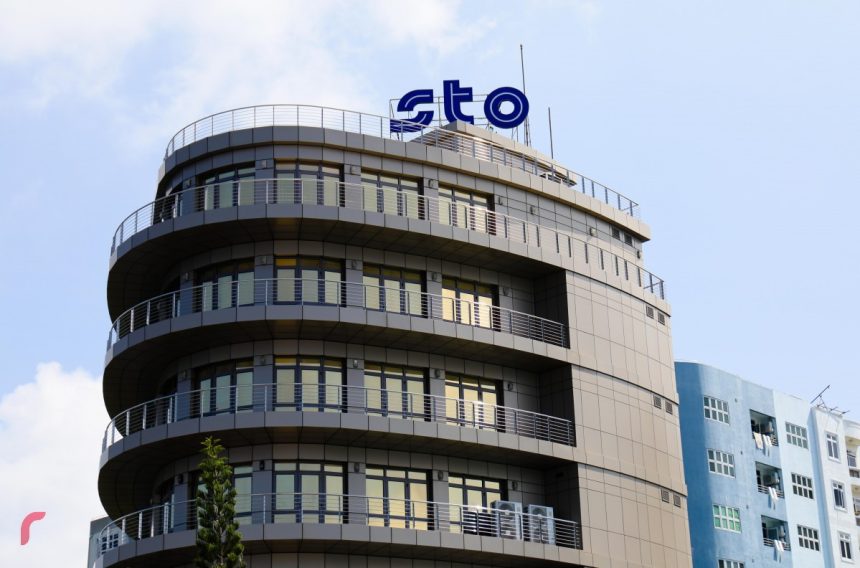
State Trading Organisation (STO) has recorded the highest corporate governance compliance score among companies assessed by the Capital Market Development Authority (CMDA), achieving 97.5 percent under the Corporate Governance Code 2025.
The assessment found that corporate governance standards among listed companies in the Maldives continued to improve, with the overall average compliance rate reaching 92.9 percent in 2025.
STO’s performance placed it 4.6 percentage points above the average, reflecting its compliance with requirements covering board responsibilities, corporate transparency and governance practices.

According to the CMDA report, the average compliance rate among assessed companies has increased steadily over the past three years, rising from 86 percent in 2023 to 88 percent in 2024 before reaching 92.9 percent in 2025.
The findings suggest that companies listed on the Maldives Stock Exchange are making progress in adopting stronger governance practices, although several areas continue to require improvement.
The assessment examined corporate governance disclosures, annual reports and other supporting documentation submitted by listed companies to determine their compliance with the code.
Among the companies identified in the assessment were STO, Bank of Maldives (BML), Dhiraagu, Maldives Islamic Bank (MIB), Allied Insurance, Housing Development Finance Corporation (HDFC) and Ooredoo Maldives’ affiliated company, OMPL.
The source material also identifies Maldives Transport and Contracting Company (MTCC), although it separately states that MTCC and CPLC were excluded because their annual and audited financial reports were not published before the June 30 deadline.
The report recorded the lowest compliance score at 88.6 percent for Maldives Tourism Development Corporation (MTDC).
A significant factor highlighted in STO’s performance was its investment in strengthening the knowledge and responsibilities of its board members.
During 2025, STO conducted eight training programmes for directors, spending a total of MVR 1,025,597 on these activities.
The company also published 12 monthly editions of a corporate governance newsletter, intended to promote awareness of governance procedures and encourage better administrative practices.
Such initiatives are designed to strengthen directors’ understanding of their responsibilities, improve oversight and support compliance with regulatory requirements.
One of the most notable findings concerned the requirement for companies to submit one-third of their board members for re-election each year.
The provision is intended to strengthen accountability by allowing shareholders to regularly participate in decisions concerning board representation.
According to the CMDA assessment, STO was the only company among the eight assessed to fully comply with this requirement.
The remaining seven companies did not meet the standard, making it one of the most significant areas of non-compliance identified in the report.
The proportion of companies failing to comply with the provision increased from zero percent in 2024 to 87.5 percent in 2025.
CMDA identified this as an area requiring particular attention, despite the broader improvement in corporate governance compliance.
The assessment also highlighted weaknesses in auditing and internal control systems, which recorded the lowest compliance rate among the governance categories evaluated.
Audit and internal controls achieved a compliance score of 86.8 percent, indicating that several companies still need to strengthen their internal oversight and financial accountability procedures.
Of the 45 areas requiring improvement identified in the assessment, 18 were related to audit and internal controls, accounting for 40 percent of the issues highlighted.
These findings underline the importance of maintaining effective internal audit functions, risk management systems and independent oversight as companies expand their operations.
The report examined 633 governance criteria across the assessed companies, recording full compliance in 588 instances and identifying 45 areas requiring improvement. It also identified 55 criteria that were not applicable to the relevant companies.
Corporate governance requirements play an important role in protecting shareholder interests, strengthening transparency and ensuring that company boards remain accountable for their decisions.
For publicly listed companies, compliance with governance standards is particularly significant because investors depend on accurate disclosures, effective oversight and responsible management when making investment decisions.
The CMDA is responsible for regulating and developing the Maldives’ capital market, including overseeing compliance with governance requirements applicable to listed companies.
Its assessments provide an indication of how companies are meeting regulatory expectations and where additional improvements are necessary.
STO’s performance places the state-owned enterprise at the forefront of the assessed companies, particularly in director development, governance awareness and compliance with board re-election requirements.
However, the wider findings show that improvements in overall compliance have not eliminated weaknesses in corporate oversight, particularly in auditing, internal controls and shareholder participation in board appointments.
The CMDA report highlights the need for companies to treat corporate governance as a continuing responsibility, rather than a requirement fulfilled solely through annual reporting.
While STO achieved the highest score in the latest assessment, the findings also point to the broader challenge facing listed companies as regulators seek to strengthen transparency, accountability and investor confidence in the Maldivian capital market.