

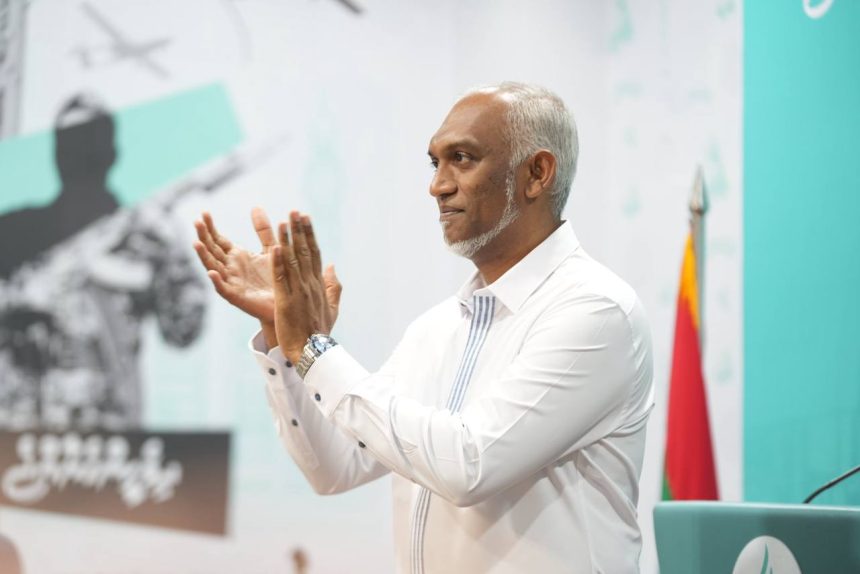
President Dr. Mohamed Muizzu on Thursday defended his administration’s economic record, stating that the government has paid nearly USD 1 billion in debt over the past 40 days while steering the Maldives away from what he described as an “economic abyss” inherited from the previous administration.
Speaking at the ruling People’s National Congress headquarters in Malé, Muizzu said the government had settled approximately USD 974 million in liabilities, including the repayment of a USD 526 million Sukuk, which he said had placed key national assets under mortgage.
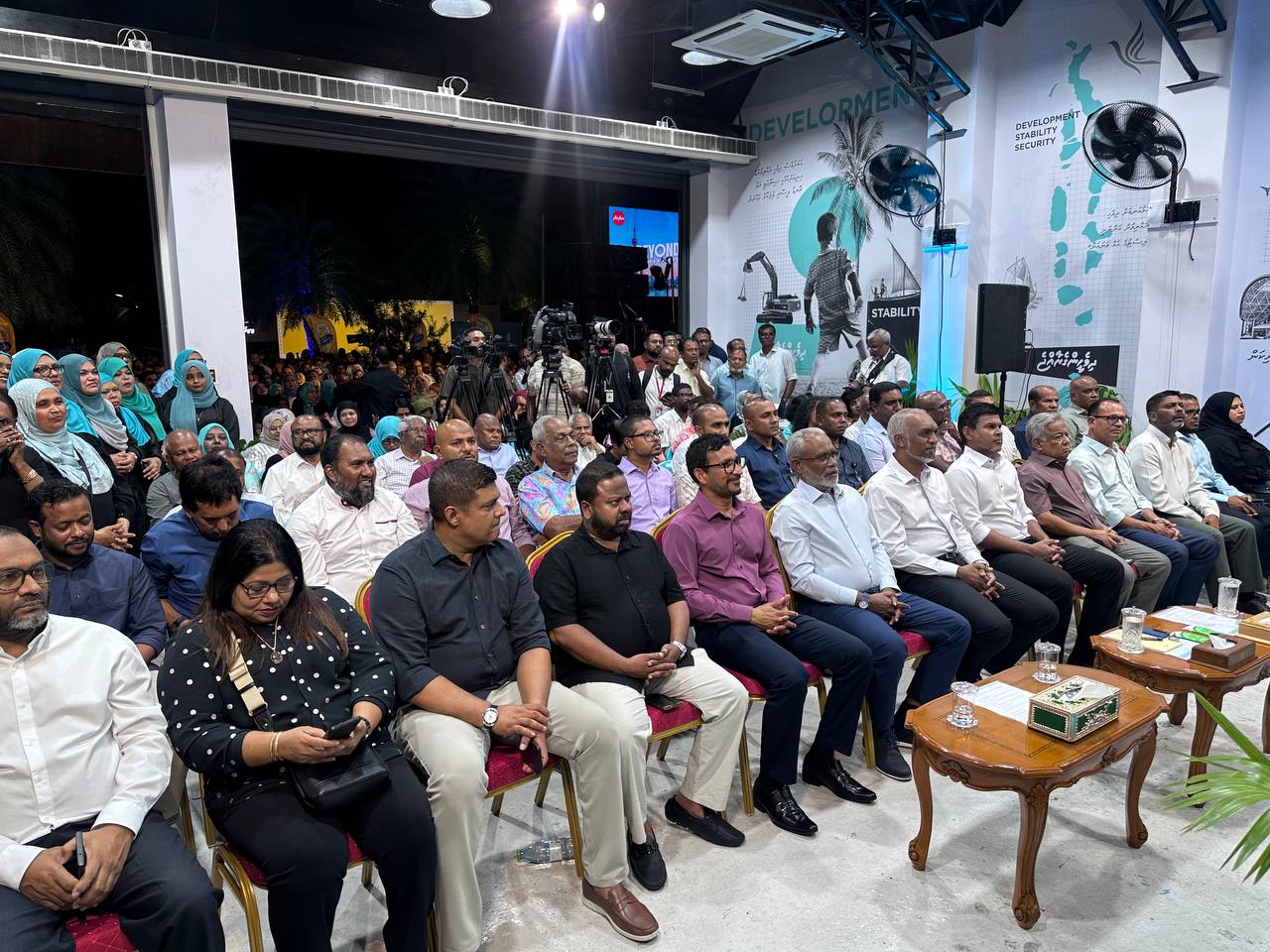

“We have now managed to release those assets from mortgage and return them to the people,” Muizzu said, adding that the administration’s broader economic strategy was focused on stabilizing public finances while easing the burden on ordinary citizens.
The president said his government’s main priority remains improving living standards through higher take-home incomes, affordable essential goods, and expanded housing opportunities. According to Muizzu, the current administration aims to become the government that delivers housing to the largest number of Maldivians in the country’s history.
He criticized previous governments for launching housing projects close to elections without completing them, while claiming his administration had prioritized unfinished housing schemes and land reclamation projects since taking office.
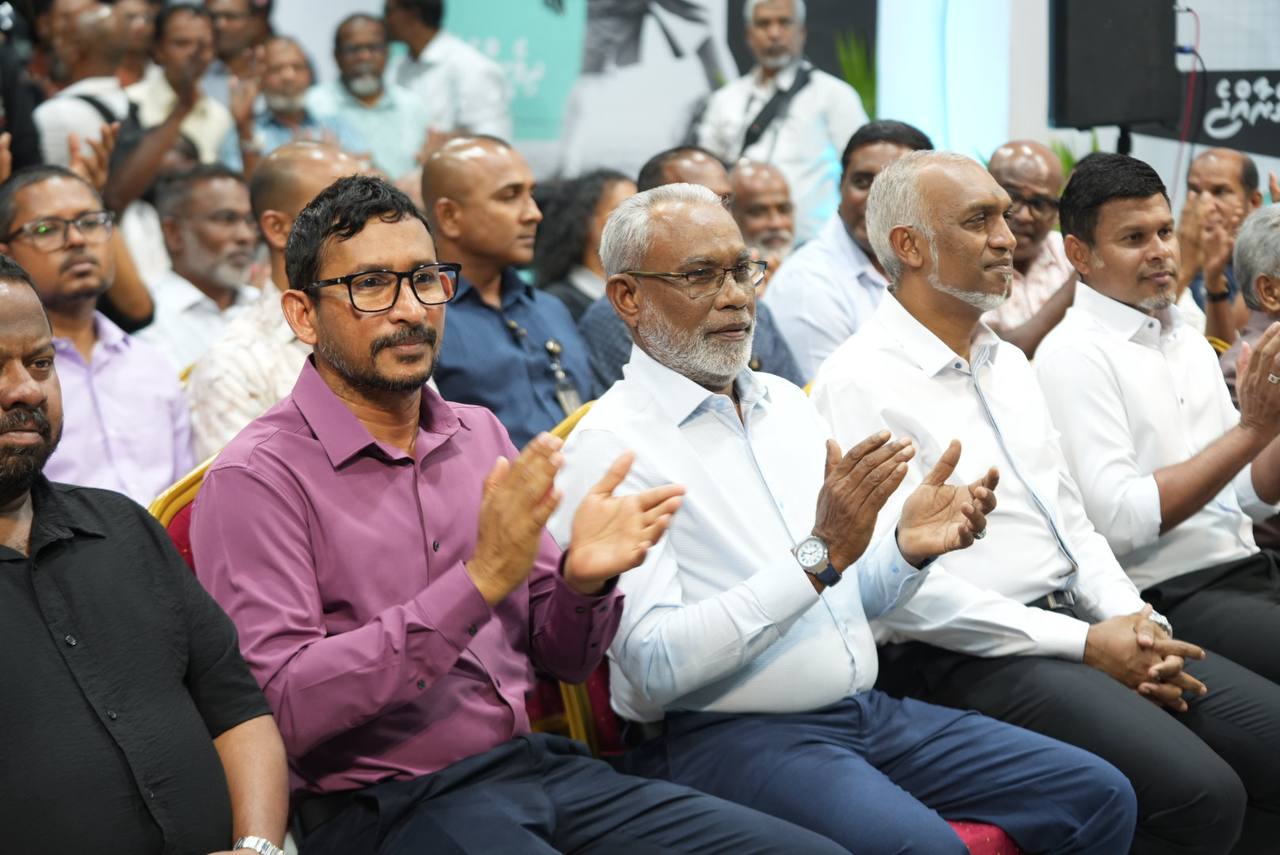
Muizzu also defended the government’s broader economic management, arguing that the Maldives had faced severe financial challenges when his administration assumed power. He said the government adopted a “holistic economic policy” to restore stability and manage mounting debt obligations.
The president linked the administration’s economic policies to his campaign vision of “Dhivehinge Raajje” or “the Maldivians’ Maldives,” which he described as a commitment to securing long-term economic stability for future generations.
During the speech, Muizzu also highlighted his administration’s foreign policy approach, stating that the Maldives had shifted away from dependency on any single foreign power under a “Maldives First” strategy. He said the country now maintains stronger relations with multiple regional and international partners.
On domestic issues, Muizzu pointed to ongoing government efforts targeting undocumented migration, gang violence, and drug trafficking. He claimed the government had increased documentation of expatriate workers from 13 percent to 98 percent within two and a half years.
The president further accused the opposition of lacking policy alternatives and resorting to “personal attacks and character assassination” instead of constructive criticism.
Muizzu maintained that his administration would continue pursuing what he described as nationalist and Islamic policies while prioritizing economic recovery and social stability.