

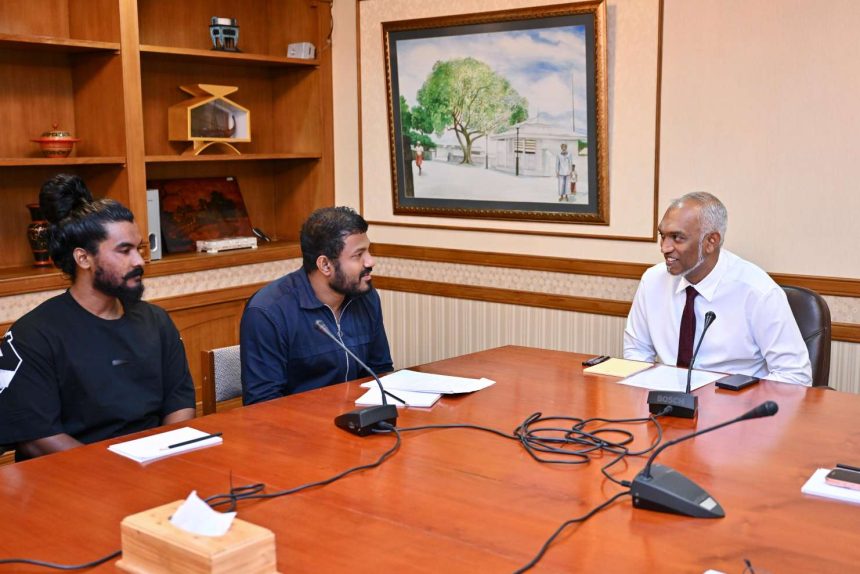
President Dr Mohamed Muizzu has taken a decisive step to improve the country’s cargo transport sector, holding direct consultations with goods transport lorry drivers operating at the Malé Commercial Harbour, underscoring his administration’s hands on approach to governance and economic facilitation.
The meeting, held this morning at the President’s Office, allowed drivers to present first hand accounts of the operational bottlenecks they face daily, ranging from infrastructure gaps to regulatory hurdles that slow down cargo movement and raise costs across supply chains.
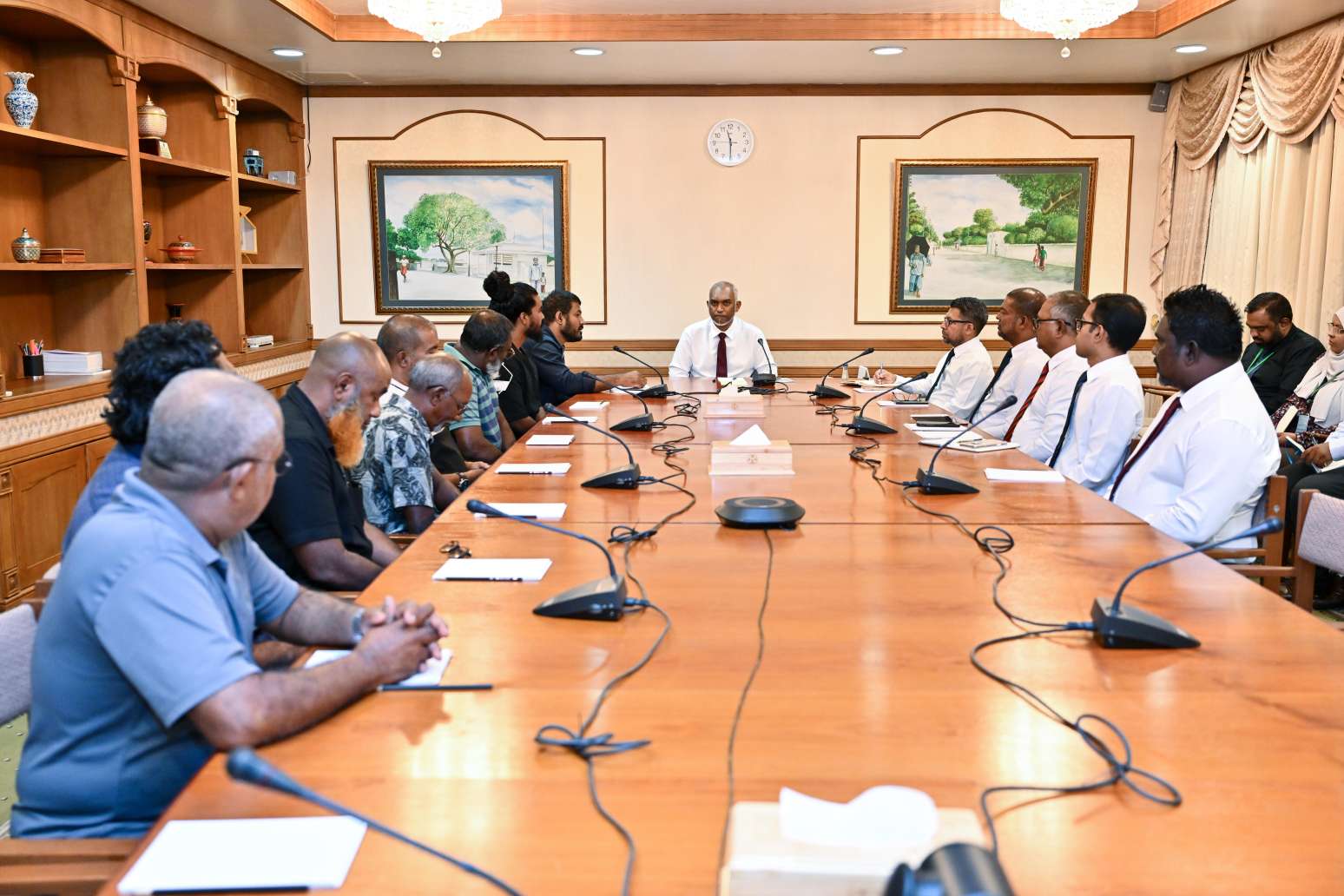

Among the key issues raised were the urgent need for designated parking facilities for goods transport vehicles near the harbour, persistent complications in transferring vehicle ownership, and delays linked to the bonding of imported spare parts. Drivers also called for reforms to the existing lorry queuing system, warning that inefficiencies at the harbour continue to disrupt schedules and livelihoods.
In line with the government’s digital transformation agenda, the drivers proposed accelerating the rollout of a dedicated cargo clearance application to streamline procedures and reduce manual delays. They further urged the introduction of a regulated mechanism to de register and dispose of ageing vehicles, allowing operators to replace them with newly imported lorries under clear government guidelines.

A significant concern highlighted during the discussions was the lack of formal recognition for lorry drivers as a profession. Participants appealed for official documentation and validation of their work, similar to other recognised employment categories, to improve job security and access to services.
Responding to the concerns, President Muizzu assured the drivers that his administration would work closely with relevant state institutions to deliver practical and timely solutions. He reaffirmed the government’s commitment to creating a more efficient, organised, and worker friendly transport sector, recognising its critical role in sustaining trade, supporting businesses, and strengthening the national economy.