

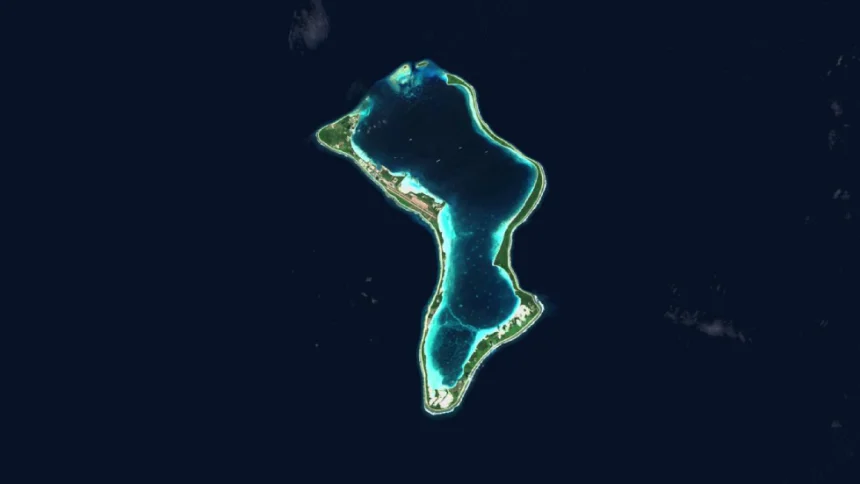
The Maldives’ position on the Chagos Islands dispute has entered a sharper diplomatic phase under President Dr Mohamed Muizzu, but Malé’s approach is not new. Long before yesterday’s international headlines, the Maldives had already taken firm diplomatic and legal stances that effectively resisted Mauritius’ expanding claims over the Chagos maritime space, while reinforcing the argument that sovereignty over the territory remained unresolved.
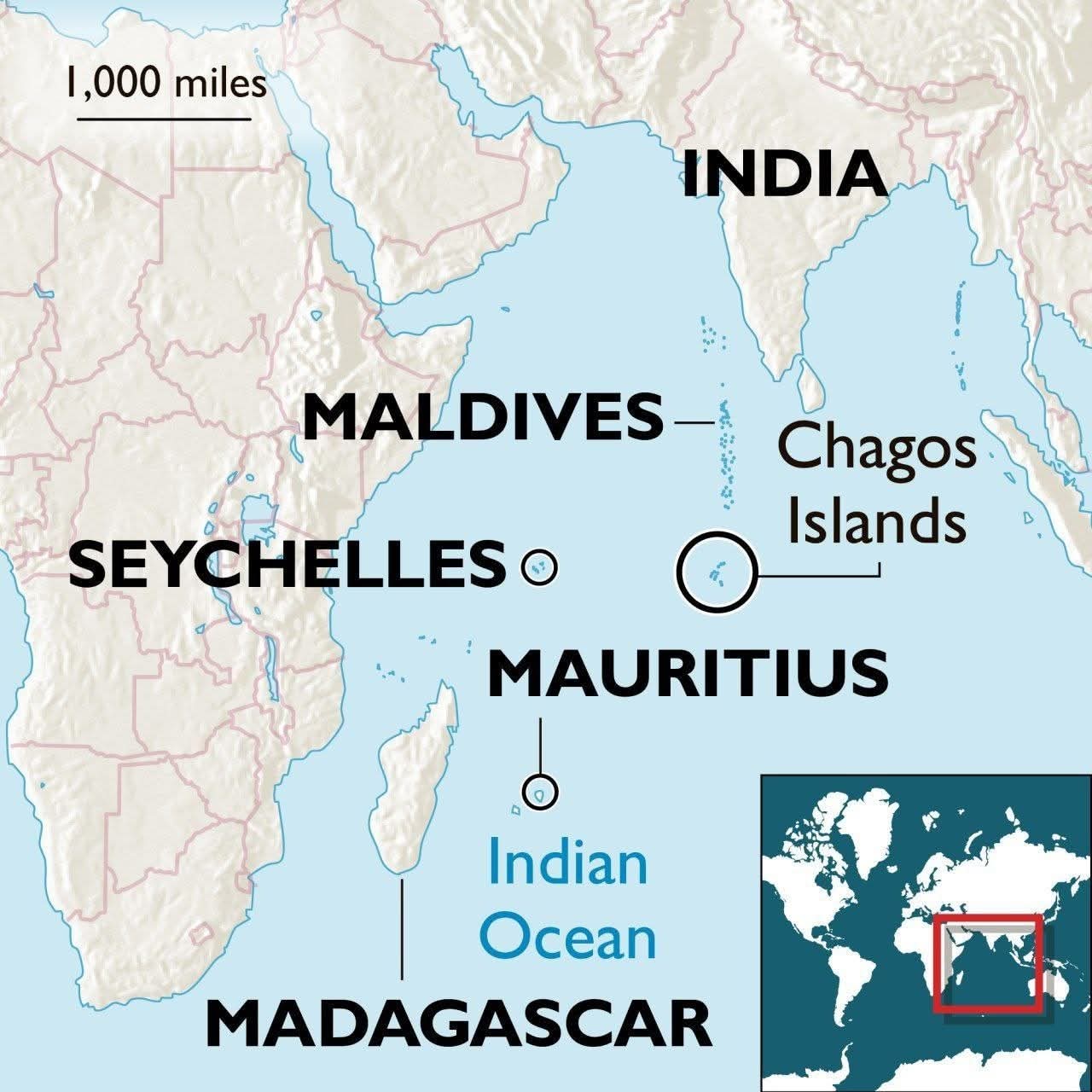
Now, as the United Kingdom advances a sovereignty transfer arrangement with Mauritius, the Maldives is repositioning itself from a defensive legal posture to an assertive geopolitical one, insisting that the Chagos Islands, known historically in the Maldives as Foalhavahi, cannot be handed to the “wrong claimant”.
Maldives’ earlier stance blocked Mauritius’ momentum
Malé has previously aligned itself against international moves that would automatically legitimise Mauritius’ claim to Chagos, including at the United Nations. This approach reflected strategic caution against reshaping Indian Ocean sovereignty assumptions in a way that could weaken Maldivian maritime interests and empower a competing regional claimant.
The Maldives’ resistance extended beyond diplomacy and into the courtroom. After Mauritius initiated legal action tied to maritime entitlements around Chagos, the Maldives challenged the matter at the International Tribunal for the Law of the Sea (ITLOS), arguing that maritime delimitation could not be properly settled while sovereignty remained contested, and that the UK was an indispensable party to the dispute.
However, ITLOS dismissed the Maldives’ preliminary objections in January 2021, a decision that strengthened Mauritius’ position and triggered wider concern that sovereignty assumptions were being cemented prematurely through legal interpretation rather than settlement.
UK–Mauritius arrangement reshapes Indian Ocean geopolitics
The agreement promoted in London as a decolonisation measure has become a defining geopolitical development in the Indian Ocean, not least because it reconfigures sovereign authority around a regionally sensitive maritime territory.
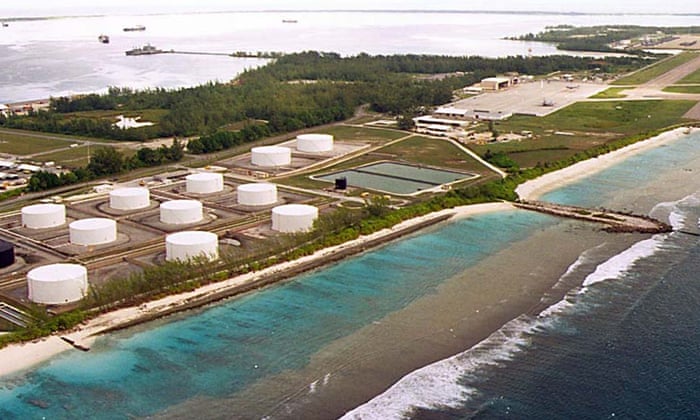
At the heart of the dispute is Diego Garcia, a strategic military base widely recognised as a central pillar of UK–US defence operations in the Indo-Pacific.
Under the arrangement, Chagos would be transferred to Mauritius, while the UK and US retain operational access to Diego Garcia through a long-term lease framework reported internationally as lasting 99 years, with Britain paying an annual sum estimated at around £101 million.
President Muizzu raises Maldives claim through formal diplomatic channels
It is in this altered strategic environment that President Muizzu has confirmed official correspondence with the British Government, stating that London is fully aware of Maldives’ concerns and its sovereignty claim.
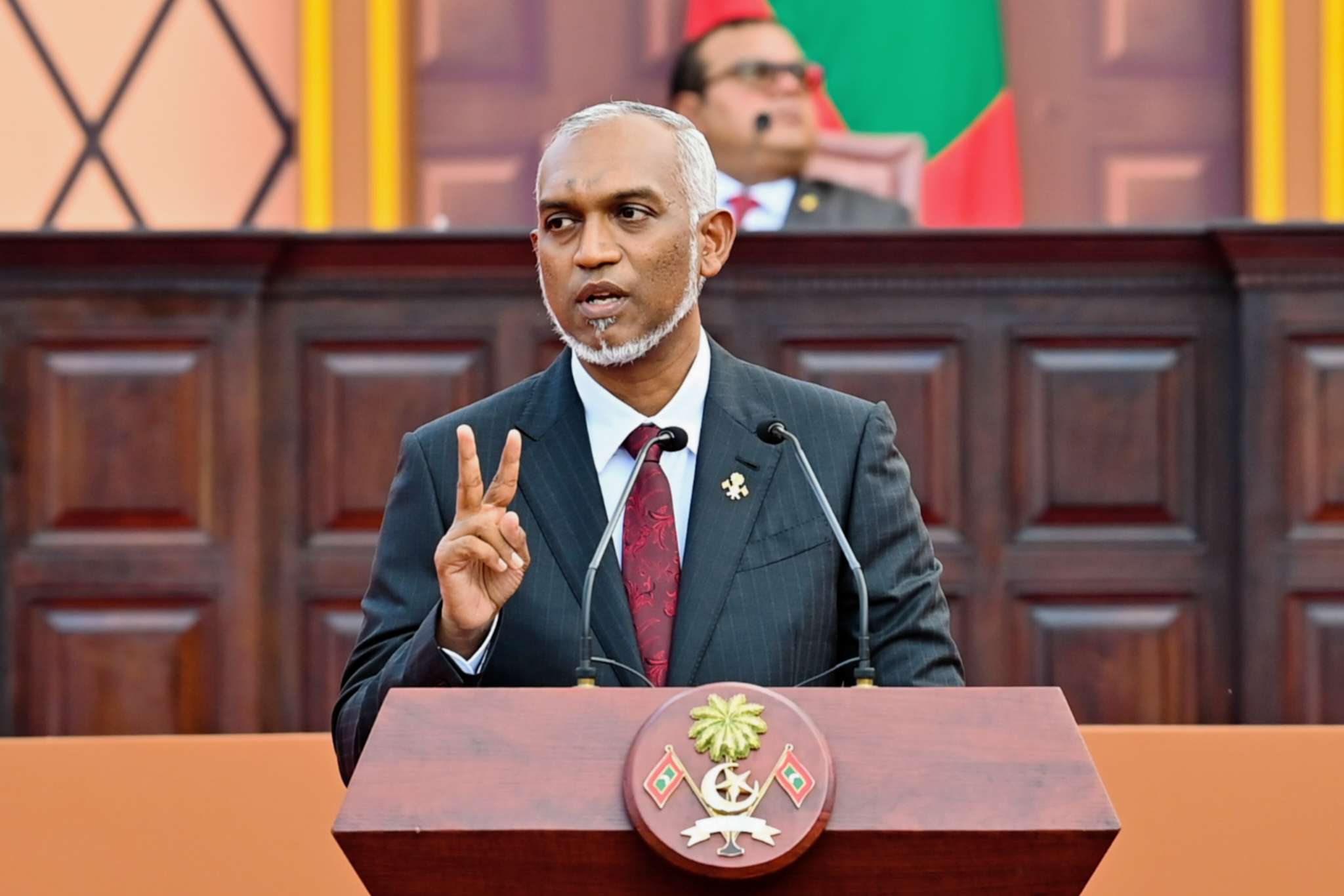
President Muizzu has argued that Maldives holds the strongest claim, citing historical, cultural, and documentary links to the islands, as well as proximity that makes the matter a direct regional issue rather than a distant colonial dispute.
The President has maintained that the Maldives has raised the issue formally through diplomatic channels and expressed confidence that Malé’s claim stands on stronger historical footing than Mauritius.
A strategic signal from Malé
Muizzu’s intervention signals a broader shift in Maldives’ geopolitical messaging, that Indian Ocean sovereignty and security arrangements cannot be decided without recognising the region’s closest stakeholders.
As global attention intensifies around maritime influence, basing rights, and Indo-Pacific strategy, Maldives is increasingly positioning itself not as a peripheral observer, but as an essential actor, determined to protect both historical truth and national interests in disputes unfolding within its own maritime neighbourhood.