

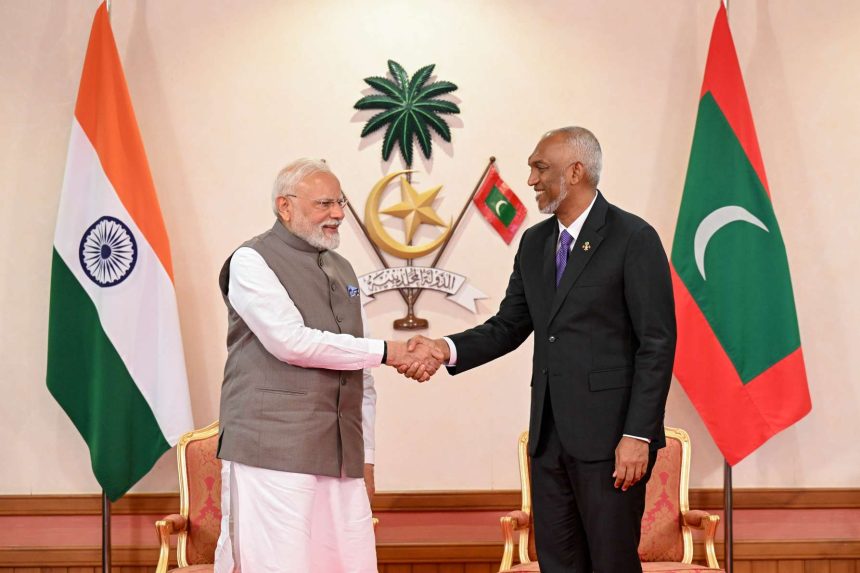
India has cleared a fresh currency swap drawdown equivalent to approximately USD 360 million for the Maldives, underscoring deepening economic cooperation and renewed political trust between President Dr Mohamed Muizzu and Indian Prime Minister Narendra Modi.
The assistance, amounting to INR 30 billion, was extended under the SAARC Currency Swap Arrangement, according to the High Commission of India in Malé. The facility was formalised during President Muizzu’s state visit to India in October 2024 and is administered by the Reserve Bank of India under the 2024–2027 framework.
The latest support comes as a previous USD 400 million swap secured by the Maldives in October 2024 matured on April 23, 2026. Officials noted that the updated arrangement offers concessional interest rates and flexible terms, helping ease short-term balance of payments pressures while strengthening foreign reserve buffers.

Diplomatic observers say the continued financial backing reflects a steady improvement in bilateral relations, with both President Muizzu and Prime Minister Modi maintaining constructive engagement focused on economic stability and regional cooperation. The latest move is seen as a clear signal of mutual confidence and pragmatic partnership between the two leaders.
Since the introduction of the SAARC swap mechanism in 2012, India has provided the Maldives with cumulative support of approximately USD 1.1 billion. The facility remains a key pillar in safeguarding the country’s macroeconomic stability.
In addition, India rolled over USD 100 million in Maldivian treasury bills last year as emergency assistance, further reinforcing its role in supporting the Maldives during periods of fiscal pressure.
New Delhi reiterated that the Maldives remains a central partner under its “Neighbourhood First” policy and Vision MAHASAGAR, with India positioning itself as a dependable first responder in times of need.
The latest funding highlights sustained cooperation between Malé and New Delhi, as both sides continue to strengthen economic ties while navigating global financial uncertainties.