

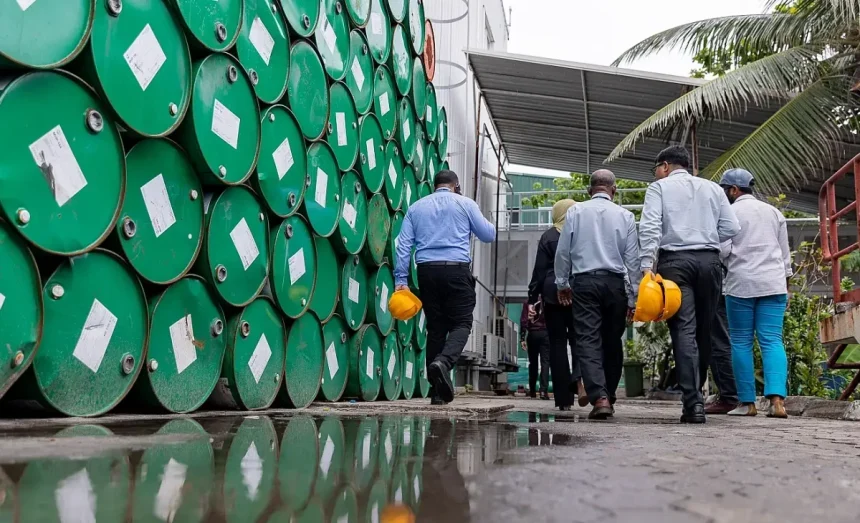
Government spending on subsidies has risen sharply this year, with fuel support accounting for much of the increase as authorities continue efforts to shield households and businesses from the impact of higher global oil prices.
According to the latest weekly fiscal statistics published by the Ministry of Finance and Public Enterprises, subsidy expenditure reached MVR 2.30 billion as of June 4, representing a significant increase compared to the same period last year.
During the corresponding period in 2025, the government spent MVR 1.36 billion on subsidies. The latest figures show an increase of MVR 938.3 million, or nearly 69 percent year-on-year.

The rise comes as international fuel markets continue to experience volatility, increasing the cost of imported petroleum products for countries such as the Maldives, which relies heavily on imports to meet its energy needs.
Officials say the government has absorbed much of the additional cost through subsidy programmes in order to prevent sharp increases in fuel prices from being passed on to consumers.
Fuel prices have a wide-reaching impact on the Maldivian economy, affecting electricity generation, sea and land transport, public services and the cost of transporting goods between islands. As a result, fluctuations in global oil markets can quickly influence the prices of everyday goods and services.
By maintaining fuel subsidies, the government aims to cushion the public from these pressures while helping businesses manage operating costs.
The latest data shows that subsidy spending has already consumed a large portion of the amount allocated for the year. Of the MVR 2.89 billion budgeted for subsidies in 2026, MVR 2.30 billion—or nearly 80 percent—had already been utilized by early June.
The increase has also contributed to higher overall government spending.
Statistics released by the ministry show that total expenditure on grants, contributions and subsidies reached MVR 5.69 billion during the period, compared to MVR 4.07 billion during the same timeframe last year. This represents an increase of MVR 1.62 billion, or 39.8 percent.
Meanwhile, recurrent expenditure rose from MVR 14.47 billion in 2025 to MVR 16.87 billion this year, reflecting an increase of MVR 2.41 billion, or 16.6 percent.
The Maldives has historically relied on subsidies to help stabilize prices for essential services and commodities, particularly during periods of economic uncertainty or rising international costs.
Economists note that while subsidies provide short-term relief to consumers and businesses, they also place considerable pressure on public finances, particularly when global fuel prices remain elevated for extended periods.
Despite the fiscal burden, the government has maintained that such measures are necessary to protect livelihoods, support economic activity and ensure the uninterrupted delivery of essential services across the country.
The latest figures highlight the growing cost of that support, as the Maldives continues to navigate the effects of global energy market fluctuations while seeking to limit their impact on the domestic economy.