

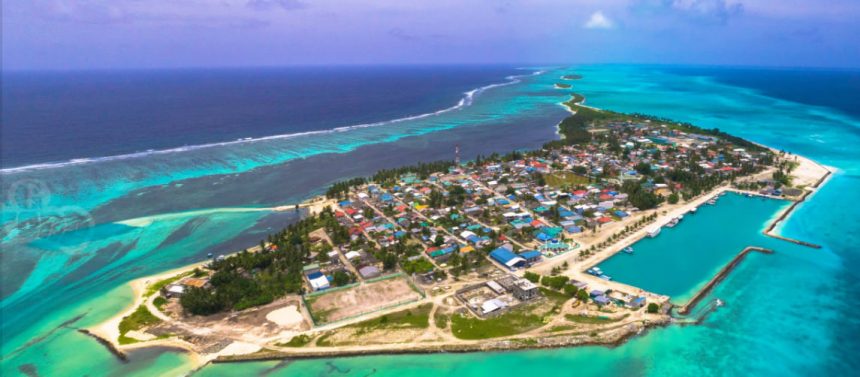
HA. Hoarafushi Council has opened bidding for the development and operation of six tourist guesthouses, as the island moves to expand its local tourism sector through a designated Tourism Zone.
The council has invited interested parties to submit proposals to lease land and develop guesthouse properties within the zone, according to an announcement published in the Government Gazette.
Six plots under the council’s jurisdiction have been allocated for the initiative in accordance with Hoarafushi’s approved Land Use Plan, with one tourist guesthouse planned for each plot.

The project represents an effort to create additional tourism investment opportunities on the island and expand accommodation capacity in the northern Maldives.
Interested parties must register and purchase the relevant bid documents before 11:00 am on October 1, 2026. The council has provided an online registration form for applicants as part of the bidding process.
Applicants are required to demonstrate the financial and technical capacity necessary to undertake the proposed developments.
Completed proposals must be submitted to Hoarafushi Council by 11:00 am on October 12, 2026.
Local tourism opportunity in the north
The planned guesthouses could further strengthen Hoarafushi’s potential as a local tourism destination, particularly given the island’s proximity to Hoarafushi Airport, which provides domestic air connectivity to the northernmost atoll.
Improved transport links have played an important role in opening tourism opportunities outside the country’s traditional resort destinations, allowing inhabited islands to attract visitors through guesthouses and other locally operated tourism businesses.
Guesthouse tourism has expanded significantly across the Maldives since regulations were introduced allowing tourist accommodation to operate on inhabited islands. The model has enabled more island communities and small businesses to participate directly in the country’s largest economic sector.
Unlike the country’s one-island-one-resort model, guesthouse tourism allows visitors to stay within inhabited communities, creating opportunities for businesses including restaurants, cafés, diving and watersports operators, excursion providers, transport services and retailers.
Hoarafushi has also been seeing investment in infrastructure and essential services. Fenaka recently delivered a new 1,000 kW generator to the island as part of efforts to strengthen electricity capacity, while infrastructure improvements in northern islands are expected to support both population needs and future economic activity.
The allocation of a dedicated Tourism Zone indicates an attempt by the council to accommodate tourism development within the island’s broader land-use framework rather than through individual developments scattered across residential areas.
Once developed and operational, the six properties would increase Hoarafushi’s tourist bed capacity while potentially creating new employment and business opportunities for the island community.
The council has not specified in its announcement when construction of the guesthouses is expected to begin, with the immediate stage focused on selecting eligible developers through the bidding process.