

President Dr Mohamed Muizzu has ratified the Maldives’ new Land Transport Act, introducing a comprehensive legal framework governing vehicles, drivers, public transport and road safety across the country.
The legislation was signed into law during a special ceremony held at the President’s Office, establishing new rules covering areas ranging from vehicle registration and driving licences to traffic enforcement and public transport operations.
One of the most significant provisions introduced under the law is a 20-year maximum operational lifespan for land vehicles, calculated from the vehicle’s date of manufacture.

Vehicles falling under special categories to be determined through regulations will be exempt from the age restriction.
The legislation also introduces a demerit points system for driving licences, creating a mechanism through which repeated traffic and regulatory violations can result in the suspension of a driver’s licence.
Licences may also be suspended when accumulated unpaid fees and fines reach MVR 5,000 or more, according to provisions included in the law.
The Act sets out requirements and standards governing the registration and use of vehicles, issuance of driving licences, stopping and parking, as well as other aspects of operating vehicles on public roads.
It also establishes standards for public transport operators and defines enforcement powers and penalties that can be applied when individuals or service providers violate land transport regulations.
Responsibility for overseeing the country’s land transport system will primarily rest with the ministry responsible for transport.
The legislation also requires the formulation of a National Land Transport Strategy, intended to provide a broader framework for the development and management of transportation across the Maldives.
A Road Safety and Traffic Management Advisory Committee will be established to support the government in matters relating to road safety and traffic management.
The law additionally creates a dedicated Greater Malé Transport and Mobility Office, which will be responsible for planning and implementing land transport and mobility operations within the Greater Malé region.
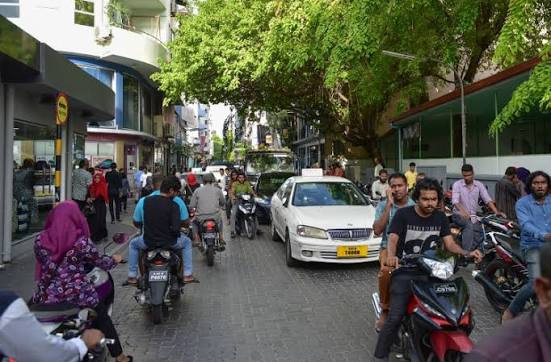
The provision is particularly significant as Greater Malé has experienced rapid growth in both its population and vehicle numbers over recent years. Traffic congestion, limited parking space and road safety have consequently become increasingly prominent challenges, particularly in the capital.
Another provision addresses driving privileges for Maldivians travelling overseas and foreign licence holders visiting the Maldives.
Authorities will be able to issue International Driving Permits to eligible Maldivian motorists for use abroad.
At the same time, people holding valid driving licences issued by countries that are parties to applicable international road traffic conventions will be permitted to drive in the Maldives without obtaining an additional Maldivian driving licence, subject to the requirements established under the law.
The legislation brings several areas of land transportation under a consolidated legal framework, covering vehicle standards, driver responsibilities, public transport services, enforcement and institutional oversight.
Road transport has become an increasingly important policy issue as the Greater Malé region continues to expand, particularly with the development of Hulhumalé and improved road connectivity between Malé, Hulhulé and Hulhumalé.
The new law is intended to provide authorities with a more structured framework for responding to those challenges while improving safety for drivers, passengers, pedestrians and other road users.
Implementation of several provisions, including exemptions from the 20-year vehicle lifespan requirement, will depend on regulations issued under the Act.