


President Dr Mohamed Muizzu has announced that physical works on the first comprehensive modernisation of Malé’s road network in decades will begin by early 2027 at the latest, marking a major step in the Government’s plan to transform the capital’s ageing infrastructure.
Speaking during the fourth episode of The Pulse podcast, which focused on Malé’s road development, President Muizzu said the project would rebuild the city’s roads while introducing modern underground infrastructure. Responding to questions from One Online, he said the initiative would be funded through a grant from the Chinese government and include a stormwater drainage system to reduce flooding, a dewatering network to support construction, and an integrated fire hydrant system.
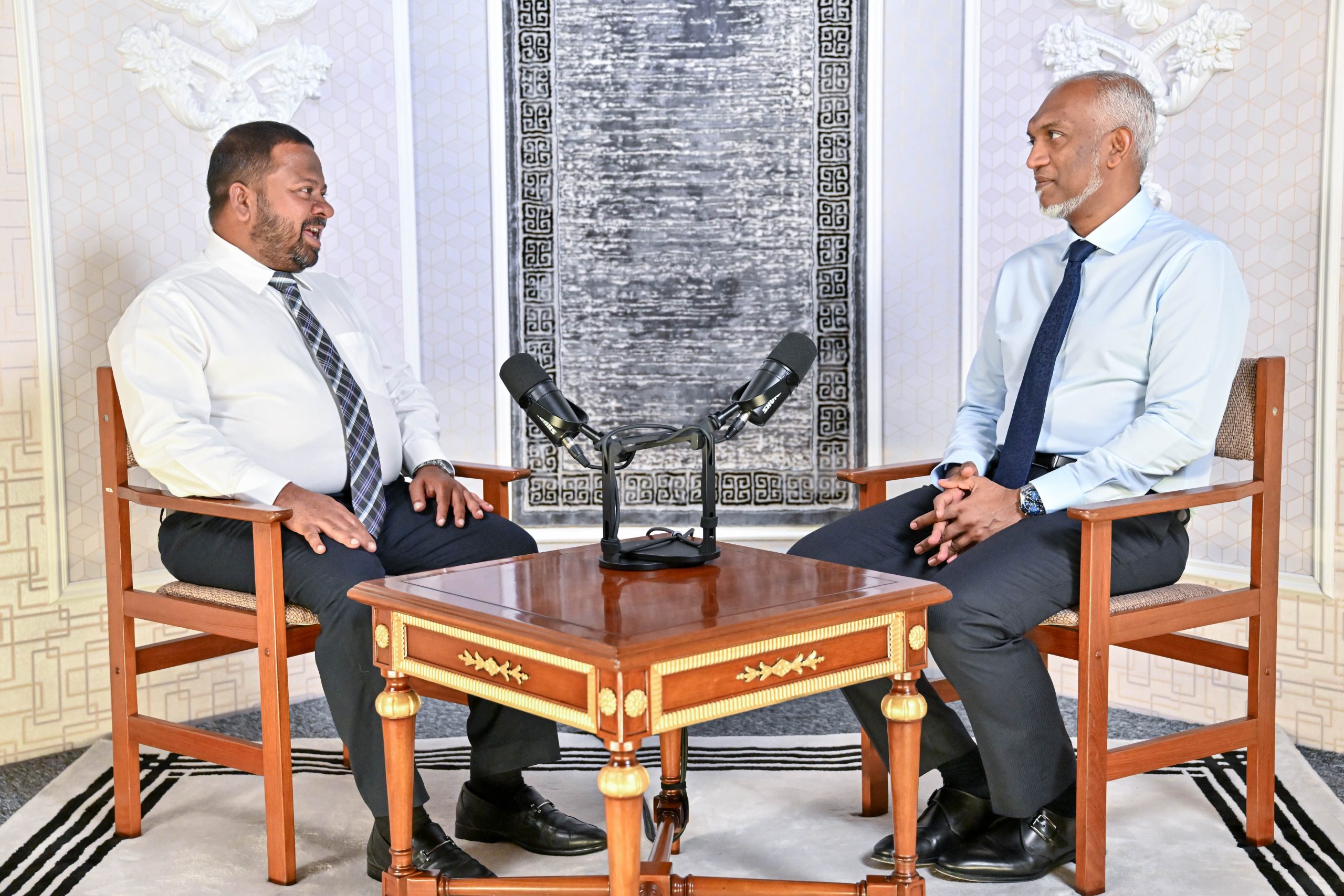

The President said the last major road development programme in Malé was carried out during the administration of former President Maumoon Abdul Gayoom, adding that the city’s roads have since deteriorated due to years of insufficient maintenance.
He also provided an update on the ongoing redevelopment of Boduthakurufaanu Magu, which is being implemented separately from the Chinese-funded project. According to the President, the second phase, stretching from Izzuddin Jetty to Barceló Nasandhura, has been completed and is expected to open to traffic next week.
President Muizzu said the upgraded road will feature parking for around 500 motorcycles, with traffic studies indicating that it will improve vehicle movement not only along Boduthakurufaanu Magu but also across surrounding roads.
Following the completion of this section, redevelopment will begin on the stretch between Maldives Ports Limited (MPL) and Rasfannu, which the President described as the most deteriorated part of the road. He said the project would significantly improve access to Malé’s market area, commercial district and the wider transport network.
He also assured that the road widening works, which involve land reclamation, would not disrupt port operations. Instead, the reclaimed land, protected by seawalls on three sides, will create additional berthing space for vessels.
Addressing long-term traffic congestion in the capital, President Muizzu said infrastructure upgrades alone would not permanently solve the issue. He said the Government’s broader strategy is to reduce pressure on Malé by decentralising housing, public services and economic opportunities through regional development.
The President added that while ongoing road and housing projects are designed to meet the immediate needs of the capital, where nearly 40 percent of the country’s population lives, they also support the Government’s long-term vision of balanced national development and a sustainable solution to congestion in Malé.