

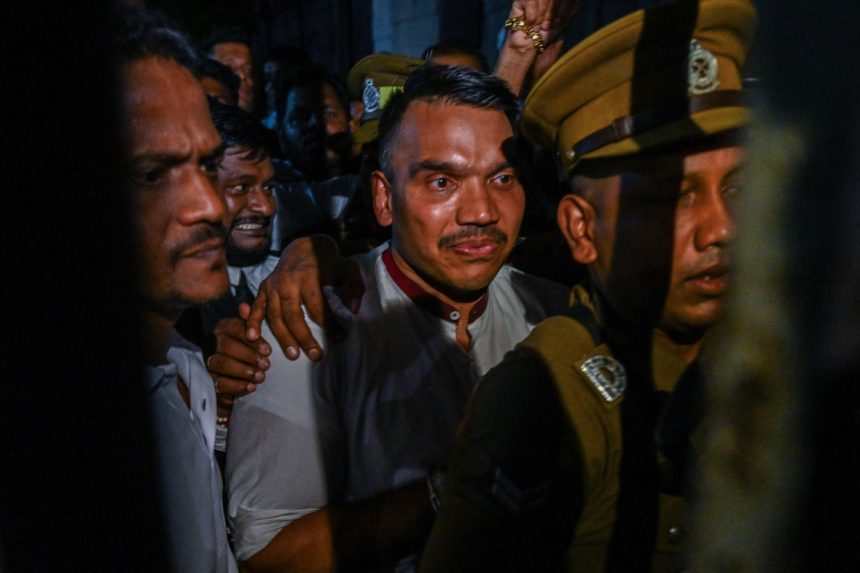
Sri Lankan opposition politician Namal Rajapaksa has been remanded in custody after his arrest over corruption allegations, but detention should not become punishment before guilt has been established in court.
Namal, the son of former President Mahinda Rajapaksa and National Organiser of the Sri Lanka Podujana Peramuna (SLPP), was arrested after questioning by Sri Lanka’s Commission to Investigate Allegations of Bribery or Corruption (CIABOC). The Colombo Chief Magistrate subsequently ordered him remanded until September 18.
The investigation concerns allegations linked to the procurement of Airbus aircraft for SriLankan Airlines. Investigators allege Rajapaksa benefited from USD 800,000 connected to the transaction. Namal denies wrongdoing, and the allegations against him have not been proven in court.

Whatever the political circumstances surrounding the case, an allegation cannot be treated as a conviction. Namal is entitled to the presumption of innocence and should be freed from remand unless authorities can demonstrate a compelling legal necessity to keep him detained while investigations continue.
Keeping an opposition politician behind bars before his guilt has been established also demands particularly careful scrutiny. The justice system must ensure that detention is based solely on legitimate investigative and judicial considerations, rather than becoming a means of punishment before trial.
If prosecutors possess evidence against Namal, that evidence should be presented and tested through the courts. He should be given every opportunity to defend himself through due process.
Namal Rajapaksa has not been convicted of the allegations against him. Until a court rules otherwise, he remains presumed innocent.
He should be freed and allowed to defend himself through the judicial process without unnecessary detention.