

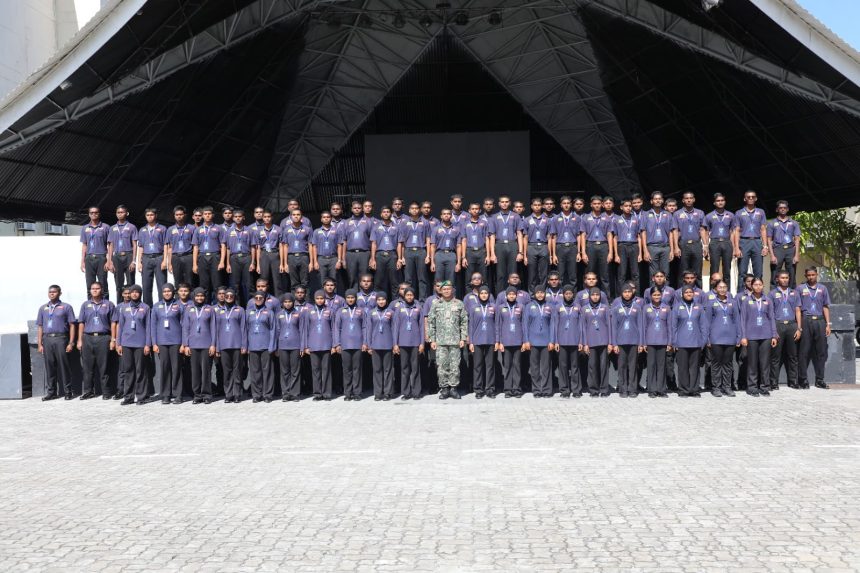
A total of 84 young Maldivians have departed to begin the third batch of the National Service Technical Training Programme, a 16-week vocational training initiative designed to equip participants with practical skills and qualifications for employment.
The latest group comprises 64 male and 20 female trainees from 44 islands across 17 atolls, reflecting participation from communities throughout the Maldives.
Training will take place at the Maldives National Defence Force (MNDF) School of Engineering and Logistics in B. Kihaadhoo, where participants will receive instruction in technical subjects alongside physical fitness, leadership and personal development.

The programme forms part of the Maldivian National Service initiative, which combines structured training with efforts to develop discipline, responsibility and employable skills among young people.
Participants in the third batch were selected from graduates of the National Service Initial Training Programme, which concluded on September 19.
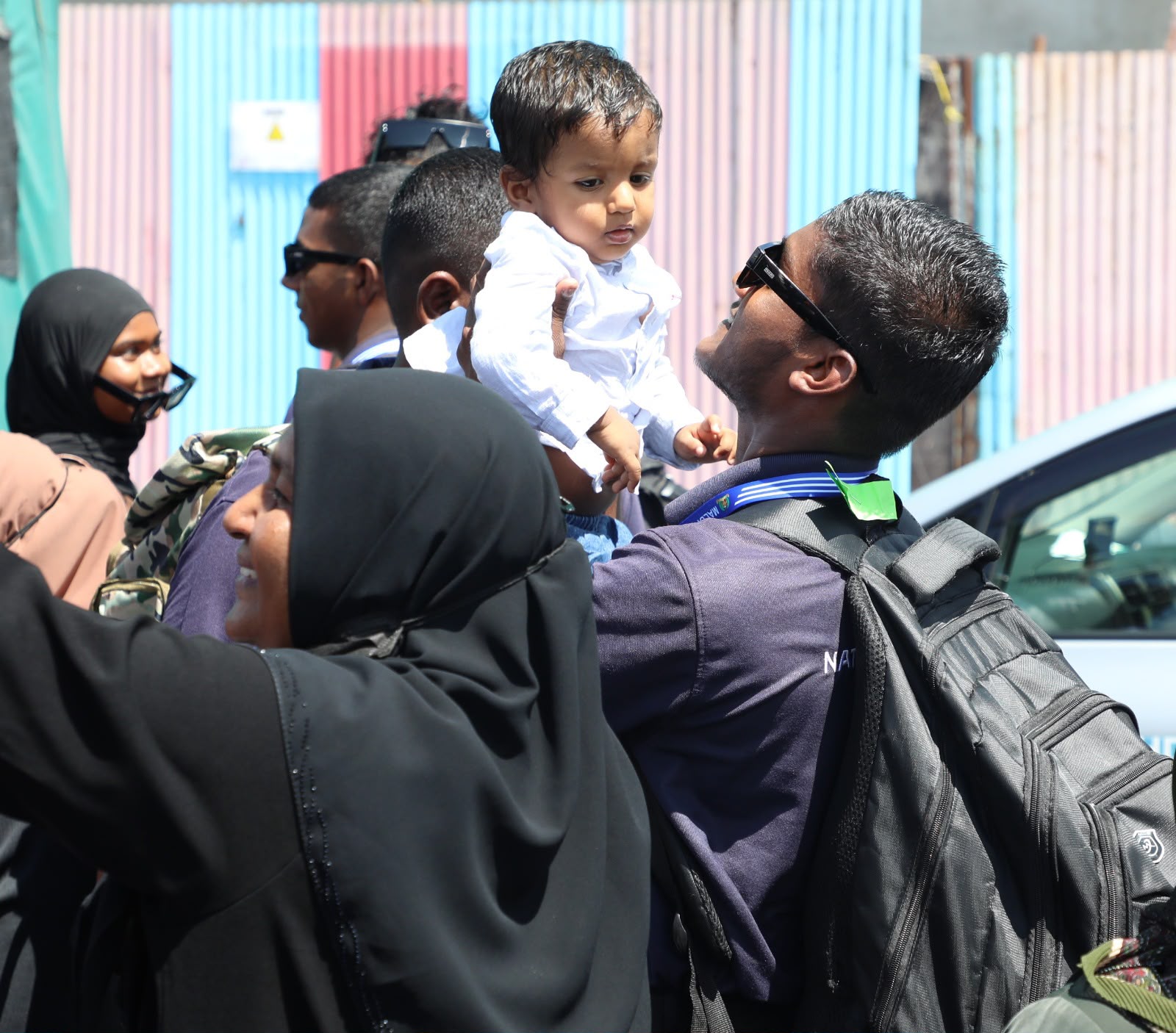
Following the completion of their initial training, graduates were given an opportunity to apply for the technical programme, with candidates selected according to established eligibility and selection guidelines.
The technical training is intended to build on the foundation established during the initial phase of National Service by providing participants with more specialised knowledge and hands-on experience.
Over the 16-week period, trainees will undertake courses leading to Certificate Level 3 qualifications in six fields.
These include Marine Mechanics, Refrigeration and Air Conditioning, Welding and Metal Fabrication, Automobile Engineering, Electrical Installation, and Office Management.
The selection of courses covers several areas relevant to the Maldivian economy, particularly industries that depend on skilled technical workers to maintain equipment, machinery and essential infrastructure.
Marine mechanics, for example, is particularly relevant in an island nation where maritime transport plays a central role in connecting communities and supporting fishing, tourism and commercial activities.
Skills in refrigeration, air conditioning and electrical installation are also important across a range of sectors, including hospitality, construction, maintenance and public utilities.
Meanwhile, training in welding, metal fabrication and automobile engineering can provide a foundation for employment in workshops, industrial operations and technical service businesses.
Office management offers participants a different vocational pathway, focusing on skills relevant to administrative and organisational work.
Alongside the technical curriculum, the programme will place considerable emphasis on physical fitness and personal development.
Participants will undergo swimming lessons, drill exercises, sports activities and other forms of physical training intended to improve endurance, coordination and teamwork.
The training will also include life skills education covering environmental cleanliness, maintenance, leadership, teamwork, personal discipline and ethical conduct.
Organisers aim to develop participants’ confidence and sense of responsibility while encouraging cooperation and respect for others.
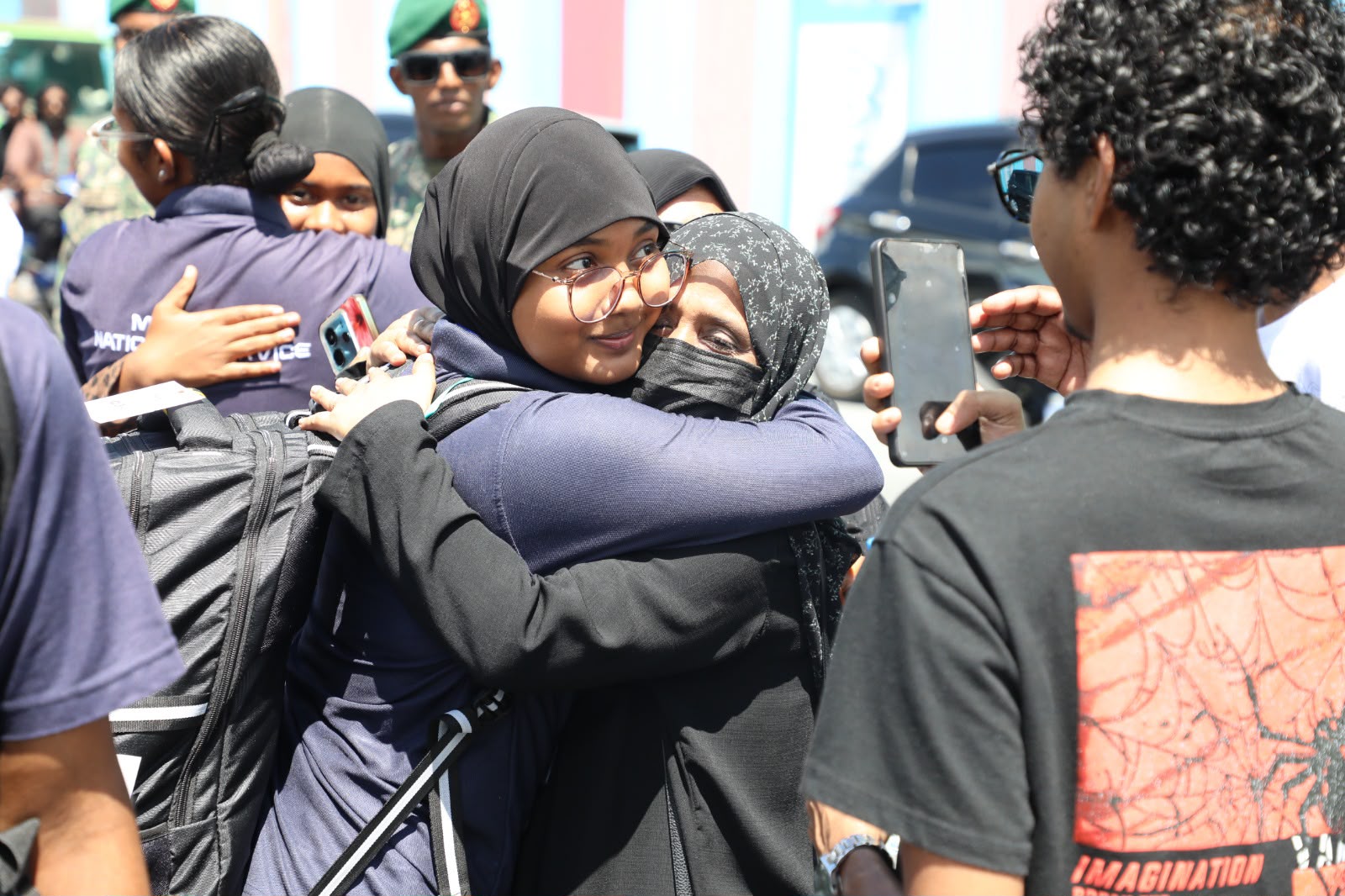
The programme also incorporates instruction relating to Maldivian national identity, responsible citizenship, Islamic values and moral conduct.
These components are intended to complement vocational education by encouraging participants to develop the personal qualities and attitudes expected in professional and community settings.
The National Service initiative is a priority programme under President Dr Mohamed Muizzu’s administration, which has placed emphasis on developing a younger generation with practical skills and a stronger capacity to contribute to national development.
The technical training component is designed to provide young people with a pathway from initial service training into vocational education, helping them acquire skills that may support future employment and career development.
For young people living across the atolls, access to specialised technical training can be particularly valuable, as vocational education facilities and training opportunities are not equally available on every island.
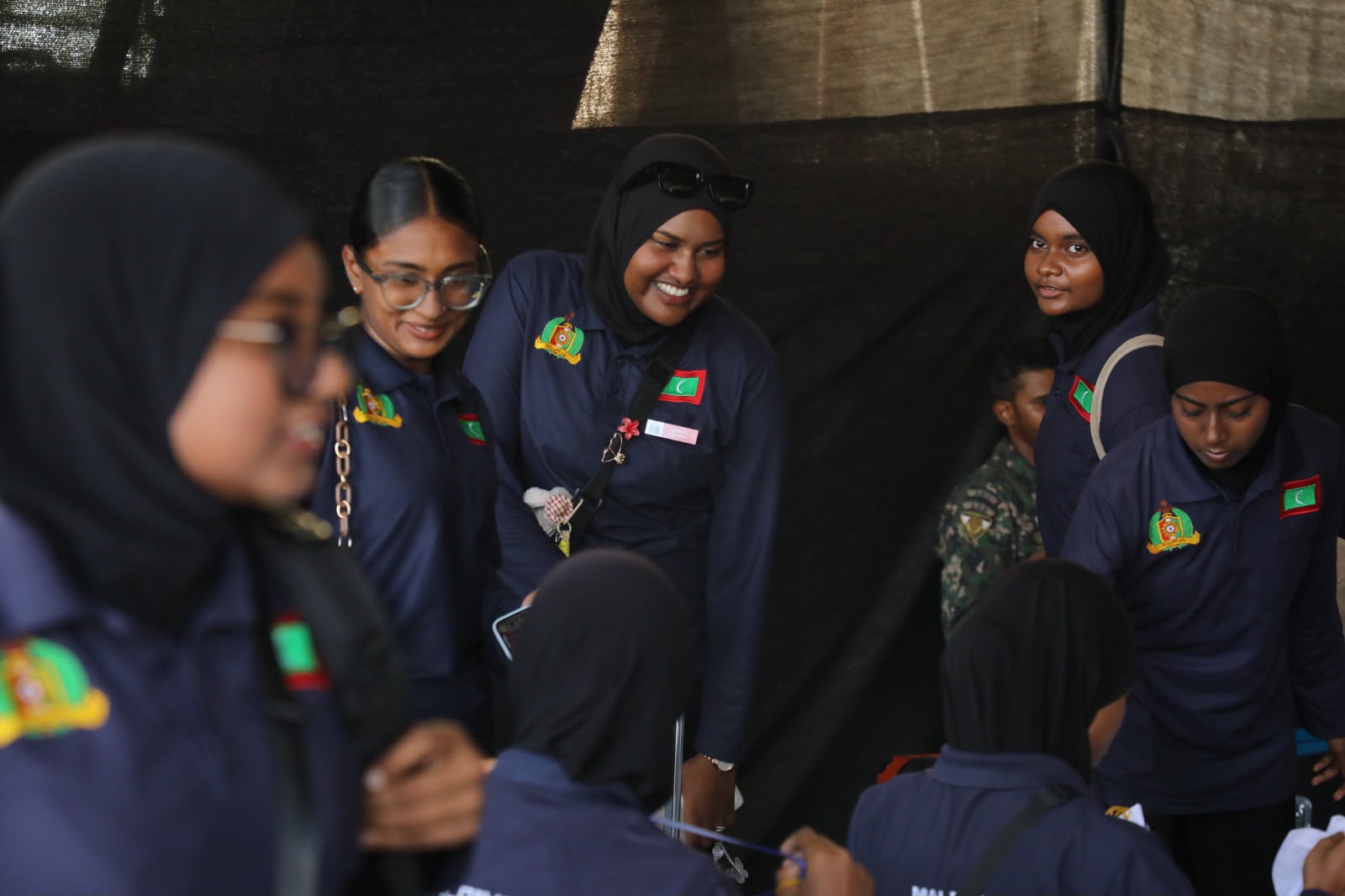
By bringing participants from different regions together at a central training facility, the programme also creates opportunities for young people to work alongside peers from other communities.
The latest batch will spend the coming 16 weeks developing technical abilities and completing the programme’s wider training requirements.
The government’s stated objective is to produce a generation of skilled, disciplined and responsible young people who are better prepared to enter the workforce and contribute to their communities and the country’s development.