

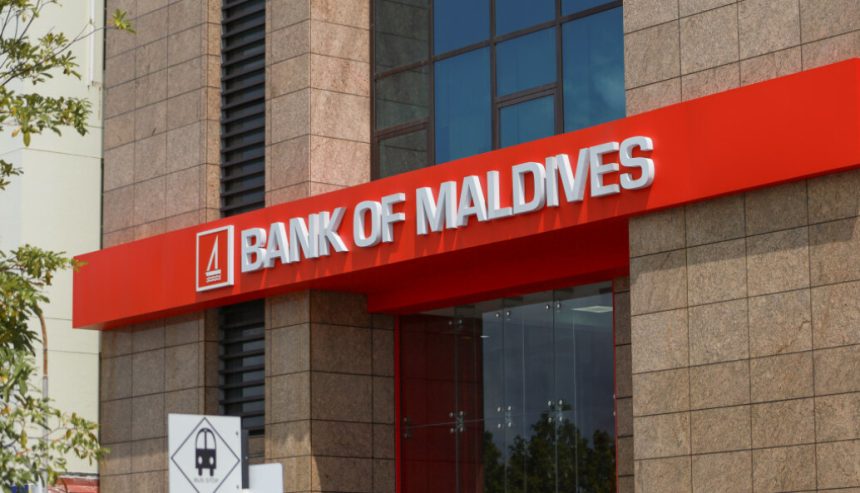
Bank of Maldives (BML) has reported strong financial performance during the first nine months of 2026, issuing MVR 12.1 billion in loans while recording a 26 percent increase in net profit compared to the corresponding period last year.
According to the bank’s third-quarter financial results, the value of loans issued between January and September has already surpassed the total lending recorded throughout 2025, reflecting an expansion in financing for businesses and key sectors of the Maldivian economy.
The bank attributed the growth to increased lending activity, continued investment in digital banking services and a stronger deposit base that has supported its ability to provide financing.

BML recorded a net profit after tax of MVR 1.93 billion for the nine-month period ending September 30, representing a 26 percent increase from the same period in 2025.
The bank’s performance was particularly strong during the third quarter, when net profit reached MVR 647.2 million, an increase of 36 percent compared to the corresponding quarter last year.
The results highlight the continued expansion of the country’s largest banking institution, which plays a central role in providing financial services to individuals, businesses and major economic sectors across the Maldives.
During the third quarter, BML generated MVR 874.8 million in net interest income, reflecting earnings from its lending and other interest-bearing activities after accounting for interest expenses.
The bank also recorded MVR 377.53 million in income from other transactions, contributing to its overall financial performance during the period.
Growth in customer deposits was another major factor supporting the expansion of lending.
Total customer deposits increased by 14 percent to MVR 42.36 billion, strengthening the bank’s funding base and providing greater capacity to extend financing to customers.
The increase in deposits also reflects the scale of funds held by individuals and businesses within the banking system, with BML maintaining a significant position in the country’s financial sector.
Alongside its earnings growth, the bank reported a strong capital position.
Its Capital Adequacy Ratio stood at 38 percent at the end of the reporting period, more than three times the minimum regulatory requirement of 12 percent.
The ratio measures the capital a bank maintains in relation to its risk-weighted assets and serves as an important indicator of its ability to absorb potential financial losses.
BML’s reported capital position provides a substantial buffer above the regulatory minimum as the bank continues expanding its lending operations.
The bank also highlighted improvements in operational efficiency, with its cost-to-income ratio maintained at 28 percent.
This means that for every MVR 100 generated in operating income, approximately MVR 28 was spent on operating expenses.
BML described the ratio as a strong result by regional banking standards, reflecting its efforts to control expenditure while expanding services.
Foreign currency operations also remained an important component of the bank’s activities during the first nine months of the year.
According to the financial report, more than 373,600 outward remittance transactions were processed, involving transfers totalling USD 2.86 billion.
The bank also reported average monthly foreign currency sales of USD 80.2 million, representing a 31 percent increase compared to the previous year.
Foreign currency availability remains an important issue for the Maldivian economy, where businesses and individuals depend heavily on international payments for imports, education, medical treatment, travel and other expenses.
As one of the country’s principal banking institutions, BML plays a significant role in facilitating these transactions and supporting access to foreign currency through the formal banking system.
The bank has also continued expanding digital services, with online and mobile banking becoming increasingly important channels for everyday transactions and financial services.
BML said its investment in modern banking technology, alongside financing for priority economic sectors, has contributed to the growth recorded during the reporting period.
Commenting on the results, BML Chief Executive Officer and Managing Director Mohamed Shareef said the bank was on course to achieve what could become the strongest financial year in its history.
Shareef attributed the performance to the bank’s robust capital and liquidity positions, as well as the confidence placed in the institution by its customers.
He said these factors had enabled BML to expand lending while maintaining a stable financial foundation.
The bank’s latest results come as demand for financing continues across the Maldives, particularly among businesses seeking capital for operations, expansion and investment.
Access to bank lending remains important for economic activity in the country, where tourism, trade, construction and small and medium-sized enterprises depend on financial institutions for working capital and development financing.
With lending during the first nine months already exceeding the previous year’s total, BML’s performance indicates a substantial increase in the volume of financing extended during 2026.
The combination of higher profits, growing deposits and a capital adequacy ratio well above regulatory requirements places the bank in a strong position as it enters the final quarter of the year.
BML said it remains focused on maintaining sustainable financial growth while expanding lending opportunities, strengthening digital banking services and supporting the wider Maldivian economy.