

The International Monetary Fund (IMF) has acknowledged improvements in the Maldives’ external financial position, stating that a combination of tourism growth, policy reforms and foreign financial assistance has helped ease economic pressures and strengthen the country’s official reserves.
The observations were made in the IMF’s preliminary findings following its 2026 Article IV Consultation, a regular assessment conducted to evaluate the economic health and policy direction of member countries.
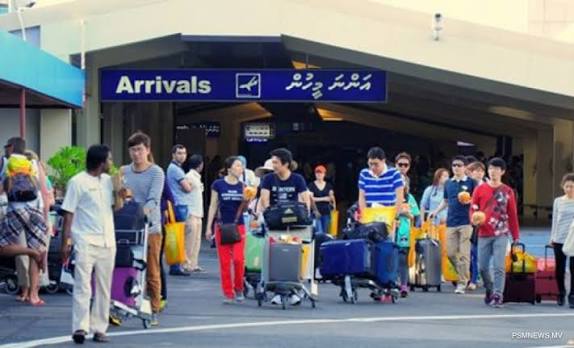
According to the IMF, the Maldivian economy benefited from strong performance in the tourism sector over the past year, with sustained visitor demand helping generate foreign currency earnings and support broader economic activity.

The institution also highlighted the role of assistance received from international partners, noting that external support helped alleviate some of the financial challenges faced by the country while contributing to the accumulation of foreign exchange reserves.
In its assessment, the IMF specifically recognized measures introduced by the government and the Maldives Monetary Authority (MMA) to improve foreign currency inflows. The report noted that recent foreign exchange regulatory reforms helped address shortages in the market and supported efforts to rebuild reserve levels.
The comments come at a time when the Maldives has been navigating significant external financial challenges, including debt repayment obligations and pressure on foreign currency reserves. Over the past year, authorities have implemented a series of fiscal and monetary measures aimed at improving liquidity and strengthening economic stability.
The IMF further noted that the Maldives had managed to achieve these gains despite continued uncertainty in the global economic environment. The institution also pointed to recent external debt repayments, stating that the country’s efforts to meet its obligations have reduced immediate concerns over financial distress.
In recent months, the Maldives successfully repaid major debt commitments, including the USD 500 million sovereign Sukuk, a move that has also been cited by international ratings agencies as a key factor behind improved investor confidence.
However, the IMF cautioned that vulnerabilities remain. The institution warned that the Maldives continues to face risks linked to fluctuations in global tourism demand, rising import costs and volatility in international oil prices, all of which could affect economic performance and foreign currency availability.
To safeguard long-term stability, the IMF stressed the importance of continuing structural reforms aimed at reducing economic imbalances, strengthening public finances and maintaining debt sustainability.
The report also welcomed the MMA’s decision to resume open market operations, describing the move as an important tool for strengthening monetary policy and managing liquidity within the financial system.
An IMF delegation visited Malé from June 4 to 14 as part of the consultation process. During the mission, officials held discussions with Finance Minister Hassan Zareer, MMA Governor Ahmed Munawar, senior government representatives, private sector stakeholders and development partners.
The Article IV Consultation findings are expected to contribute to future policy discussions as the Maldives continues efforts to strengthen reserves, manage debt and maintain macroeconomic stability in an increasingly uncertain global environment.